ECOWAS Just Drew a Red Line Around the Sahel—Here’s Why
The Economic Community of West African States (ECOWAS) has issued a stark warning regarding the escalating crisis in the Sahel region. The bloc’s latest declaration signals a firm stance against further instability spilling across its southern borders.
The Economic Community of West African States (ECOWAS) has issued a stark warning regarding the escalating crisis in the Sahel region. The bloc’s latest declaration signals a firm stance against further instability spilling across its southern borders. This is not merely a diplomatic statement; it is a strategic repositioning in response to a rapidly deteriorating security environment.
For years, the Sahel—a vast semi-arid belt south of the Sahara—has been a battleground for jihadist insurgencies, military coups, and geopolitical rivalry. As France withdraws troops and Russia’s influence grows through mercenary groups, the region has become a vacuum of power. ECOWAS, traditionally focused on coastal West African economies, now faces an existential threat: the potential collapse of its northern neighbors into failed states.
The "red line" drawn by ECOWAS is a declaration of containment. It signals that the bloc will not tolerate the further export of terrorism, arms trafficking, or refugee flows into its member states. The statement emphasizes collective defense, but it also carries an implicit warning to external actors—particularly those fueling the conflict for strategic gain.
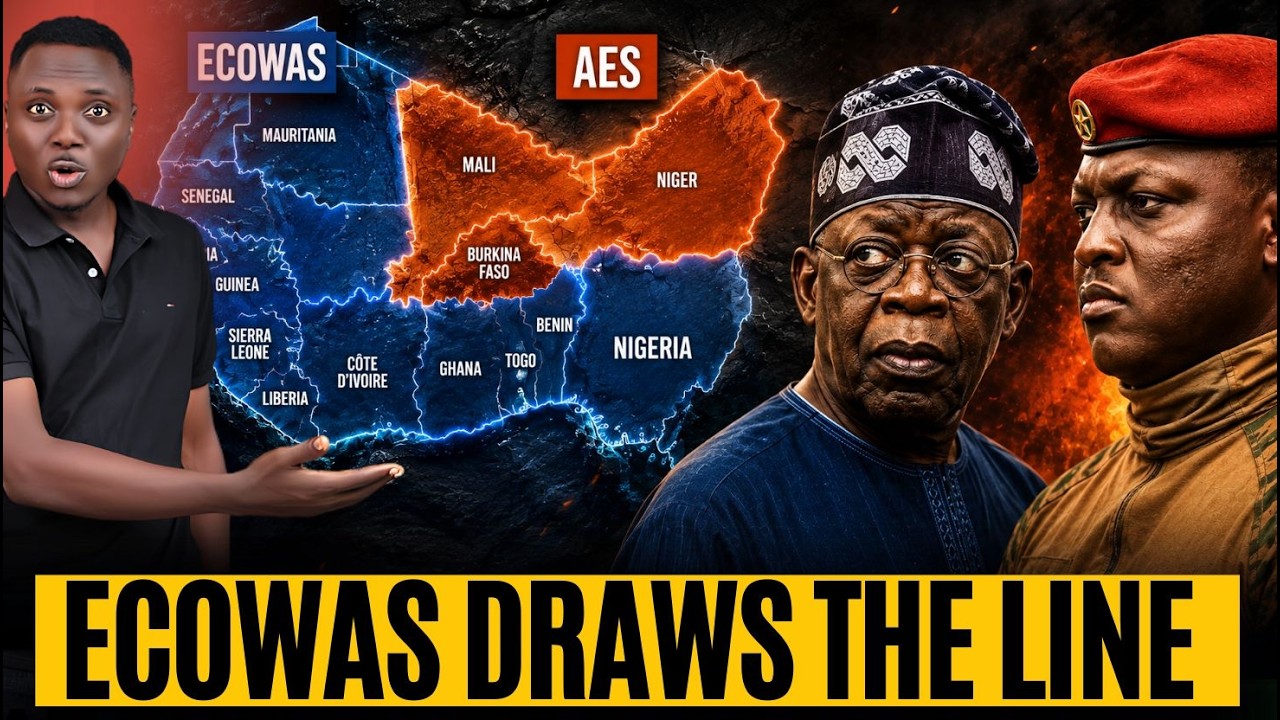
The timing is critical. With the recent expulsion of French forces from Mali, Burkina Faso, and Niger, and the subsequent formation of the Alliance of Sahel States (AES), ECOWAS has lost direct influence over its northern frontier. The AES, led by military juntas, has rejected ECOWAS’s mediation efforts, viewing the bloc as a proxy for Western interests. This fracture has created a dangerous diplomatic stalemate.
ECOWAS’s response is twofold. First, it is reinforcing its own rapid reaction force, aiming to secure its borders and prevent incursions. Second, it is appealing for renewed international support, but on its own terms—demanding that aid be directed toward development and governance, not just counter-terrorism operations. This shift reflects a growing recognition that military solutions alone are insufficient.
However, the bloc’s leverage is limited. Its member states are economically fragile and politically diverse. Nigeria, the regional heavyweight, is already stretched thin fighting Boko Haram in the Lake Chad Basin. Senegal and Côte d'Ivoire, while stable, face domestic pressures that limit their appetite for foreign intervention. The "red line" is thus as much a warning to itself as it is to external parties: the cost of inaction is higher than the cost of engagement.
The international community is watching closely. The United States and European Union have expressed cautious support for ECOWAS’s stance, but they remain wary of becoming entangled in a complex proxy war. Meanwhile, Russia has dismissed the declaration as "neo-colonial rhetoric," further deepening the divide.
In practical terms, the red line may already be crossed. Reports of cross-border raids and the flow of advanced weapons into coastal states are increasing. The Sahel is not a separate theater; it is the source of a contagion that threatens the entire West African region.
What happens next depends on whether ECOWAS can translate its rhetoric into action. A unified military posture would be a historic first, but it requires political will and financial resources that have historically been lacking. Alternatively, the bloc may resort to diplomatic isolation of the AES, hoping that internal pressures within the junta-led states will force a return to the negotiating table.
The stakes could not be higher. If the red line holds, West Africa may stabilize and secure its economic future. If it fails, the region risks becoming a permanent zone of conflict, with consequences that will reverberate far beyond the continent. ECOWAS has made its position clear; the world is now waiting to see if it has the capacity to enforce it.
Related Coverage
El Niño on Steroids: Supercharged Climate Event Threatens to Wipe Out Millions in the Sahel
Across Africa’s Sahel region, a catastrophic mix of surging violence, climate shocks, and hunger is pushing millions to the brink of collapse — and a potentially historic “super” El Niño threatens to make the crisis even deadlier. The United Nations warns that the humanitarian disaster, which has largely faded from global headlines since 2012, is now spilling across borders as civilians flee brutal attacks, droughts destroy crops, and extreme weather strains already broken systems.
Sahel on the Brink: 3 Million Displaced as Violence and Climate Shocks Push Region to Collapse
The humanitarian crisis in Africa’s Sahel region is rapidly worsening, with millions now facing dire conditions driven by a surge of violence, mass civilian displacement, climate shocks, and widespread hunger spilling across national borders.
Global Regulators Warn AI Could Trigger Cross-Border Financial Crash
A new wave of AI-driven cyber threats is putting the world's financial system on edge, with top regulators warning that a single failure could spread across borders.
South Africa’s President Warns Anti-Immigrant Groups: No ‘June 30 Deadline’ as 15,000+ Foreign Nationals Flee
South African President Cyril Ramaphosa has warned anti-immigration groups that they have no legal authority to enforce a self-imposed “June 30 deadline” for undocumented migrants to leave the country, as more than 15,000 foreign nationals have already been processed for departure amid rising xenophobic tensions.
1,800 Zimbabweans Beg to Go Home as South Africa Deports 15,000 Before Anti-Migrant Protests
As an unofficial June 30 deadline for undocumented foreigners to leave the country approaches, South Africa is racing to deport over 15,000 Malawian nationals while more than 1,800 Zimbabweans voluntarily request repatriation, saying they feel unsafe. President Cyril Ramaphosa has warned that any violence during planned anti-migrant protests will be met with the full force of the law.
Nigerian Activists Sound Alarm: $11 Billion Highway, Forest Destruction Threaten Our Future
Activists across Nigeria are demanding immediate government action to halt environmental destruction, warning that unchecked development and climate change are pushing ecosystems and communities to the brink.
Related Editorials
The Sahel Alliance Just Redrew West Africa’s Geopolitical Map—And ECOWAS Is Scrambling
In a move that has sent ripples through West African diplomacy, the Alliance of Sahel States (AES) has unveiled a significant new project that regional bloc ECOWAS did not anticipate. The development marks a decisive step in the consolidation of the AES as a standalone geopolitical and economic for
Mali’s Military Mutiny Sends a Warning to Nigeria’s President Tinubu
In the volatile landscape of West African politics, the chain of command is often the last line of defense against chaos. Yet, a recent upheaval in Mali has exposed a vulnerability that military leaders across the region fear most: the enemy within.
Russia’s Silent Takeover: How Moscow Is Replacing France in the Sahel
In a dramatic geopolitical shift, Russia is quietly but decisively expanding its military and political influence across West Africa’s Sahel region. Recent developments in Mali, Burkina Faso, and Niger signal a coordinated effort by Moscow to fill the vacuum left by departing Western powers—particu
The Sahel’s Quiet Revolution: Why Mali, Burkina Faso, and Niger Turned Their Backs on the West
In a move that has reshaped the geopolitical map of West Africa, three nations—Mali, Burkina Faso, and Niger—have collectively severed ties with their traditional Western allies. This is not a sudden coup or a fleeting protest; it is a calculated, strategic pivot that signals a new era of self-dete
The Gathering Storm: How a Continental Shift Is Threatening South Africa’s Regional Dominance
A quiet but seismic shift is underway in African geopolitics. For decades, South Africa has operated as the continent’s economic and diplomatic anchor, wielding influence from Cape Town to Cairo.
Burkina Faso’s Revolt Against France Triggers an Irreversible Domino Effect in the Sahel
In a move that has reshaped the geopolitical landscape of West Africa, Burkina Faso’s decision to sever ties with its former colonial power has ignited a chain reaction that analysts now describe as irreversible. The country’s military junta, which seized power in a 2022 coup, has not only expelled