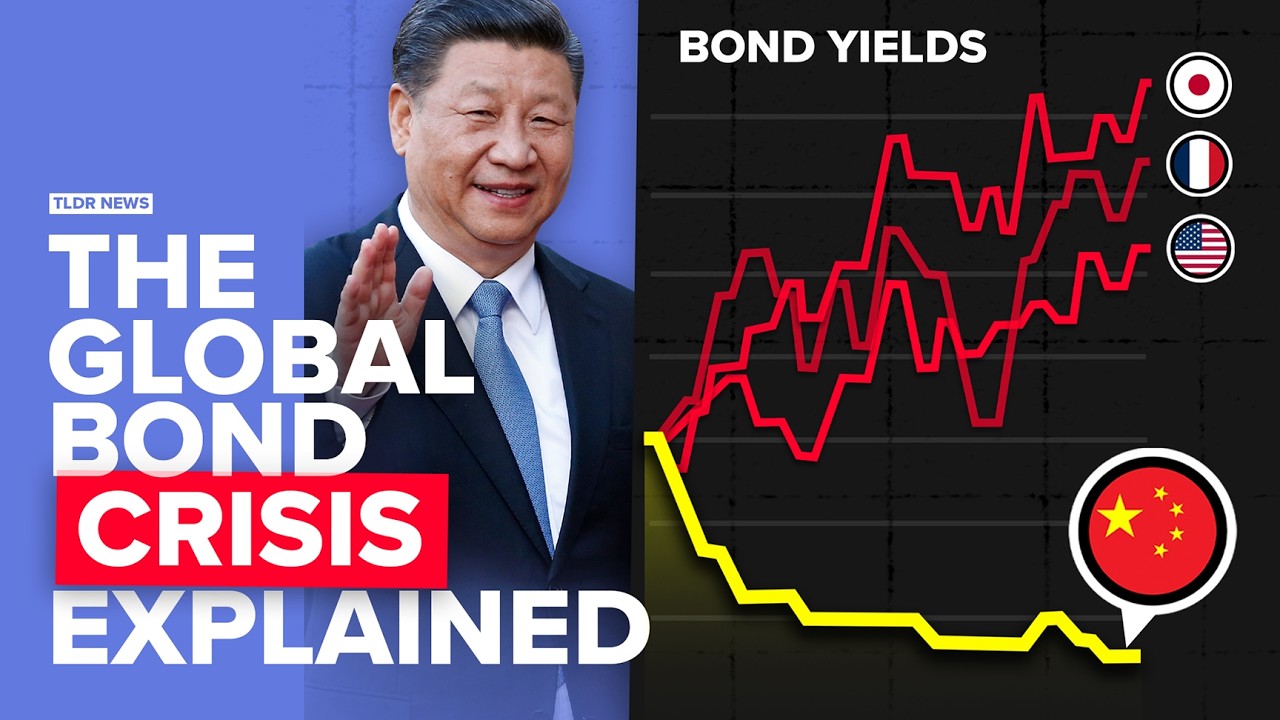
The Global Cash Crunch: Why the World Is Feeling the Pinch (and China Isn't)
Across the developed world, a pervasive sense of financial dread has taken hold. From the suburbs of the United States to the high streets of Europe, households are reporting a collective tightening of belts, a phenomenon that has sparked a wave of economic anxiety.
Across the developed world, a pervasive sense of financial dread has taken hold. From the suburbs of the United States to the high streets of Europe, households are reporting a collective tightening of belts, a phenomenon that has sparked a wave of economic anxiety. Yet, one major global power appears to be navigating these turbulent waters with relative ease: China.
This divergence raises a critical question: Why are Western economies experiencing a synchronized squeeze on purchasing power while China’s economic engine seems to be running on a different fuel? The answer lies not in a single catastrophe, but in a complex interplay of post-pandemic policy, structural differences in economic models, and divergent approaches to global trade.
The Western Squeeze: A Perfect Storm of Inflation and Debt
For many Western nations, the current financial strain is the result of a delayed reaction to the COVID-19 pandemic. Stimulus packages, while preventing immediate collapse, flooded the market with liquidity. This, combined with supply chain bottlenecks and the energy crisis triggered by geopolitical conflict, created a persistent inflationary environment.
Central banks responded with aggressive interest rate hikes. While intended to cool down overheated economies, this "medicine" has had severe side effects. The cost of borrowing has skyrocketed, impacting everything from corporate expansion to consumer mortgages. For the average citizen, this translates into higher monthly payments and decreased disposable income.
Simultaneously, wage growth has largely failed to keep pace with the rising cost of living. This "real wage stagnation" means that even those who are employed feel poorer. The result is a demand-side contraction, where consumers are forced to prioritize essentials, leading to a slowdown in discretionary spending and a subsequent ripple effect across retail and service industries.
The Chinese Exception: A Different Economic Operating System
China’s relative stability in this environment is not an accident; it is a feature of its distinct economic architecture. While the West focuses on consumer-driven growth, China’s model prioritizes industrial policy and state-directed investment.
One of the primary buffers for China has been its approach to inflation. Unlike the West, which saw consumer prices surge, China’s manufacturing overcapacity has kept domestic prices for goods relatively low. The country acts as a "deflationary exporter," shipping low-cost goods that help temper global inflation while simultaneously keeping its own domestic consumer price index (CPI) in check.
Furthermore, China’s capital controls and a tightly regulated financial system insulate it from the volatile capital flows that have destabilized other emerging markets. While Western central banks have been forced into a tightening cycle, China has been able to maintain a more accommodative monetary policy, focusing on stimulating domestic production and infrastructure rather than curbing consumer demand.
The "Broke" Narrative vs. Economic Reality
It is crucial to distinguish between the feeling of being broke and actual economic insolvency. Western consumer debt is at record highs, but this is often a reflection of an economy built on credit. The "broke" sentiment is driven by debt servicing costs, which are consuming a larger share of household income.
In contrast, the Chinese household savings rate remains significantly higher than in the West. This "buffer" of savings provides a cushion against economic shocks, reducing the anxiety associated with financial instability. However, this is a double-edged sword; high savings rates often correlate with lower domestic consumption, which is a challenge China is actively trying to address.
The Verdict: A Tale of Two Policies
The divergence in financial well-being is not a sign of Western economic failure nor a testament to Chinese superiority. It is a reflection of different policy priorities.
The West is currently paying the price for its reliance on debt-fueled stimulus, facing the inevitable hangover of inflation and high interest rates. China, by prioritizing supply-side strength and industrial self-reliance, has shielded its population from the immediate pain of inflation but faces its own structural hurdles, including a struggling property sector and demographic decline.
Ultimately, the global economy is not "going broke," but it is undergoing a significant realignment. The pain felt in the West is a recalibration from an era of cheap money, while China’s relative comfort is a result of a more insulated, state-managed approach. For the global citizen, this means the era of easy money is over, and the new economic reality requires a more cautious, resilient approach to personal finance.
Related Coverage
Fuel, Fear, and the Fading Line Between State and Profit: How Converging Crises Are Reshaping Global Politics
A wave of interlocking emergencies—war, energy shocks, climate disasters, and the tightening grip of corporate and state power—is squeezing ordinary households while a narrow set of interests reaps record rewards, testing the global order as never before.
# Global Economy Buckles as Energy Wars, Climate Chaos, and AI Speculation Reshape the World Order
The global economic system is under unprecedented strain as geopolitical conflict, extreme weather, and financial speculation converge into a cascade of interconnected crises. From the closed oil routes of the Strait of Hormuz and the battlefields of Ukraine to the drought-parched rivers of Europe, the pursuit of geopolitical power and corporate profit is increasingly colliding with fundamental human needs, leaving ordinary citizens to bear the heaviest burden of inflation, fuel shortages, and food insecurity.
Oil Shocks, Crackdowns, and a World Order Under Strain: How War, Energy, and Repression Are Reshaping Global Politics
A convergence of war, energy chokepoint seizures, climate disasters, and domestic crackdowns is squeezing ordinary households while powerful interests profit. From the Red Sea to Western Thrace, governments are tightening control as the global order built on financial accumulation generates unsustainable inequality.
Global Militarization and Economic Warfare Drain Public Wealth as Interconnected Crises Reshape the World Order
The global system is buckling under the weight of interconnected crises, where the pursuit of geopolitical power and corporate profit is colliding with fundamental human needs, diverting public resources from social welfare toward conflict and profiteering. From the closed oil routes of the Strait of Hormuz and the battlefields of Ukraine to the drought-parched rivers of Europe and the besieged villages of the West Bank, a cascade of emergencies is leaving the world's most vulnerable populations to bear the heaviest burden of inflation, displacement, and violence [15485][15474].
Global Militarization and Economic Warfare Drain Public Wealth as Interconnected Crises Reshape the World Order
The global system is buckling under the weight of interconnected crises, where the pursuit of geopolitical power and corporate profit is colliding with fundamental human needs, diverting public resources from social welfare toward conflict and profiteering. From the closed oil routes of the Strait of Hormuz and the battlefields of Ukraine to the drought-parched rivers of Europe and the besieged villages of the West Bank, a cascade of emergencies is leaving the world's most vulnerable populations to bear the heaviest burden of inflation, displacement, and violence.
Militarization and Economic Warfare Drain Public Wealth as Climate and AI Crises Converge
The global order is buckling under the weight of interconnected crises, where the pursuit of geopolitical power and corporate profit is colliding with fundamental human needs. From the closed oil routes of the Strait of Hormuz and the escalating aerial war in Ukraine to drought-parched rivers across Europe and famine-stricken regions of Africa, a cascade of emergencies is diverting public resources away from social welfare and toward conflict, leaving the world's most vulnerable populations to bear the heaviest burden of inflation, displacement, and violence [15614][15642].
Related Editorials
The Establishment is Panicking: Why the Old Rules of Economics No Longer Apply
The global economic establishment is in a state of deep anxiety. This is not merely a feeling; it is a rational response to a world in which the central pillars of post-war economic policy—inflation targeting, central bank independence, and the assumption of stable growth—are crumbling.
The End of Contentment: Why Global Stability Is Fracturing
For decades, a fragile global equilibrium held: cheap energy from Russia, ultra-efficient manufacturing from China, and a security umbrella provided by the United States. This arrangement delivered unprecedented prosperity to the developed world.
The Great Bank Retreat: Why Financial Institutions Are Abandoning Our Communities
Across the United States, a silent crisis is unfolding. Banks are closing branches at an alarming rate, leaving millions of Americans—particularly in rural areas and low-income urban neighborhoods—without access to basic financial services.