The $27 Trillion Time Bomb: Why the Treasury Market Is Even Shakier Than It Looks
The U. S.
The U.S. Treasury market is the bedrock of the global financial system. It sets the "risk-free" rate against which every asset on Earth is priced, and it serves as the ultimate safe haven in times of crisis. But beneath the surface of this $27 trillion market, structural fractures are widening. The market is becoming more fragile, less liquid, and increasingly vulnerable to shocks—a reality that contradicts its reputation for stability.
The Illusion of Liquidity
On paper, the Treasury market looks robust. Daily trading volumes exceed $700 billion. However, volume does not equal liquidity. Liquidity refers to the ability to buy or sell an asset quickly without causing a significant change in its price.
In reality, the market's depth—the ability to absorb large trades—has deteriorated. When volatility spikes, buyers vanish. This was evident during the "Flash Rally" in 2014 and the "Dash for Cash" in March 2020. In both instances, the world's deepest market froze, requiring central bank intervention to function.
The Leverage Problem
A primary driver of this fragility is the explosion of hedge fund leverage. Through the "basis trade," hedge funds exploit tiny price differences between Treasury futures and cash bonds. To make these razor-thin margins profitable, they borrow heavily—often at ratios of 50-to-1 or more.
This strategy creates hidden risks. Because these positions are highly leveraged, a small drop in prices can trigger margin calls. If funds are forced to sell their holdings to meet these calls, they can spark a cascade of selling. This "crowded trade" has grown so large that it now poses a systemic risk to the entire financial system.
The Buyer Base Has Shifted
The identity of the marginal buyer has changed. Historically, price-insensitive buyers—like central banks and commercial banks—absorbed supply regardless of yield. Today, that demand has waned. Central banks are diversifying reserves, and banks are constrained by post-2008 regulations.
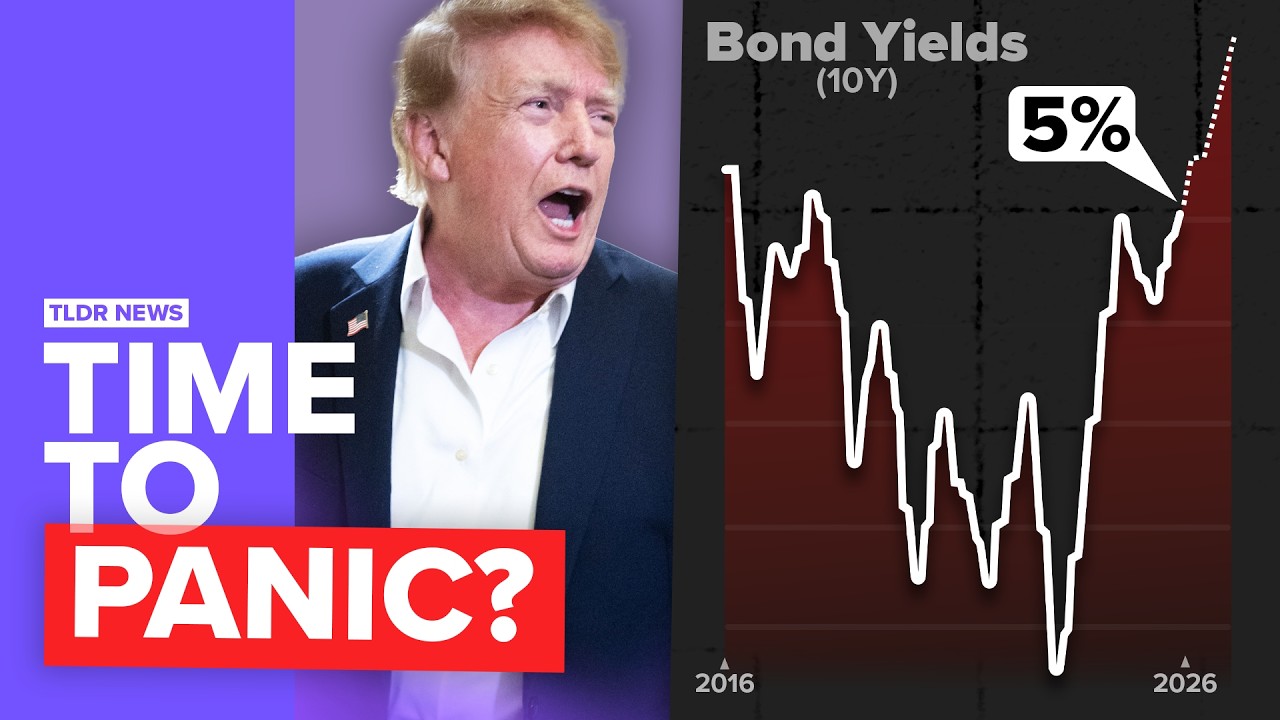
Instead, the market now relies on price-sensitive buyers: hedge funds and mutual funds. These participants are quick to exit when conditions worsen. This shift means that when the government issues new debt to fund its deficit, it must offer higher yields to attract buyers. This dynamic puts upward pressure on interest rates and increases borrowing costs for the entire economy.
The Regulatory Blind Spot
Regulators face a difficult challenge. Much of the trading activity has moved to the shadows of the market—specifically, the Treasury repo market. Repurchase agreements (repos) are short-term loans collateralized by Treasuries. While crucial for market functioning, this market is opaque.
The Financial Stability Oversight Council (FSOC) has flagged the Treasury market as a potential vulnerability. However, implementing reforms is difficult. Stricter capital rules might prevent banks from acting as intermediaries during crises, while looser rules could encourage excessive risk-taking. The market is caught in a regulatory limbo.
The Implications
Why does this matter to the average investor? The Treasury market is the plumbing of the financial system. If the plumbing backs up, the entire house floods.
A dysfunctional Treasury market would:
- Impair Monetary Policy: The Federal Reserve uses Treasuries to conduct open market operations. If the market is broken, the Fed loses its primary tool for controlling interest rates.
- Raise Borrowing Costs: A lack of liquidity leads to higher yields. This translates to higher mortgage rates, auto loans, and corporate borrowing costs.
- Trigger Contagion: Because Treasuries are used as collateral worldwide, a sudden drop in their value could trigger margin calls across the globe, similar to the 2008 financial crisis.
Conclusion
The Treasury market is no longer the risk-free, infinitely liquid monolith it once was. It is a market stretched by massive debt issuance, reliant on leveraged players, and vulnerable to sudden stops. While a total collapse is unlikely, the "shakiness" is real. Investors and policymakers must recognize that the foundation of the global financial system requires urgent structural repair.
Related Coverage
Hedge Funds Now Run the $27 Trillion Treasury Market — And That’s a Problem
Wall Street’s safest corner has become its riskiest bet: hedge funds now dominate the $27 trillion U.S. Treasury market, using heavy borrowing to chase tiny price differences, a strategy that could trigger a sudden sell-off and spike government borrowing costs if one major fund fails.
Trump Admin’s Bond Market Meddling Could Blow Up Your Mortgage Rates
The Trump administration is pushing for more control over how U.S. government bonds are issued and priced, a move that experts warn could raise borrowing costs for everyday Americans instead of lowering them.
Iran War 2.0: Asia Braces for $20 Trillion Shock as Oil Prices Explode
The collapse of the US-Iran ceasefire is set to unleash a second wave of economic chaos across Asia, with analysts warning the next global financial crisis could be four times worse than the dot-com crash, wiping out up to $20 trillion in market value.
AI Debt, Iran War, and a $1 Trillion Borrowing Wave: Markets Flash 2008-Style Warning Signs
Wall Street faces a dangerous mix of slowing AI investment, escalating Middle East conflict, and surging government borrowing costs — and investors are getting nervous.
Chip Stocks in Freefall: $3 Trillion Wiped Out as Bond Yields Hit Decade Highs
Global markets are in turmoil as a massive selloff in semiconductor shares, triggered by soaring government bond yields and AI hype crumbling, has erased roughly $3 trillion from chip stocks.
Social Security’s Clock Is Ticking—Why Nobody’s Talking About It
The Social Security trust fund is projected to run short of money in the coming years, yet the issue has barely registered as a top campaign priority, leaving many Americans unaware of the program’s financial shortfall and the painful choices ahead.
Related Editorials
The $3.5 Trillion Shadow: Why the Global Debt Time Bomb Is Still Ticking
A financial crisis is unfolding in plain sight, yet it remains largely absent from mainstream headlines. It is not a bank run, a stock market crash, or a sudden currency devaluation.
America’s Debt Bomb: Is the Fiscal Reckoning Finally Here?
The United States has long operated on a fiscal knife’s edge, borrowing trillions to fund its ambitions. For decades, economists have warned that the bill would come due, only to see the day of reckoning perpetually postponed.
The Next Financial Crash: Why “Uninvestable” Assets Are the Real Threat
The global financial system is a complex web of interdependencies. When a major shock occurs—like a pandemic or a sudden spike in interest rates—the initial damage is often visible.
Britain's Debt Machine: How the Bond Market Moves Wealth from the Poor to the Rich
The UK's national debt stands at roughly 100% of GDP. The interest bill alone exceeds the defence budget.
The Bond Market’s Quiet Rebellion: Why Yields Are Surging Again
For months, the financial world watched a slow-motion car crash unfold in the Treasury market. After a period of relative calm, US government bond yields are climbing once more, sending ripples through global equities and reigniting fears that the era of cheap money is definitively over.
Britain’s £3 Trillion Debt: The Number That Lies
When politicians or pundits cite the United Kingdom’s national debt, they usually point to a staggering figure: roughly £3 trillion. It is a number large enough to dominate headlines and fuel debates about fiscal responsibility.