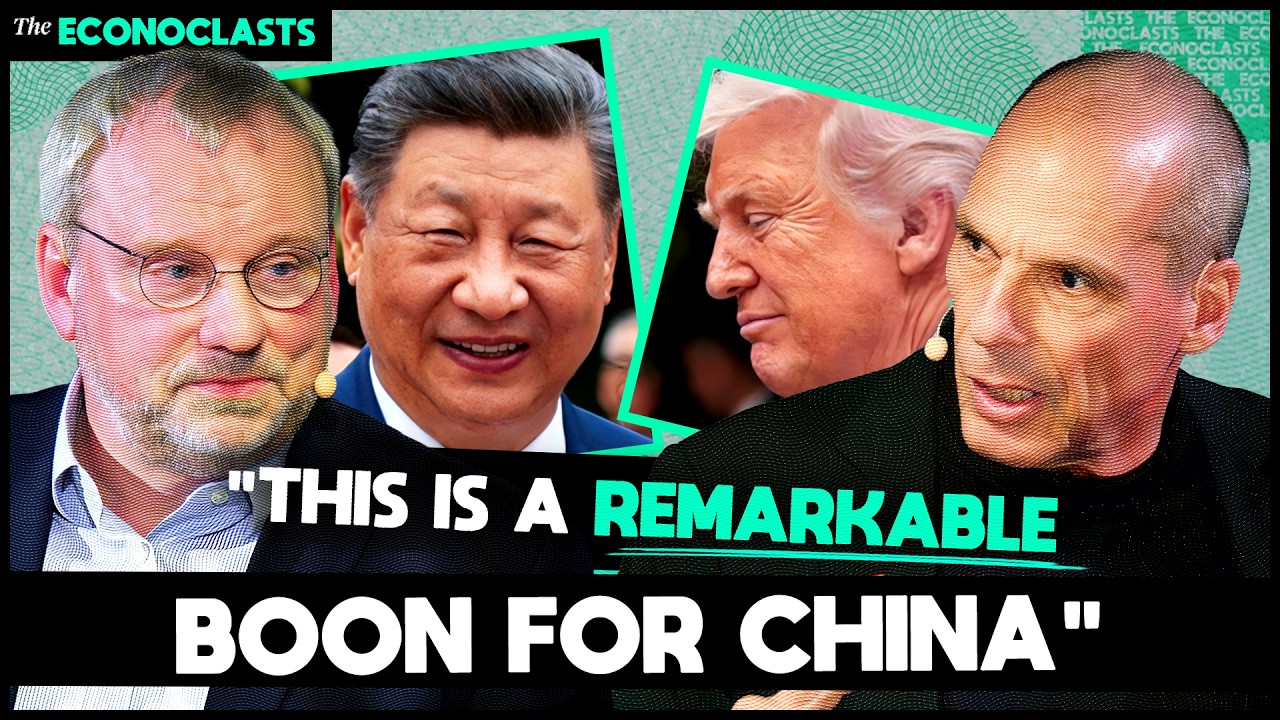
How Washington’s New Tariffs Are Pushing the World into Beijing’s Arms
The United States has long positioned itself as the central node of global trade, the indispensable partner for any nation seeking economic security. Yet, according to economists Yanis Varoufakis and Wolfgang Münchau, the latest wave of American protectionism is achieving the exact opposite of its
The United States has long positioned itself as the central node of global trade, the indispensable partner for any nation seeking economic security. Yet, according to economists Yanis Varoufakis and Wolfgang Münchau, the latest wave of American protectionism is achieving the exact opposite of its stated goal. Instead of isolating China, Washington’s aggressive tariff policies are inadvertently accelerating a global realignment toward Beijing.
The Logic of the Tariff Trap
The core argument presented by Varoufakis and Münchau hinges on a fundamental miscalculation in U.S. strategy. The American approach—imposing steep tariffs on Chinese goods—was designed to punish Beijing for perceived unfair trade practices and to force manufacturing back to American shores. However, this policy creates a vacuum. When the U.S. erects barriers, it does not simply stop trade; it redirects it.
Countries that previously relied on the American market are now facing a choice. They can absorb the cost of tariffs, watch their exports dwindle, or find new buyers. China, with its vast domestic market and its willingness to underwrite infrastructure projects through initiatives like the Belt and Road, becomes the obvious alternative.
The "Push" Factor
The economists argue that the U.S. is effectively pushing its traditional allies into a closer economic embrace with China. For example, European nations and Southeast Asian exporters, who once balanced their trade between Washington and Beijing, are now being forced to choose. The U.S. tariff regime makes exporting to America increasingly expensive and unpredictable. Simultaneously, China offers stable, long-term contracts and access to its consumer base.
This is not a passive drift. It is an active re-routing of global supply chains. Varoufakis describes this as a "self-inflicted wound." By weaponizing the dollar and trade access, the U.S. diminishes the very trust that made the dollar the world’s reserve currency and America the market of last resort.
The Unintended Consequence: A Multipolar World
The central thesis of the discussion is that Washington’s actions are creating a world where China does not need to "win" the trade war. Instead, the U.S. is losing it by default. Every tariff imposed is an invitation for Beijing to deepen its economic ties with Europe, Africa, and Asia.
Münchau points out that this dynamic is particularly dangerous for the U.S. because it erodes the financial architecture that supports American power. If countries begin to settle trade in currencies other than the dollar—specifically the yuan or a basket of currencies—the U.S. loses the "exorbitant privilege" of borrowing cheaply and financing its deficits with ease.
A Strategic Blunder
The conversation concludes with a stark warning. The current U.S. trade policy is not a strategic masterstroke; it is a tactical blunder of historic proportions. By attempting to contain China through isolation, Washington is building the very infrastructure for a global economy that operates without it. The world is not turning against the U.S. out of malice. It is turning toward China out of necessity, driven by the very policies meant to prevent that outcome.
In the end, the tariff walls built to protect American industry may become the walls that enclose it, while the rest of the world finds its future in Beijing.
Related Coverage
War, Tariffs, and Oil at $100: How a World Built on Profit Is Breaking the Global Economy
A cascade of escalating military conflicts, surging energy prices, and a breakdown in global trade is pushing the world economy to its breaking point, with ordinary citizens bearing the costs of a system that prioritizes corporate profit and military spending over human welfare.
Brazil Dumps US, Races to China Trade Deal After Trump's 25% Tariff War
Brazil has slammed the brakes on trade with the United States and is now speeding toward a deal with China, after Washington hit nearly half of its exports with new tariffs.
China’s Rare-Earth Squeeze Hits US Magnet Makers, Sparking New Trade Clash
China has tightened control over rare-earth supplies, directly targeting two American manufacturers that are central to the Trump administration’s push to rebuild the U.S. supply chain for critical magnets, raising the risk of a fresh trade clash between the world’s two largest economies [178998].
Trump Slaps Double-Digit Tariffs on 60 Nations, Sparks Global Trade Chaos
The United States has imposed sweeping double-digit tariffs on 60 countries, citing forced labor practices, in a move that is disrupting trade deals and pushing allies to seek new partners.
Trump to EU: Drop Canada Deal or Face Massive Tariffs
Trump is threatening the European Union with severe tariffs and a possible trade cutoff if it grants Canada a special "partner member" status. The warning comes as Canada deepens ties with Europe, and China pushes its own Asia-Pacific trade agenda.
China and Israel Trade Deal Sparks US Security Fears – 17 Nations Skip Defence Pact
China’s deepening economic ties with Israel are alarming Washington, while Beijing and Washington both stayed out of a new 17-nation defence pact aimed at protecting undersea cables.
Related Editorials
America Is Quietly Losing the World: Two Top Economists on the Empire’s Unraveling
The United States has long been the undisputed center of global capitalism. Yet, according to two of the world’s most prominent dissenting economists, Yanis Varoufakis and Richard D.
Is Washington Turning Its Back on the Indo-Pacific?
For decades, the United States has positioned itself as the indispensable power in the Asia-Pacific region, anchoring security alliances and driving economic integration. Yet, under the current administration, a growing chorus of diplomats and strategists is asking a provocative question: has Washi
Washington’s Fickle Embrace: Why the Gulf States Are Losing Patience with Trump
For decades, the relationship between the United States and the Gulf monarchies has rested on a simple bargain: American security guarantees in exchange for oil stability and regional alignment. Yet, beneath the surface of official summits and handshakes, a quiet but profound erosion of trust is un
The Tariff Paradox: Why Trump’s Trade War Exposes the True Limits of Government Power
When a head of state launches a trade war, the assumption is simple: the government, with all its authority, can dictate economic outcomes. Yet, the unfolding reality of President Donald Trump’s aggressive tariff campaign has revealed a counterintuitive truth.
Is Trump’s Trade War a Prelude to Economic Annexation of Canada?
The recent escalation in US-Canada trade relations has raised a provocative question: is the Trump administration’s tariff strategy a calculated economic maneuver aimed at undermining Canadian sovereignty? While official statements cite border security and trade imbalances, the broader implications
Is Trump’s Trade War with Canada a Declaration of Economic Hostility?
The relationship between the United States and Canada, long considered the world’s most stable bilateral partnership, is facing an unprecedented strain. Recent actions by the Trump administration have led economists and political analysts to question whether we are witnessing the opening salvo of a