Britain’s “No Money” Claim: Austerity by Choice, Not Necessity
When a chancellor tells the public there is “no money,” the statement sounds like a simple accounting fact. It is not.
When a chancellor tells the public there is “no money,” the statement sounds like a simple accounting fact. It is not. It is a political choice dressed as arithmetic. The claim rests on a particular set of fiscal rules, not on any immutable law of economics—and those rules can be rewritten.
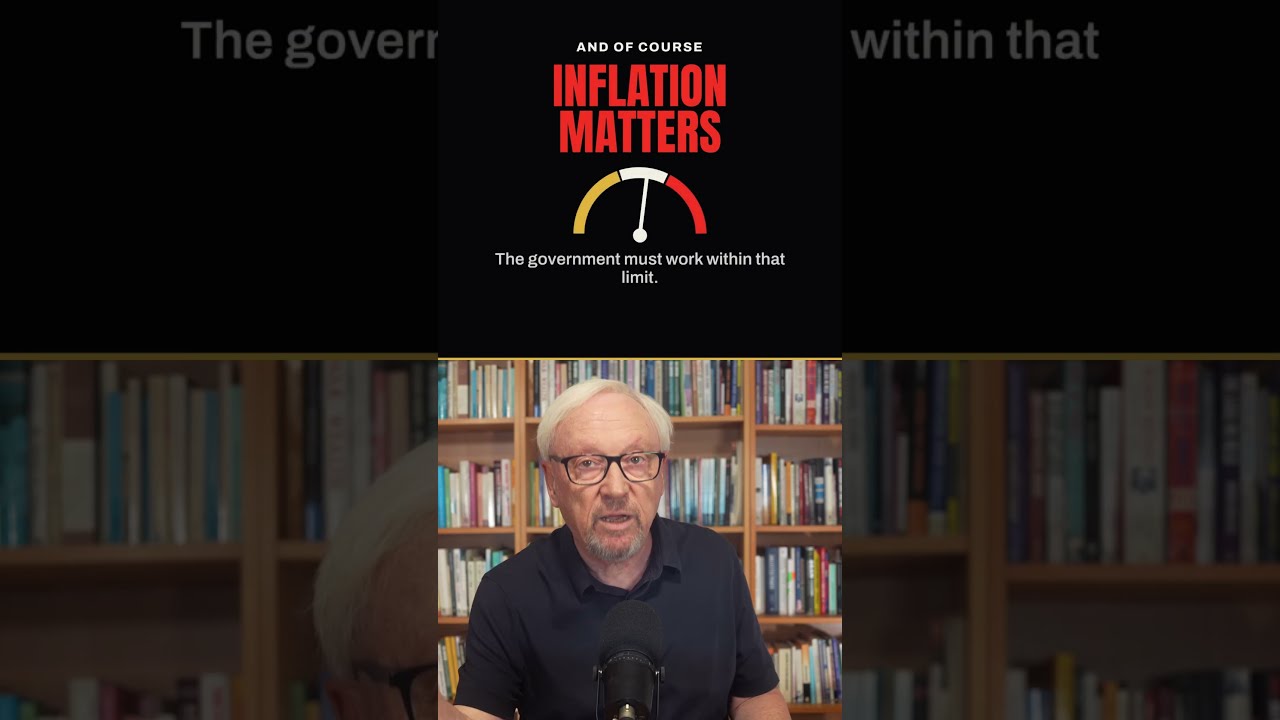
The core of the argument is straightforward. A government that borrows in its own currency cannot run out of money in the way a household can. It can always meet obligations denominated in the currency it issues. The real constraint is not solvency but inflation: spending beyond the economy’s capacity to produce goods and services drives up prices. That is a genuine limit, but it is a very different one from “the cupboard is bare.”
So why does the chancellor say otherwise? Because modern fiscal policy is governed by self-imposed rules. These rules set targets for borrowing and debt, and they frame spending as a trade-off against a fixed pot. Within that framework, “no money” is an accurate description—but the framework itself is a decision, not a natural phenomenon. Change the rules and the money appears.
The distinction matters because it shapes what is presented as possible. If the budget is treated like a household account, then any new spending must be matched by cuts elsewhere or by higher taxes. If instead the constraint is real resources—workers, materials, productive capacity—then the question becomes whether the economy can absorb the spending without overheating. These are different questions with different answers, and the choice between them is political.
The austerity that follows from the “no money” framing is therefore a choice, not a necessity. It is a decision to prioritise certain fiscal targets over other possible uses of public spending. Presenting it as an unavoidable fact conceals that choice and closes off debate about alternatives.
None of this means spending is unlimited. Inflation is a real and serious constraint, and ignoring it would be reckless. But the honest version of the constraint is about the economy’s capacity, not about a household-style budget that can simply be redrawn. The chancellor’s phrase does not describe reality; it describes a rulebook. And rulebooks can be changed.
Related Editorials
The Austerity Trap: Why Balancing the Government’s Books Could Make You Poorer
Introduction It is a mantra repeated by politicians and central bankers worldwide: governments must balance their books. To spend beyond one's means is seen as irresponsible, while fiscal discipline is hailed as a virtue.
Britain’s £3 Trillion Debt: The Number That Lies
When politicians or pundits cite the United Kingdom’s national debt, they usually point to a staggering figure: roughly £3 trillion. It is a number large enough to dominate headlines and fuel debates about fiscal responsibility.
The UK’s Welfare Myth: Why the System Is Not in Crisis
The debate over welfare in the United Kingdom is often dominated by rhetoric suggesting a system in collapse. However, a closer examination of the data reveals a different reality.
Britain’s Budget Illusion: Why Handouts Won’t Fix Inequality
The UK government claims its latest budget will tackle the country’s deepening wealth gap. But a closer look at the numbers reveals a different story: one where short-term giveaways mask long-term structural failures.
The Myth of Taxpayers’ Money: Why Government Has No Money of Its Own
The phrase "taxpayers' money" is a staple of political rhetoric. But according to modern monetary theory, it is fundamentally inaccurate—and misunderstanding it leads to bad policy.
The £17 Billion Question: Why HMRC is Leaving Tax Revenue Uncollected
In an era of strained public finances, a startling figure has emerged from the UK’s fiscal landscape: an estimated £17 billion in tax revenue that His Majesty’s Revenue and Customs (HMRC) is effectively choosing not to pursue. This is not a story of sophisticated tax evasion hidden in offshore acco