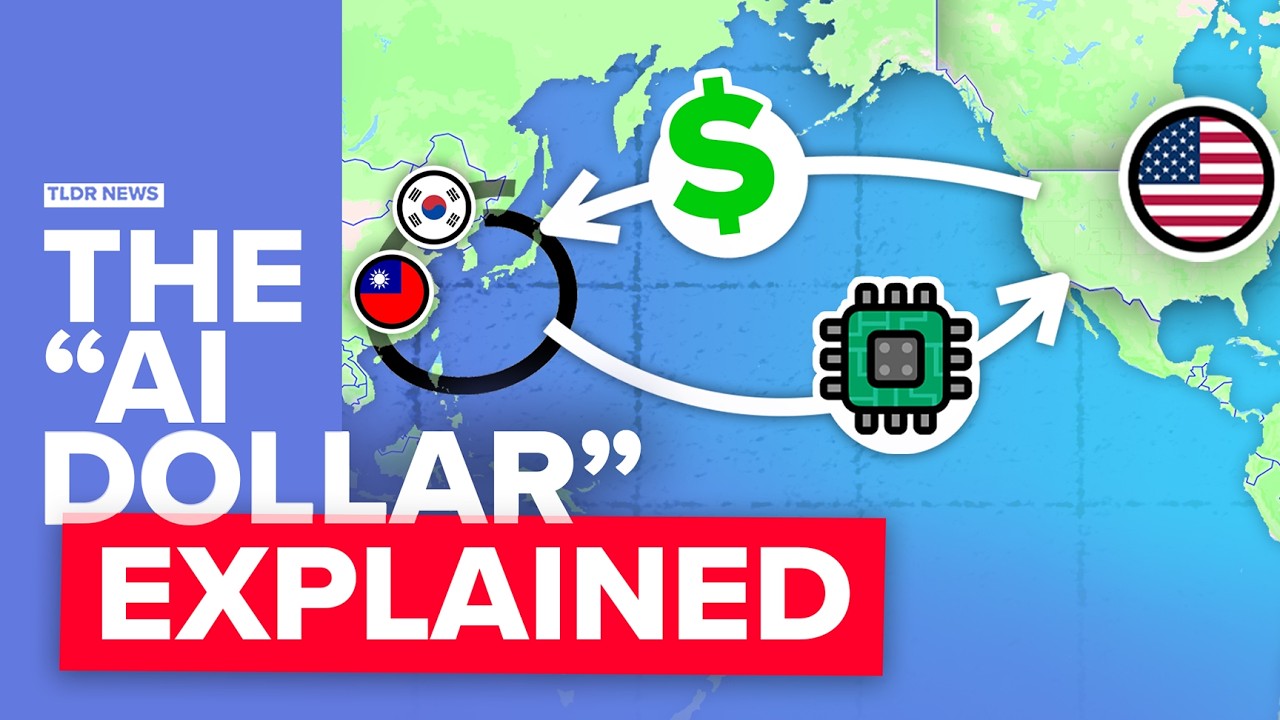
The Rise of the AI Dollar: How Silicon Valley Replaced Saudi Arabia as the Backbone of the US Currency
For decades, the global dominance of the US dollar rested on a single, tangible commodity: oil. The "petrodollar" system, forged in the 1970s, ensured that the world’s most crucial energy resource was traded exclusively in dollars, creating an insatiable global demand for American currency.
For decades, the global dominance of the US dollar rested on a single, tangible commodity: oil. The "petrodollar" system, forged in the 1970s, ensured that the world’s most crucial energy resource was traded exclusively in dollars, creating an insatiable global demand for American currency. That era is ending. A new, intangible asset is now underpinning the dollar’s strength: artificial intelligence.
The shift is not the result of a single policy or treaty, but of a silent, market-driven transformation. The petrodollar was a geopolitical agreement. The "AI dollar" is a technological and economic reality.
The End of the Petrodollar Era
The petrodollar system was born in 1974, when the United States struck a deal with Saudi Arabia. In exchange for military protection and political support, the Saudis agreed to price all oil exports exclusively in US dollars. Other OPEC nations soon followed. The result was a self-reinforcing cycle: any country needing oil had to first acquire dollars, which meant buying US Treasury bonds or holding dollar reserves. This created a permanent, artificial demand for the dollar, allowing the US to run persistent trade deficits without crashing its currency.
That foundation is now cracking. China, the world’s largest oil importer, has been aggressively pushing for yuan-denominated oil contracts. Saudi Arabia has begun accepting yuan for some sales. Russia and Iran now trade oil in rubles, yuan, and even gold-linked instruments. In 2023, the share of global oil trade settled in dollars fell below 80% for the first time in decades.
The petrodollar is not dead, but its monopoly is broken.
The New Backbone: Compute and Data
As the oil-based demand for dollars wanes, a new force has emerged to take its place: the global demand for AI infrastructure. This is not a conspiracy or a government plan. It is the natural result of market economics.
Artificial intelligence runs on three things: data, algorithms, and computing power—specifically, advanced semiconductors and cloud data centers. The United States currently dominates all three. Nvidia, AMD, and Intel produce the world’s most advanced AI chips. Amazon Web Services, Microsoft Azure, and Google Cloud control the majority of global cloud computing capacity. The largest AI models—GPT-4, Gemini, Claude—are trained and hosted on American soil.
The result is a new form of dollar demand. Any company, government, or research institution that wants to build or use cutting-edge AI must pay for American cloud services, American chips, and American software licenses. These transactions are conducted in dollars. A Chinese AI startup training a model on Nvidia chips? It pays in dollars. A European bank using Microsoft’s AI tools? Dollars. A Middle Eastern sovereign wealth fund buying access to American data centers? Dollars.
This is the AI dollar in action.
A Structural Shift in Global Finance
The scale is staggering. In 2024, global spending on AI infrastructure—chips, data centers, and cloud services—is projected to exceed $200 billion. By 2027, that figure could surpass $500 billion. For comparison, the entire global oil market is worth roughly $2 trillion annually. AI infrastructure is on track to become a comparable driver of dollar demand within a decade.
Crucially, this demand is stickier than oil demand. Oil can be sourced from multiple suppliers in multiple currencies. AI infrastructure is far more concentrated. There is no alternative to American cloud providers for high-end AI workloads. There is no substitute for Nvidia’s H100 or B200 chips. Even if a country wants to pay in yuan or euros, it cannot—because the product itself is American.
This gives the US a new, structural advantage in global currency markets. The petrodollar was a political arrangement that required constant maintenance. The AI dollar is a technological monopoly that reinforces itself: the more powerful American AI becomes, the more the world needs it, and the more dollars the world must hold.
The Geopolitical Implications
The implications for global power are profound. Under the petrodollar system, the US had to secure the cooperation of Saudi Arabia and other oil producers. Under the AI dollar, the US is largely self-sufficient. It controls the chips, the cloud, and the algorithms. Other nations are not partners in this system; they are customers.
This creates a new kind of dependency. Countries that fail to secure access to American AI infrastructure risk falling behind economically and militarily. Those that try to build their own alternatives—as China is doing with Huawei and homegrown chips—face a massive technological and capital deficit. The gap is not closing; it is widening.
The AI dollar also changes the calculus of sanctions. Under the petrodollar, sanctioning an oil producer like Iran or Russia had limited effect because oil could still be traded in other currencies. Under the AI dollar, sanctioning access to American cloud services or chip exports is devastating. A country cut off from Nvidia’s chips cannot train advanced AI models. It cannot develop autonomous weapons, advanced logistics, or next-generation financial systems. It is locked out of the future.
Risks and Vulnerabilities
No system is invulnerable. The AI dollar faces three significant risks.
First, technological disruption. A breakthrough in quantum computing or optical chips outside the US could break the American monopoly. China’s progress in chip manufacturing, while slower than hoped, cannot be dismissed.
Second, antitrust and regulation. The dominance of a few American tech giants has attracted scrutiny from regulators in Europe and the US itself. Forced breakups or open-source mandates could weaken the concentration that makes the AI dollar effective.
Third, political backlash. Other nations may see the AI dollar as a form of digital colonialism and attempt to build parallel systems, just as they did with oil. The European Union’s push for digital sovereignty and China’s AI ecosystem are early signs of this resistance.
The Bottom Line
The petrodollar was a 50-year arrangement that defined the global financial order. It is now being quietly replaced by something more powerful and more durable. The AI dollar does not require treaties, military bases, or OPEC meetings. It requires only that the world’s most transformative technology remains American.
For now, it does. And as long as it does, the dollar’s dominance is not just secure—it is stronger than ever. The currency of the 21st century is no longer backed by black gold. It is backed by silicon, data, and the algorithms that run the future.
Related Coverage
The Price of Power: How Sanctions, War, and Climate Chaos Are Reshaping the Global Economy
A global economy built on the promise of open trade and cheap energy is now buckling under the weight of geopolitical conflict, strategic blockades, and a technological gold rush that is straining the very limits of infrastructure. From the closed oil lifeline of the Strait of Hormuz to the drone-struck refineries of Russia and the record-breaking rallies in tech stocks, the global financial system is being pulled in opposing directions. While investors chase artificial intelligence (AI) profits and safe-haven assets like gold, millions of ordinary citizens are facing the harsh realities of inflation, fuel shortages, and a widening gap between the wealthy and the rest [15239].
# The AI Arms Race: How Compute Became the New Currency of Global Power
The artificial intelligence boom has transformed from a technological race into a geopolitical and economic battleground, where control over chips, data, and capital is reshaping the balance of power between states and corporations—while workers and financial markets absorb the shockwaves.
Global Economy on a Knife’s Edge: War, Sanctions, and Energy Chaos Reshape Markets
A world economy built on the promise of open trade and cheap energy is now buckling under the weight of geopolitical conflict, strategic blockades, and a technological gold rush that is straining the very limits of infrastructure. From the closed oil lifeline of the Strait of Hormuz to the drone-struck refineries of Russia and the record-breaking rallies in tech stocks, the global financial system is being pulled in opposing directions. While investors chase artificial intelligence (AI) profits and safe-haven assets like gold, millions of ordinary citizens are facing the harsh realities of inflation, fuel shortages, and a widening gap between the wealthy and the rest.
When Power Trumps People: How War, Climate Chaos, and an AI Debt Bubble Are Reshaping Global Politics
The global order is buckling under the weight of interconnected crises, where the pursuit of geopolitical power and corporate profit is colliding with fundamental human needs, leaving the world’s most vulnerable populations to bear the heaviest burden of inflation, displacement, and violence. From the closed oil routes of the Strait of Hormuz and the escalating aerial war in Ukraine to drought-parched rivers across Europe and famine-stricken regions of Africa, a cascade of emergencies is diverting public resources away from social welfare and toward conflict [15614][15642]. At the center of this turmoil lies a massive arms trade and militarization drive that escalates global insecurity for the benefit of a few, while the financial system itself teeters on an artificial intelligence debt bubble that central banks and sovereign wealth funds warn is overheating [15672].
AI's Power Grab: How the Fight Over Chips, Safety, and Energy Is Redrawing Global Control
Big tech's race to build superintelligent machines is colliding with an energy crunch, a US-China export war, and warnings of catastrophe — and ordinary people are footing the bill.
The AI Bubble Is a Power Play: How Compute, Debt, and Labor Are Reshaping the Global Order
The artificial intelligence boom is not a neutral technological revolution; it is a geopolitical and economic battleground. As the United States and China compete for control over the chips, data, and capital that fuel AI, the contest is redrawing the balance of power between states and corporations—while workers and global financial markets absorb the shockwaves.
Related Editorials
Title: The Quiet Unraveling of Dollar Hegemony
The global financial order is not built on treaties or pacts. It is built on a single currency, the US dollar, which underpins international trade, central bank reserves, and the pricing of commodities from oil to wheat.
The End of Contentment: Why Global Stability Is Fracturing
For decades, a fragile global equilibrium held: cheap energy from Russia, ultra-efficient manufacturing from China, and a security umbrella provided by the United States. This arrangement delivered unprecedented prosperity to the developed world.
Washington’s Fickle Embrace: Why the Gulf States Are Losing Patience with Trump
For decades, the relationship between the United States and the Gulf monarchies has rested on a simple bargain: American security guarantees in exchange for oil stability and regional alignment. Yet, beneath the surface of official summits and handshakes, a quiet but profound erosion of trust is un
The Dollar’s Defiant Surge: Why the World’s Reserve Currency Keeps Getting Stronger
In a global economy often defined by uncertainty, one trend has become remarkably consistent: the relentless rise of the U. S.
OPEC’s Unraveling: Why the Cartel’s Collapse Now Looks All But Certain
For decades, the Organization of the Petroleum Exporting Countries (OPEC) has functioned as the undisputed referee of global energy markets, wielding its members’ vast crude reserves to set prices and stabilize supply. Yet, beneath the veneer of quarterly meetings and production quotas, tectonic fo
The Invisible Fault Line: How an AI Crash Could Unravel the Global Economy
Artificial intelligence is no longer a futuristic concept confined to research labs. It is the silent engine powering modern finance, logistics, and communication.