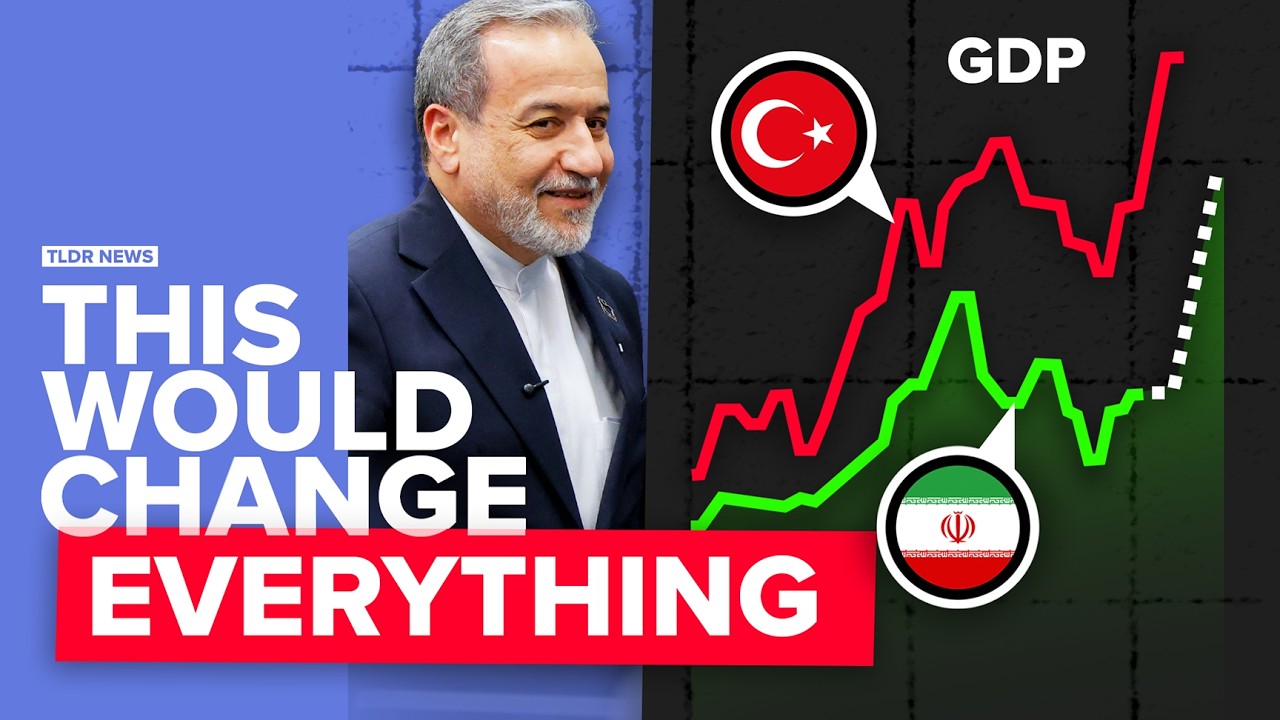
Iran’s Economic Paradox: A Sleeping Giant or a Sanctioned Mirage?
Iran sits on one of the world’s largest reserves of oil and natural gas. It boasts a young, educated population, a strategic geographic position, and a diversified industrial base.
Iran sits on one of the world’s largest reserves of oil and natural gas. It boasts a young, educated population, a strategic geographic position, and a diversified industrial base. Yet, its economy remains crippled by sanctions, inflation, and capital flight. This article examines the fundamental factors that could make Iran’s economy “huge”—and the barriers that keep it from realizing that potential.
The Foundation: Energy and Geography
Iran holds the world’s second-largest natural gas reserves and the fourth-largest proven oil reserves. This energy wealth alone gives it a structural advantage over most emerging economies. Furthermore, Iran’s location—bordering the Caspian Sea, the Persian Gulf, and the Gulf of Oman—makes it a natural transit hub for trade between Asia, Europe, and the Middle East. These geographic and resource assets form the bedrock of any serious growth scenario.
The Human Capital Factor
Demographics matter. Iran has a population of nearly 90 million, with a median age of about 31 years. More importantly, over 60% of its population is under 35. The country has a high literacy rate and a strong emphasis on engineering and science education. This creates a large, relatively skilled labor force that can support advanced manufacturing, technology, and services sectors—if the economic environment allows them to thrive.
The Hidden Economy: Resilience Under Pressure
Despite decades of sanctions, Iran’s economy has not collapsed. It has adapted. A vast informal economy—estimated by some analysts to be 20-30% of GDP—operates outside official channels. Domestic industries, from automotive parts to petrochemicals, have developed import-substitution capabilities. The country also has a sophisticated, though volatile, stock exchange and a network of small and medium enterprises. This resilience suggests that, under normalized conditions, the economy could expand rapidly.
The Critical Barrier: Sanctions and Isolation
The primary obstacle is the international sanctions regime. These restrictions cut Iran off from the global financial system, limit its oil exports, and deter foreign direct investment. As a result, Iran’s economy suffers from chronic inflation (often above 30%), a weak currency, and high unemployment, especially among youth. Without sanctions relief, the country cannot access the technology, capital, and markets needed to scale its potential.
What a “Huge” Economy Would Look Like
If sanctions were lifted and Iran reintegrated into global trade, analysts project its GDP could double within a decade. Key growth drivers would include:
- Energy exports: Unlocking full production capacity.
- Transit and logistics: Leveraging the “North-South” corridor.
- Technology: A young, educated workforce could drive a startup ecosystem.
- Tourism: Iran’s cultural and historical sites are underutilized.
However, even then, structural reforms—such as reducing state control, curbing corruption, and stabilizing the currency—would be essential. The country’s potential is real, but it is not automatic.
Conclusion
Iran’s economy possesses all the raw ingredients for massive growth: resources, people, and geography. But those ingredients remain locked inside a cage of geopolitics and mismanagement. The question is not whether Iran could be a huge economy. It clearly could. The question is whether the political conditions—both domestic and international—will ever allow it to become one.
Related Coverage
Iran Says Strait Closed, But 55 Ships Sailed Through Anyway
Iran claims it has shut the Strait of Hormuz again, yet dozens of ships and Iranian oil tankers are still moving through the key waterway, creating a confusing standoff over global oil supplies.
Iran’s New President Blasts Global Silence on Israel, Demands $6 Billion Freeze-End
Iran’s new president, Masoud Pezeshkian, has slammed the international community for staying silent on Israeli military actions while simultaneously demanding the release of $6 billion in frozen Iranian funds held in Qatar. The twin demands come as regional leaders warn of a wider war and Israel threatens another strike on Iran.
Trump’s ‘Economic D-Day’ Hits Iran as $93B Oil Windfall and Secret Hormuz Escort Missions Rewrite Global Trade
The United States has formally shifted its confrontation with Iran from open military conflict to a sweeping economic war, with President Donald Trump announcing a new wave of sanctions he called an “economic D-Day” [223660]. The move comes as a secret American naval operation keeps millions of barrels of oil flowing through the Strait of Hormuz each night, even as the region’s instability forces a permanent realignment of global supply chains and financial markets [223406][223191].
Sanctions Squeeze: Trump’s Economic War on Iran Hits Ordinary Citizens as Hormuz Stays Shut
Sanctions are back as the White House pivots from failed military strikes to a full-court economic press on Tehran, with oil prices hovering near $90 a barrel and the Strait of Hormuz still blocked after five months.
Trump’s “Economic D-Day”: Will Iran’s Oil Threat Backfire?
Iran’s president says the country is in a “full-scale economic, military, and security war” as Washington prepares to unleash what Donald Trump calls the “most devastating economic operation ever” — while Tehran warns allies that joining the US pressure campaign will make them enemies.
Iran Tells Trump: Pick War or Talks as Oil Climbs for 2nd Day
Iran says the choice between war and diplomacy is now up to US President Donald Trump, as stalled nuclear talks push oil prices higher for a second day.
Related Editorials
Why Trump’s Iran Oil Sanctions Will Likely Backfire on the Global Economy
In a move that has sent shockwaves through global energy markets, the Trump administration has reinstated a "maximum pressure" campaign against Iran, targeting the country’s oil exports with renewed vigor. The strategy aims to choke off Tehran’s revenue, particularly by blocking shipments through t
The Hidden Crisis That Could Decide the Next Iran War
For years, the public debate on Iran has focused on centrifuges, enriched uranium, and the timeline to a nuclear weapon. Yet, a deeper, more immediate crisis is unfolding beneath the surface—one that receives far less attention but could prove decisive in any future conflict.
The Iran Deal’s Hidden Escape Clause: How the World’s Toughest Sanctions Could Vanish Overnight
In 2015, world powers celebrated the Joint Comprehensive Plan of Action (JCPOA)—the Iran nuclear deal—as a landmark of nonproliferation. But beneath its diplomatic veneer lies a critical secret that could render the agreement meaningless.
Britain’s Perfect Storm: How Record Oil Profits and a Hawkish Bank Could Trigger a Recession
The British economy is walking a tightrope. On one side, energy giants are posting historic windfall profits.