Iran Strikes Back: US Says Strait of Hormuz "Not Under Iranian Control"
The United States has launched a third round of major attacks against Iran, after Tehran closed the Strait of Hormuz and fired on a ship following an "unauthorized route." The escalation has spread to several Middle Eastern countries with US bases, including Qatar, Kuwait, Bahrain, and Jordan.
Iran responded on Sunday with missiles and drones to the latest US strikes, which began after a peace agreement signed on June 18. Despite Iran's announcement that the strategic waterway is closed, US President Donald Trump and the US Central Command (Centcom) said the strait remains open "for all vessels" traveling legally.
"Iran does not control the strait. Traffic is flowing," Centcom posted on X.
Iran's Revolutionary Guard reported attacks on US air bases in Jordan and Qatar. The base in Qatar, which hosts the largest US troop presence in the Middle East, saw the most serious incidents. Qatar's Interior Ministry said at least three people, including a child, were injured by falling shrapnel from intercepted Iranian projectiles.
Qatar's Transport Ministry has temporarily suspended all maritime activities "in the interest of public safety."
Iran also claimed attacks on a Patriot missile system in Kuwait, as well as a US ammunition depot and radar station. In Bahrain, it targeted US communication systems and radar.
Iran's parliament speaker and chief negotiator, Mohamad Baqer Qalibaf, warned the US that "the era of unilateral agreements is over." He posted on X: "We told you: keep your word or pay the price."
Another Iranian official, Ebrahim Rezaei, said: "We have taken control of the strait by force, and by force we will preserve it."
Kuwait called the Iranian offensive a "very serious escalation" that undermines diplomatic efforts for de-escalation. Oman also protested the attacks, summoning Iran's ambassador. The Palestinian presidency condemned the strikes, expressing solidarity with affected Arab nations.
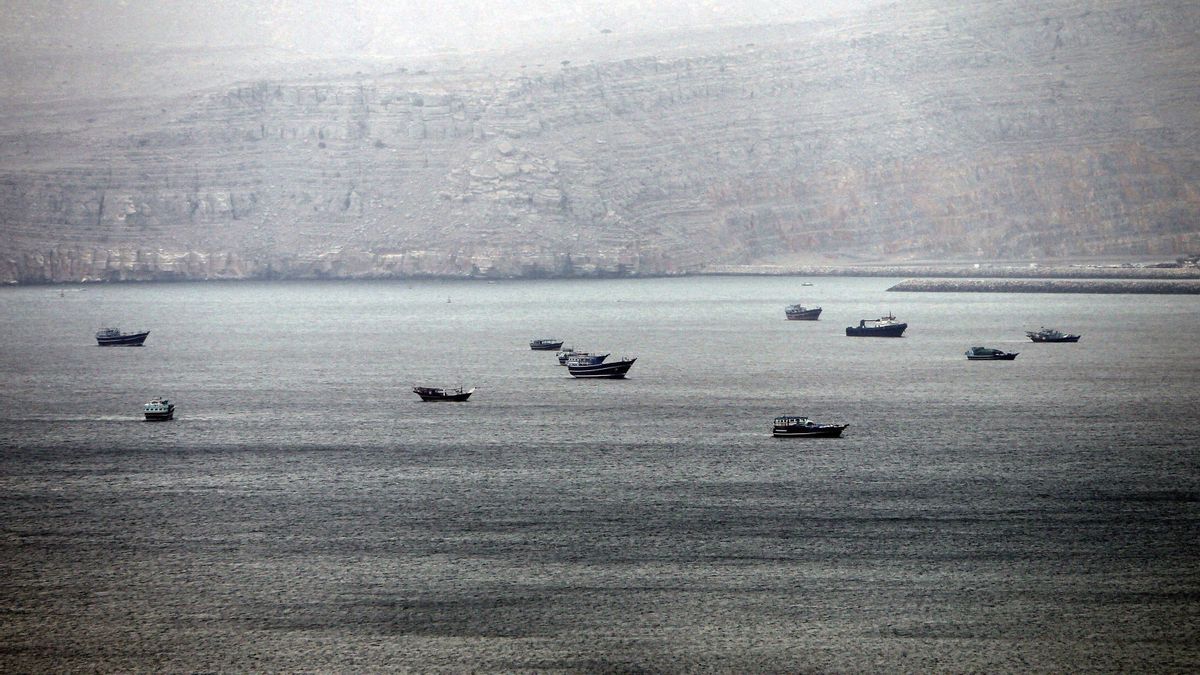
On Sunday, little visible traffic was recorded in the strait, according to a Bloomberg report.
The weekend's attacks began when Iran closed the strait after a ship on an "unauthorized route" was hit by a warning shot. The US then announced a third round of strikes, saying it is "imposing a high cost" on Iran for attacking civilian sailors and commercial ships.
A Cyprus-flagged container ship suffered "significant damage to the engine room," and one civilian crew member is missing, according to US Central Command.
The new Supreme Leader of Iran, Mojtaba Jamenei, promised revenge for the assassination of his father, Ayatollah Ali Khamenei, in the war's first strikes on February 28. "Revenge is the will of our nation," he said.
Iran's Foreign Minister, Abbas Araghchi, accused the US of violating the temporary agreement by ending exemptions that allowed Iran to sell oil in US dollars. "The reality is this: there can only be mutual compliance," he wrote on X.
Trump has threatened further strikes, writing on social media that "a thousand missiles are ready to fire" if Iran carries out its threats. He declared the ceasefire over but said the US will continue negotiations.
The US strikes on Iran over two days killed at least 17 people and wounded 115, according to Iran's Health Ministry. Additional casualties are expected from this weekend's attacks.