Title: Volunteers Race to Fill Aid Gap in Ceuta: "People Are Starting to Break Down"
**Article:**
Two weeks after thousands of migrants crossed into the Spanish enclave of Ceuta from Morocco, a group of volunteers is stepping in to provide basic aid where they say institutional help is falling short.
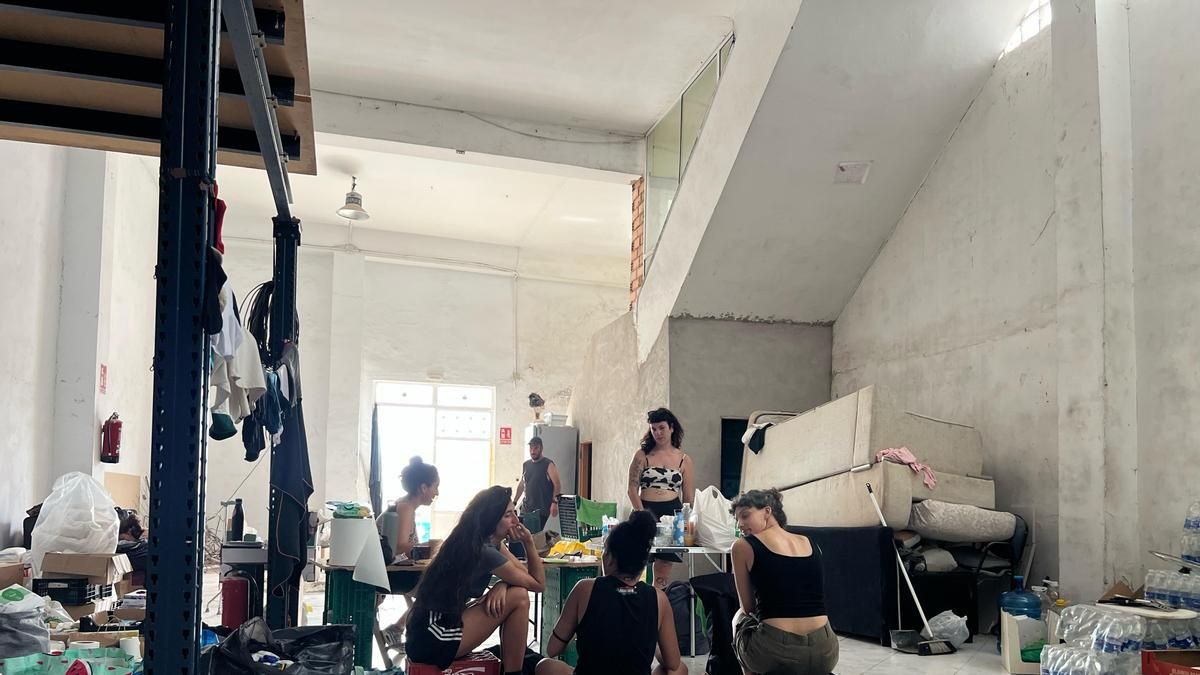
In a warehouse near Tramaguera Beach, volunteers from the collective Border Resistance sort through piles of donated clothing. They are assembling kits—a top, a bottom, and a warm layer—alongside diapers, food, and hygiene products. The goal is to deliver help quickly to migrants who remain hidden across the city.
Many migrants are staying in remote areas, away from official aid centers. Some have been wearing the same clothes for 15 days. Others need food, medicine, or treatment for injuries.
Ana Clemente Vivancos, a volunteer, says many migrants only come out of hiding when they recognize the volunteers' vehicles. "They are ashamed to come out. They smell bad. They don't want people to see them in that condition," she said.
Border Resistance was founded in December 2024 to document human rights violations related to migration policies. Its usual work involves collecting testimonies. But the situation in Ceuta has pushed the group into humanitarian aid, a new role for them.
The collective set up donation points across Spain, including in Madrid, Barcelona, Seville, and Bilbao. They have raised around 7,000 euros through a campaign with the Zambra Málaga Association. Volunteers are also paying for travel and lodging out of their own pockets.
Once supplies reach Ceuta, the challenge is finding the people who need them. The group has about ten people on the ground preparing 200 meals a day, plus breakfasts, hygiene kits, and bags of clothes.
Volunteers also provide basic first aid for injuries from falls on rocky terrain. Some migrants avoid official health services out of fear.
Ana reports that patrols have increased in areas where migrants are hiding. "That pressure is having psychological consequences. People are starting to break down," she said.
The situation of unaccompanied minors is a major concern. Ana says shelters are overcrowded and some children remain outside the system. She has found girls with fever, cough, and no access to medicine. She is calling for transfers to the mainland to relieve pressure on Ceuta's centers. "Children are our responsibility. It is our obligation to protect them," she said.
Shadi Boukhari, co-founder of Border Resistance, previously documented the 2022 events in Melilla, which he called a "massacre." He says what is happening in Ceuta is different—a "humanitarian crisis."
Boukhari insists that distributing food and clothing should not be the job of volunteer groups. Other organizations, including No Name Kitchen, Cruz Roja, and local neighborhood networks, are also involved. But he warns that solidarity has limits.
"We can have a thousand NGOs in Ceuta, but we cannot reach everyone," he said. He is calling for a formal institutional response to guarantee food, water, shelter, healthcare, and protection for those in need.