Sweden's Election Shocker: Far-Right Falls, But a Government Is Still Out of Reach
Sweden's Social Democrats won the most votes in Sunday's general election, but the result is their worst in a century. The far-right Sweden Democrats lost support for the first time. And after a night of tense, extremely close counting, no one yet knows who will govern.
**A razor-thin lead**
With 99% of votes counted, the progressive bloc — the Social Democrats, the Left Party, the Greens and the Centre Party — holds 176 seats. The conservative bloc holds 173. That is a difference of just 0.45 percentage points, or about 28,600 votes.
The final result may not be clear until Wednesday. Votes cast early and abroad, at embassies and consulates, still have to be counted. These ballots could shift seats in Parliament, as happened after the 2022 election. Still, analysts at Sweden's public broadcaster SVT expect the current result to hold.
**A bittersweet win for the Social Democrats**
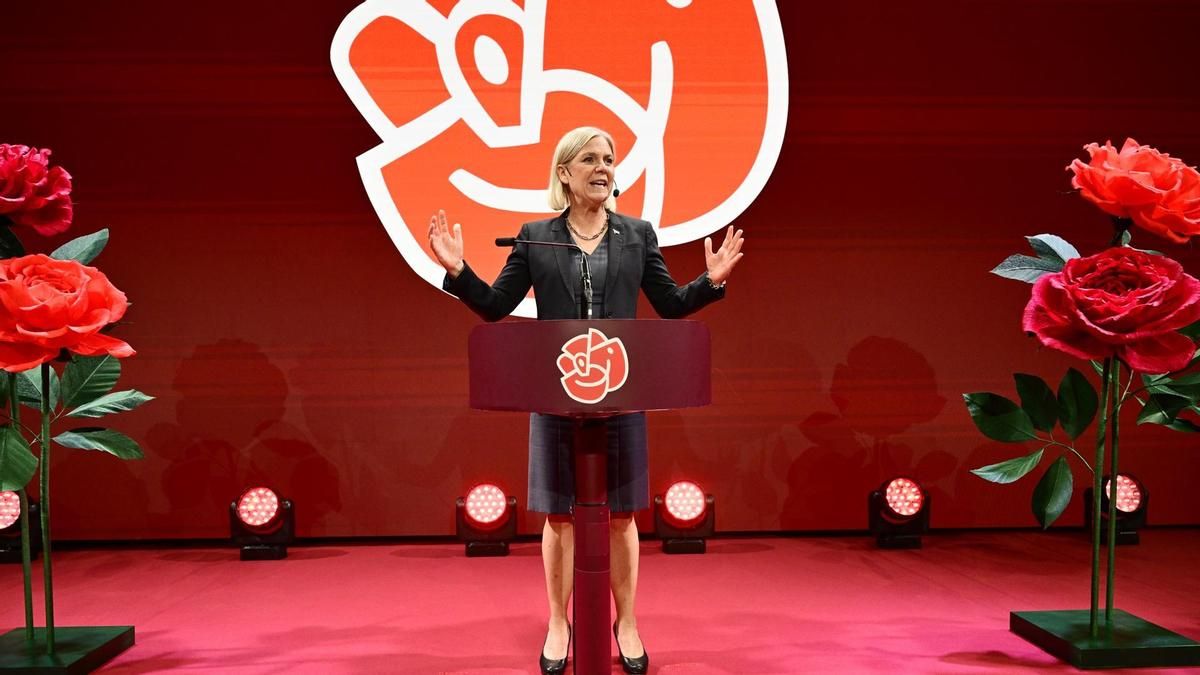
The Social Democrats, led by Magdalena Andersson, remain Sweden's largest party. But they are also the only opposition party that lost votes. Andersson has asked supporters to wait for the final count. She said her party is "ready to take responsibility for the result" and to "try to form a new government."
Her task will not be easy. The progressive bloc is deeply divided.
The Left Party had a strong night. It won 8.2% of the vote and 29 seats, making it the fastest-growing party in Parliament. Its best results came in big cities, where the Social Democrats lost the most ground. Left Party leader Nooshi Dadgostar has demanded that the Social Democrats take her party's rise seriously and include it in any government.
But the Centre Party (7.1%, 25 seats) refuses to work with the Left Party. During the campaign, it accused Left Party members of antisemitism and of supporting Palestinian groups labeled as terrorist organizations.
Andersson could instead look to the political center, especially the Liberals. But the Liberals say they will not support a government they are not part of. The Left Party, for its part, rejects any deal with the Liberals' controversial leader, Simona Mohamsson. If the Social Democrats tried to govern alone as a minority, the Left Party would be unlikely to back them.
**Far-right rise stalls**
The gloomiest mood of the night was at the headquarters of the Sweden Democrats. The far-right party had hoped to enter government for the first time. Instead, it lost its place as the largest party in the conservative bloc — and lost more support than any other party in Parliament.
The party, known for its xenophobic, populist and nationalist rhetoric, had been gaining ground since it entered Parliament in 2010. This time, that rise stopped. Voters' priorities also shifted during the campaign. Fighting organized crime and immigration became less important, while public services and the cost of living moved to the top.
**Moderates want to keep power**
For Prime Minister Ulf Kristersson's Moderates, election night went better than expected. Polls had predicted a disappointing result. Instead, the party regained its position as the leading conservative force, a spot it lost to the Sweden Democrats in 2022.
Kristersson admitted the progressive bloc had won more seats. But he pointed to "many irreconcilable positions" between those parties and questioned whether they could reach a deal.
He said he was ready to look for an alternative majority in Parliament, "to find a viable coalition that guarantees support for the economic policy Swedish voters have approved" over the past four years. One option: pull the Centre Party into the conservative bloc. But the Centre Party rejects any cooperation with the far right — whose support the Moderates would still need.