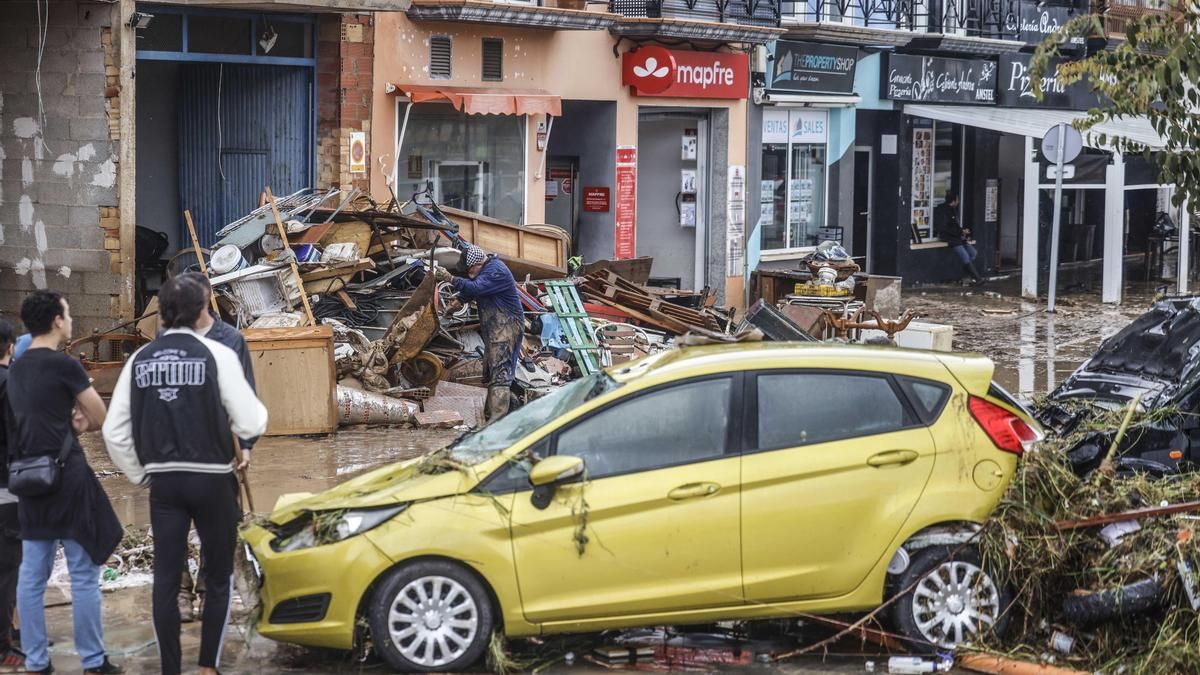
Climate Risk Could Sink Investments in Valencia, EU Warns
The European Union has a stark warning for regions like Valencia: prepare for climate change or risk losing investment.
"Companies will think twice before investing in a region like Valencia, or many others, if it is not better prepared to face the effects of climate change," a senior EU official said, following another episode of torrential rains in the region last week.
The warning came Tuesday as the European Commission presented its new EU Climate Resilience Framework. The plan aims to strengthen Europe's ability to anticipate climate risks. It cites scientific evidence that the world is on track to warm 1.5°C above pre-industrial levels by 2030, 2°C by 2050 and 3°C by 2100.
The economic stakes are already clear. According to the Commission, more than 35,000 people have died from heat-related causes, including over 5,000 in Spain alone. Climate-related damage between 2022 and 2025 cost an estimated €200 billion — about €50 billion per year. Heat alone is projected to have cut 0.17% of GDP between April and September this year, a cost of €19 billion. "These are very conservative estimates," the official said.
The core problem, Brussels argues, is insurability. "What cannot be insured is becoming something that cannot be invested in," the official said. "Authorities and, of course, companies are increasingly aware of this."
The warning comes as the Commission has spent months scaling back its own green agenda. It recently proposed relaxing the emissions trading system (ETS), giving companies more time to reach net-zero emissions, and delayed by one year rules requiring oil, gas and coal importers to cut methane emissions — the second-most potent greenhouse gas after CO2.
The new framework offers practical tools rather than new funding. These include a European Climate Viewer, an interactive map of projected climate risks across the continent developed by the European Centre for Medium-Range Weather Forecasts (ECMWF). A Navigator of Climate Resilience Tools, built by the European Environment Agency, will help users find resilience tools based on their location, sector and specific risks. A Solutions Explorer will showcase tested adaptation solutions from the EU Mission on Climate Adaptation.
No additional money is attached. The Commission says funding is already covered by the proposed multiannual budget, which sets a target of spending 35% on climate action and nature — though countries have not yet agreed on the budget.
European Commission Vice-President for Competition Teresa Ribera, addressing parties that deny the climate crisis, said: "Climate change is not a hoax. It is not only real, it is a powerful deadly agent. It kills people. It also destroys wealth and infrastructure." She cited a European Central Bank study finding local economic output runs 1.5 percentage points below normal two years after a summer heatwave. If the five hottest years in each country between 2014 and 2024 became the norm from 2030, cumulative GDP losses could reach 5% to 7% in the most exposed economies, with France, Italy, Germany and Spain losing between $120 billion and $240 billion, she said.
Adapting Europe's infrastructure and economy will require about €70 billion a year in investment, according to the Commission. But it estimates returns on climate adaptation can exceed ten times the initial value through avoided losses and damage. The global market for adaptation solutions is expected to quadruple to €3.5 trillion by 2050.
Climate Commissioner Wopke Hoekstra noted that Spain has long experience with droughts and heatwaves. But in recent years, torrential rains have overwhelmed sewer systems, discharging untreated wastewater and urban pollutants into rivers and the sea, degrading water quality and sometimes forcing beach closures. Barcelona, Madrid and Alicante are responding with stormwater retention tanks and sustainable urban drainage systems, including permeable pavements and floodable green spaces that reduce runoff and retain water.