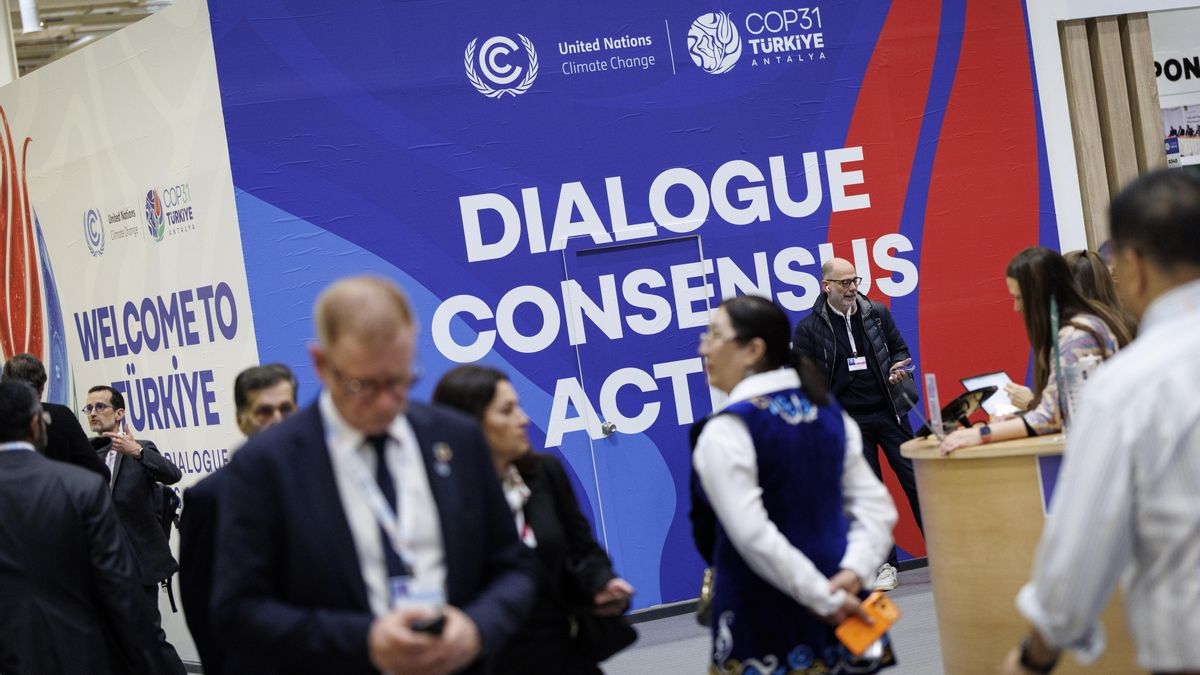
Oil Fever at Climate Summit: Host Turkey Announces New Drilling on Day One
Turkey opened the COP31 climate summit on Monday by announcing it will extract more oil. The host country said it has found new oil fields in the southeast and plans to pump 100,000 barrels per day by the second half of 2027.
The timing was awkward. On the same opening day, Qatar's state oil company QatarEnergy said it will explore for oil and gas off the coast of Namibia, in an area of 11,400 square kilometers and at depths of up to 2,300 meters. ExxonMobil, the world's second-largest oil company, also announced it signed a preliminary agreement with Venezuela's state oil company to evaluate oil opportunities in the country, which holds the largest reserves on the planet.
The announcements clash with the purpose of the summit. Just three years ago, at COP28 in Dubai, governments agreed to a "global effort" to "transition away from fossil fuels." It was the first time a COP decision mentioned the cause of the climate crisis: the intensive use of oil, gas, and coal. Scientists say about 60% of remaining oil must stay in the ground to avoid the worst effects of climate change. Researchers at University College London wrote in *Nature* that oil and gas production must fall 3% every year until 2050.
Instead, producer states plan to extract up to 100% more fossil fuels by 2030. The International Energy Agency expects oil demand to recover next year from the shock caused by the war in Iran, rising by 7.7 million barrels per day — and CO2 emissions will rise with it.
Oil companies are profiting. By September, the five largest Western oil companies had earned more than 100 billion euros in net profit, double their 2025 figure. Saudi Aramco earned 90 billion euros, up 34%, and PetroChina reached 20 billion euros, up 21%.
ExxonMobil CEO Darren Woods defended the business: "The world needs more fossil fuels to raise global living standards." On climate change, he said: "We must focus on reducing emissions instead of eliminating fossil fuels."
Simon Stiell, secretary-general of the UN Climate Change Conference, offered a different view on Tuesday in Antalya. "Countries face a choice: electrify or suffer a shock," he said. "Reconfigure the world economy for the electric age, or accept the continuous pain that fossil fuels impose on families, businesses, and national budgets."