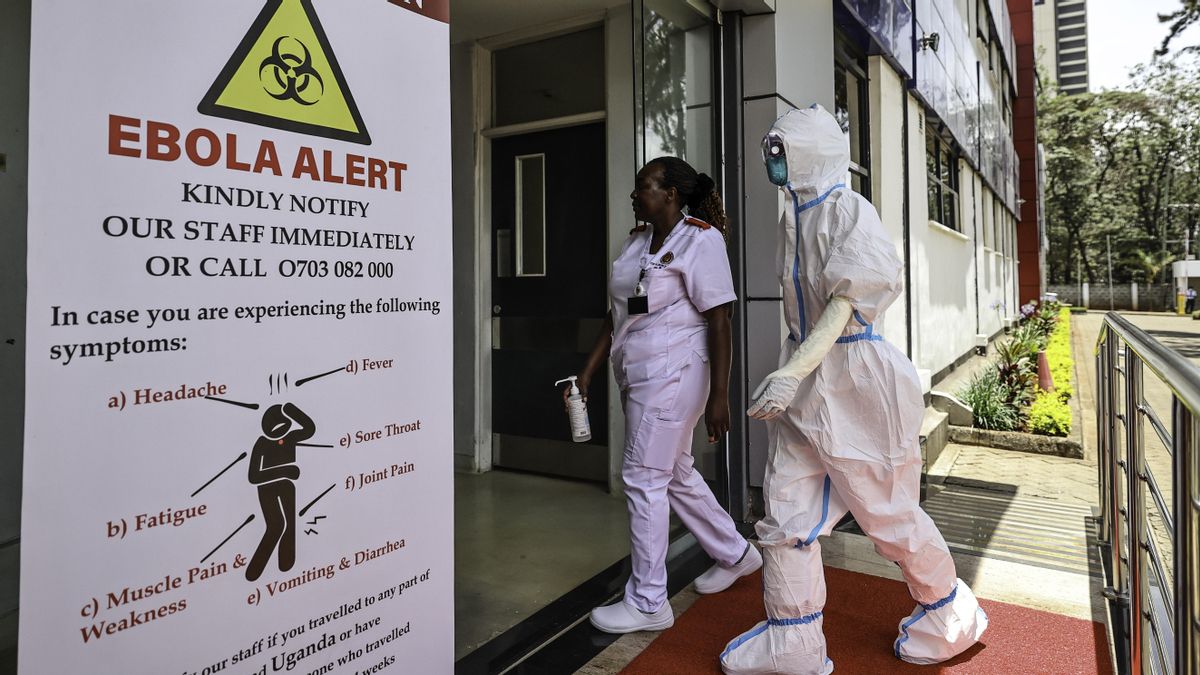
Ebola Outbreak Could Become the Deadliest in History
The Ebola outbreak in the eastern Democratic Republic of the Congo (DRC) has surpassed 11,700 cases and entered a dangerous plateau. According to the World Health Organization (WHO), there are 11,793 confirmed infections and 5,779 deaths across dozens of health zones, with a fatality rate near 49%.
Six months after the Bundibugyo ebolavirus appeared, the epidemic shows no sign of slowing. Cases have also been exported to Uganda, Kenya, Nigeria and France, raising alarm. The current figures remain below the West African outbreak of 2014–2016, which saw about 30,000 infections and 11,000 deaths. But the recent trend points to an unprecedented scenario.
After peaking in August 2026, transmission has stalled for three months at 460 to 480 new cases per week. Experimental vaccines are proving insufficient against an emergency driven by overlapping crises: armed conflict, hunger, human mobility and a slow clinical progression that delays early diagnosis.
If medical teams cannot control the spread and the epidemic persists for another year at this rate, it will become the worst Ebola disaster ever recorded.
**The "layer cake" effect**
To understand why the pathogen is advancing unchecked, experts point to a "layer cake effect" operating in the population and within the health system. In complex risk management, this describes what happens when multiple layers of vulnerability and operational failures stack up without coordination, multiplying danger instead of containing it.
In eastern Congo, this occurs on two levels. First, a layer cake of overlapping structural crises: Ebola is hitting on top of decades of armed conflict, forced displacement, extreme poverty, acute malnutrition and active cholera and measles outbreaks. These weaken both biological resistance and community resilience.
Second, an institutional layer cake of failed health barriers. Containing a filovirus requires stacking early diagnosis, isolation, contact tracing, clinical care, border control and vaccination across governments, agencies, donors and medical teams. When these entities operate as bureaucratic layers with overlapping responsibilities, rigid protocols and fragmented funding, the system loses agility. The aligned gaps in each barrier let the virus pass through without a firewall.
**Slower clinical progression**
A key biological factor adds to the structural problems. Unlike the fast-moving and highly lethal Zaire ebolavirus, the Bundibugyo species shows a slower progression to severe illness.
This clinical pattern matters for several reasons. First, it multiplies silent transmission. Ebola spreads from person to person only when symptoms are present, and early signs of Bundibugyo Ebola—fever, muscle pain and fatigue—mimic malaria. This allows sick people to maintain normal routines and travel before seeking hospital care.
When suspected, patients must be quarantined for the full three-week incubation period to avoid unidentified active cases. Because Bundibugyo has no approved vaccines or monoclonal antibodies, detecting these mild symptoms early and isolating the patient is the most critical tool for cutting transmission.
The positive side of its slow progression is that it widens the clinical window to save lives through aggressive intravenous hydration, electrolyte control and shock management, reducing mortality compared to Zaire.
**Treatment and diagnostic gap**
Over the past decade, effective vaccines and monoclonal antibodies have been developed, but this arsenal was designed almost exclusively against Zaire ebolavirus. When the 2026 epidemic broke out with Bundibugyo ebolavirus—a distinct species with its own clinical and virological features—no authorized immunizations or specific therapies existed in the affected areas.
A decisive obstacle was added to this gap: the lack of rapid, universal diagnostic tests in rural clinics capable of detecting any filovirus from day one. This allowed the pathogen to circulate silently for weeks before epidemiological alerts were activated.
**Collapse of contact tracing**
Stopping Ebola requires quickly identifying each patient and isolating close contacts before they develop symptoms, through integrated epidemiological surveillance systems.
At the epicenter, this mechanism is nearly broken. Information indicates that only 11% of confirmed cases come from contact lists under follow-up—far below the 95% minimum threshold needed to cut transmission.
As a result, health teams detect 89% of infections outside surveillance chains, often when the patient has already died or exposed dozens of people. About two-thirds of deaths occur in community homes rather than treatment centers.
Social stigma and fear of hospital isolation discourage many families from seeking medical help, perpetuating unprotected home care and unsafe burials.
**War, distrust and humanitarian syndemic**
Ituri and North Kivu, the hardest-hit provinces, are each the size of a small European country. They lack basic infrastructure and have been devastated by armed conflict for decades. Recurrent attacks on health teams and triage centers frequently interrupt contact tracing and volunteer recruitment for vaccine clinical trials.
Beyond physical violence, deep historical distrust of state authorities and external interventions creates fertile ground for misinformation and community resistance.
Severe malnutrition also compromises patients' immune responses. The overlap of febrile and gastrointestinal conditions caused by cholera and measles overwhelms resource-starved hospitals in a context where armed conflict and public health converge fully.
**From artisanal mines to airports**
Although Ebola does not travel through the air but through direct contact with bodily fluids, it advances efficiently through human movement networks, driven by transport corridors and itinerant populations linked to artisanal mining. In Ituri alone, more than 16,000 people cross international borders every day. Closing official crossings backfires by diverting travelers to informal routes without health screening.
Modern transport connectivity has also been evident in the export of infections to neighboring countries and destinations connected by air, confirming that in an era of global interconnection, no local outbreak remains isolated.
The final determining factor is linked to international budgets. Despite the magnitude of the emergency, global funding shortfalls of tens of millions of dollars persist. These force cuts to surveillance and health control points on key migration routes and limit operational capacity on the ground.
Previous epidemics show that Ebola resurges every time global attention fades and resources decline before completing 42-day surveillance cycles without new infections.
Without coordinated dismantling of the entire layer cake sustaining the crisis—ensuring security, nutrition, universal diagnosis, community trust and sustained funding—experimental vaccines against a virus moving faster than the institutional response will keep arriving too late.
*About the author: Raúl Rivas González is a professor of Microbiology and a member of the Spanish Society for Microbiology at the University of Salamanca.*