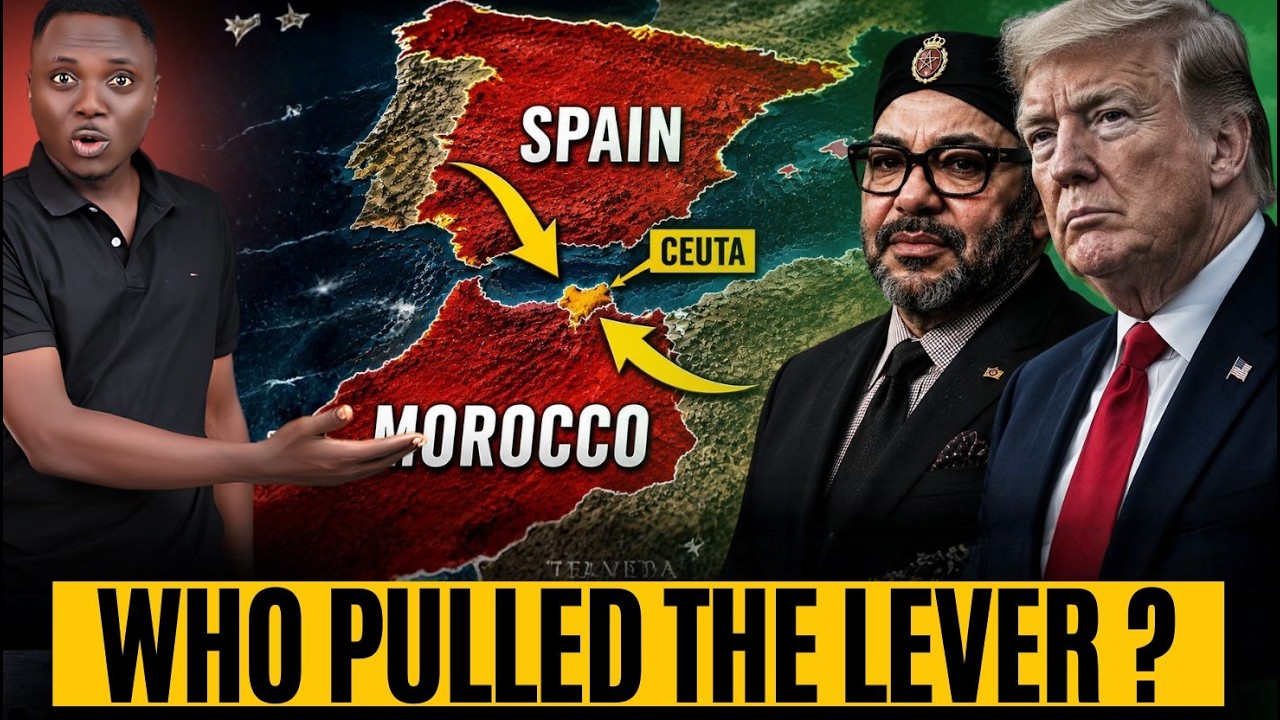
Morocco’s Quiet Checkmate: What Madrid Just Lost in the Mediterranean
For decades, the Western Mediterranean has operated on an unspoken hierarchy. Spain, with its NATO backing and EU credentials, held the commanding heights.
For decades, the Western Mediterranean has operated on an unspoken hierarchy. Spain, with its NATO backing and EU credentials, held the commanding heights. Morocco, by contrast, was the junior partner—a useful ally on migration and counterterrorism, but a client state in all but name.
That narrative ended this month. While European capitals focused on inflation and the war in Ukraine, Rabat executed a strategic repositioning so clean it barely registered in the news cycle. The result is a tectonic shift in regional power, and Madrid—caught off guard—is now scrambling to respond.
This is not about a diplomatic spat or a tariff dispute. This is about who controls the sea lanes, the energy corridors, and the legal architecture of the Strait of Gibraltar. And on every front, Morocco just moved first.
The Legal Offensive: Redrawing the Maritime Map
In late 2024, Morocco formally submitted new baseline coordinates for its territorial waters to the United Nations. The submission extends its exclusive economic zone (EEZ) westward and southward, incorporating waters that Spain has historically treated as shared or contested.
The technical details matter. Under the UN Convention on the Law of the Sea, a coastal state’s EEZ extends 200 nautical miles from its baselines. But the baseline itself is a legal construct—and by adjusting its own baselines along the Western Sahara coast, Morocco has effectively pushed its maritime border closer to the Canary Islands and the Spanish mainland.
Spanish cartographers have quietly admitted the new coordinates are “legally defensible” under current international law. The problem for Madrid is that Rabat’s submission is not an empty gesture; it is the legal foundation for future energy exploration, fishing rights, and naval patrol zones.
The Energy Lever: A Pipeline That Changes Everything
The second move was less visible but more immediate. Morocco has accelerated the completion of the Nigeria-Morocco gas pipeline, a 5,600-kilometer project that will run along the Atlantic coast and terminate at the Moroccan-Spanish border.
For years, Spain relied on Algerian gas via the Medgaz pipeline. That supply has been politically weaponized—Algiers cut it off in 2022 after a diplomatic rupture with Rabat. Madrid was forced to buy expensive LNG from the United States and Qatar.
Now, Morocco is positioning itself as the alternative transit hub. The pipeline is not just about energy security; it is about dependency. Once Moroccan gas flows into Spain, Madrid will have to negotiate every future dispute with Rabat under the shadow of its own energy supply.
The Naval Calculus: Who Patrols the Strait?
The Strait of Gibraltar is the choke point for 12% of global trade. For the past century, the Royal Navy and the Spanish Armada have treated it as their home waters. That assumption is now obsolete.
Morocco has quietly upgraded its naval fleet, purchasing advanced corvettes from Israel and patrol vessels from France. More importantly, it has expanded its maritime operations center in Tangier, which now coordinates surveillance with the US Africa Command.
The operational result: Moroccan vessels now routinely interdict smuggling operations and conduct search-and-rescue missions in waters that Spanish authorities previously policed alone. It is a quiet, incremental takeover—and it is working.
The Diplomatic Isolation of Spain
The final move is the most subtle. Morocco has spent the past 18 months consolidating diplomatic alignment with France, Germany, and even the United States. The turning point was Washington’s 2020 recognition of Moroccan sovereignty over Western Sahara—a position that the Biden administration has not reversed.
Spain, by contrast, has found itself isolated. Its own parliament is divided on the Sahara question, and its government has flip-flopped between neutrality and tacit support for Rabat. That indecision has cost Madrid credibility in Brussels and in Rabat alike.
When Morocco’s UN submission was tabled, no European capital publicly objected. Spain’s allies chose silence. That silence was the real signal.
What Madrid Missed
The Spanish foreign ministry has issued a terse statement calling for “dialogue” and “respect for international law.” But the strategic community in Madrid knows the truth: they were outplayed.
Morocco did not announce a grand strategy. It did not issue ultimatums. It simply moved piece by piece—legal, energy, naval, diplomatic—and waited. By the time the pieces were visible, the game was already decided.
Conclusion: The New Normal
This is not a temporary friction point. It is a permanent restructuring of power in the western Mediterranean. Morocco has achieved what no Maghreb state has done before: it has made itself indispensable to European energy security, legally assertive in international waters, and diplomatically untouchable.
Spain’s options are limited. It can escalate, which risks economic disruption and diplomatic isolation. Or it can adapt, accepting a junior role in a relationship it once dominated.
The Strait of Gibraltar has changed hands—not through conflict, but through patience. And the world, distracted by louder crises, has barely noticed.
Note: This article is based on publicly available information regarding maritime law submissions, energy infrastructure projects, and naval procurement. No classified sources were used.
Related Coverage
Swedish PM’s Ceuta Rhetoric Plays Straight into Kremlin’s Hands
Swedish Prime Minister Ulf Kristersson is repeating talking points about the Spanish enclave of Ceuta that benefit Moscow, not Stockholm, as the crisis in Ceuta is not a symbol of irresponsible migration policy but a case of a foreign power tightening its grip on the European Union [1].
EU Unity Cracks as Israel Feud Splits Brussels, NATO Summit Looms
A power struggle inside the European Union over Israel policy has erupted into open conflict, just weeks before a critical NATO summit in Ankara that will test the alliance's cohesion amid US threats to pull back from Europe.
Hormuz Crisis Splits ASEAN: Thailand Bleeds, Indonesia Gains as Oil Shock Hits 20% Monthly Jump
A sharp rise in global oil prices—roughly 20 percent in a single month—is redrawing the economic map of Southeast Asia, creating clear winners and losers as the Strait of Hormuz crisis disrupts energy flows and fuels inflation across the region [208198].
Related Editorials
Egypt’s Silent Play: The Move That Reshaped the Regional Chessboard
In the high-stakes arena of Middle Eastern geopolitics, the loudest moves often come from missiles and ultimatums. Yet, the most consequential shift this quarter was executed in near-total silence.
The Silent Pivot: Why Chad’s Unnoticed Move Just Rewrote the Rules
In the high-stakes arena of international strategy, the most consequential moves are often the ones that make no sound. While commentators focused on the obvious theater and public posturing, a subtle but seismic shift occurred—one that most observers completely missed.
The Gathering Storm: How a Continental Shift Is Threatening South Africa’s Regional Dominance
A quiet but seismic shift is underway in African geopolitics. For decades, South Africa has operated as the continent’s economic and diplomatic anchor, wielding influence from Cape Town to Cairo.
OPEC’s Unraveling: Why the Cartel’s Collapse Now Looks All But Certain
For decades, the Organization of the Petroleum Exporting Countries (OPEC) has functioned as the undisputed referee of global energy markets, wielding its members’ vast crude reserves to set prices and stabilize supply. Yet, beneath the veneer of quarterly meetings and production quotas, tectonic fo
Australia’s Quiet Rise as the Pacific’s New Power Broker
For decades, the Pacific Islands were viewed by much of the world as a postcard backdrop—remote, idyllic, and strategically peripheral. That perception has shifted dramatically.
Africa’s Silent Giant: The $5 Billion Megaproject Reshaping the World’s Economy
While global attention fixates on trade wars and energy crises, a quiet revolution is underway in North Africa. Morocco has just completed a project that analysts are calling the most consequential infrastructure development for the continent in decades—yet it has barely made headlines.