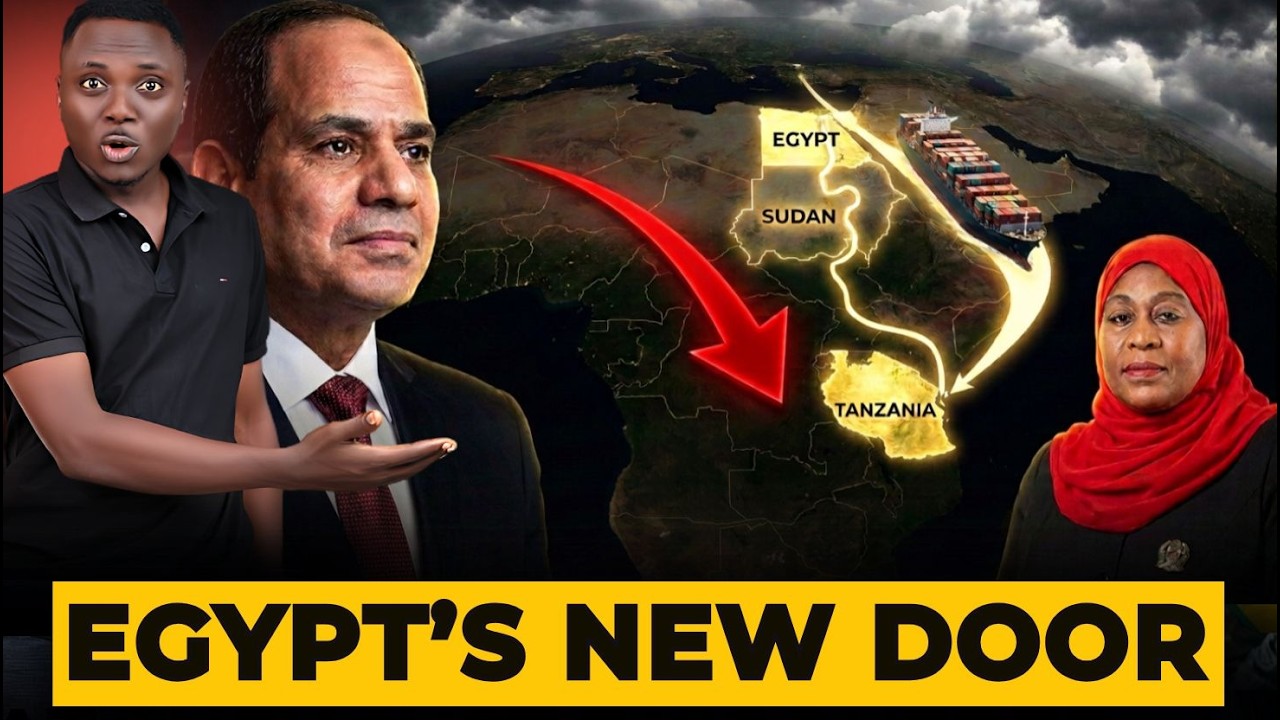
Egypt’s Silent Play: The Move That Reshaped the Regional Chessboard
In the high-stakes arena of Middle Eastern geopolitics, the loudest moves often come from missiles and ultimatums. Yet, the most consequential shift this quarter was executed in near-total silence.
In the high-stakes arena of Middle Eastern geopolitics, the loudest moves often come from missiles and ultimatums. Yet, the most consequential shift this quarter was executed in near-total silence. While the world’s media focused on the Gaza frontlines and the Red Sea shipping lanes, Cairo completed a strategic repositioning that analysts are only now beginning to fully decode.
This was not a military parade or a diplomatic summit. It was a quiet, structural recalibration of Egypt’s leverage—one that has fundamentally altered the balance of power along the Suez Canal and the Eastern Mediterranean.
The Core of the Maneuver
For months, the prevailing narrative suggested that Egypt was a passive observer, buffeted by the economic fallout of regional instability. The loss of Red Sea transit revenue due to Houthi attacks was estimated to cost Cairo hundreds of millions of dollars monthly. The assumption was that Egypt was weak, reactive, and desperate.
The reality, as evidenced by recent satellite imagery and port authority data, is the opposite. Egypt has used this period of chaos to accelerate the expansion of its alternative logistics infrastructure. Specifically, the government has poured resources into the development of the Ain Sokhna port complex and the parallel road and rail networks that bypass the Bab el-Mandeb Strait entirely.
Redefining the "Choke Point"
The strategic genius of this move lies in its reframing of the crisis. Historically, Egypt’s economic security was tied exclusively to the Suez Canal—a single, vulnerable artery. If the Red Sea became impassable, so did Egypt’s revenue stream.
By aggressively expanding the "land bridge" between the Mediterranean at Port Said and the Red Sea at Ain Sokhna, Cairo has created a redundancy that competitors lack. This corridor allows cargo to be offloaded, transported overland via high-speed rail, and reloaded on the Mediterranean side, bypassing the conflict zone entirely.
This is not a temporary workaround; it is a permanent upgrade. The new infrastructure is designed to handle significantly higher volume than current crisis levels demand. Egypt is effectively positioning itself as the only regional player capable of moving goods from Asia to Europe without transiting a war zone.
The Geopolitical Calculus
The implications extend far beyond logistics. By securing an alternative route, Egypt has insulated itself from the coercive power of non-state actors in Yemen. More critically, it has signaled to global shipping conglomerates that they have a viable, stable alternative to the Cape of Good Hope route—which adds weeks to transit times—or the dangerous Red Sea passage.
This move also shifts the diplomatic dynamic. Egypt no longer needs to beg for a ceasefire solely to reopen the Canal. While it still desires stability, its leverage has increased. It can now negotiate from a position of infrastructural strength, demanding concessions on navigation rights and regional security protocols that were previously off the table.
The Economic Signal
Domestically, this is a jobs program and a foreign currency magnet rolled into one. The expansion of the corridor has attracted foreign direct investment from Gulf states and European logistics firms eager to secure supply chain resilience. The message to investors is clear: Egypt is building for the post-conflict era, not just surviving the current one.
A Lesson in Strategic Patience
The international community missed this because it was looking for explosions. Egypt played a longer game. It understood that the crisis in the Red Sea was not a temporary blip but a structural shift in global trade security. While others panicked, Cairo built.
The result is a Middle East where the map of power is no longer drawn solely by military might, but by the control of alternative routes. Egypt has quietly ensured that even if the Suez Canal were to close tomorrow, its economic relevance—and its geopolitical weight—would remain intact. That is not a defensive posture. That is a power play.
Related Coverage
Erdogan and Netanyahu’s War of Wills: 2 Armies, 1 Region, Zero Room for Compromise
Turkey’s opposition has dropped its domestic fight to back President Recep Tayyip Erdogan as the standoff with Israel over Syria and Gaza escalates, turning a personal rivalry into a strategic clash reshaping the Middle East.
Hong Kong's 150% Yuan Bet: Can It Beat Sanctions Chaos to Win the Middle East?
A quiet but strategic shift is underway as Hong Kong positions itself as a neutral financial bridge between China and the Middle East, while simultaneously launching a massive yuan lending tool to boost global currency use—all as African businesses get crushed between US and Chinese sanctions.
US-Iran Deal Signed, But Oil Tankers Won’t Move Until They See Proof — and Netanyahu Says No to Pullout
A fragile US-Iran peace deal has been signed, but it faces immediate collapse as Israeli Prime Minister Benjamin Netanyahu refuses to withdraw from occupied zones and major shipping companies refuse to risk the Strait of Hormuz without concrete evidence the agreement is real.
Related Editorials
The Silent Pivot: Why Chad’s Unnoticed Move Just Rewrote the Rules
In the high-stakes arena of international strategy, the most consequential moves are often the ones that make no sound. While commentators focused on the obvious theater and public posturing, a subtle but seismic shift occurred—one that most observers completely missed.
Africa’s Silent Giant: The $5 Billion Megaproject Reshaping the World’s Economy
While global attention fixates on trade wars and energy crises, a quiet revolution is underway in North Africa. Morocco has just completed a project that analysts are calling the most consequential infrastructure development for the continent in decades—yet it has barely made headlines.
Turkey’s Silent Surge: How Ankara Is Reshaping the Battlefield in Mali
For years, the conflict in Mali has been defined by a complex web of local militias, foreign mercenaries, and shifting jihadi alliances. Yet, a new player has quietly moved to the center of the board, altering the strategic calculus of the Sahel.
Morocco’s Quiet Checkmate: What Madrid Just Lost in the Mediterranean
For decades, the Western Mediterranean has operated on an unspoken hierarchy. Spain, with its NATO backing and EU credentials, held the commanding heights.
Russia’s New Arctic Base: A Strategic Shift That Could Reshape the AES War
In a move that has drawn little attention outside military circles, Russia has quietly completed a new military installation in the high Arctic—a base that analysts say could fundamentally alter the balance of power in the ongoing AES conflict. Located on the remote island of Alexandra Land, part o
West Bank Erupts: The Unseen Escalation Reshaping the Middle East
The world’s gaze has been fixed on Gaza, but a second, equally volatile front has been quietly igniting. Across the West Bank, violence has surged to levels not seen in nearly two decades, threatening to destabilize the entire region.