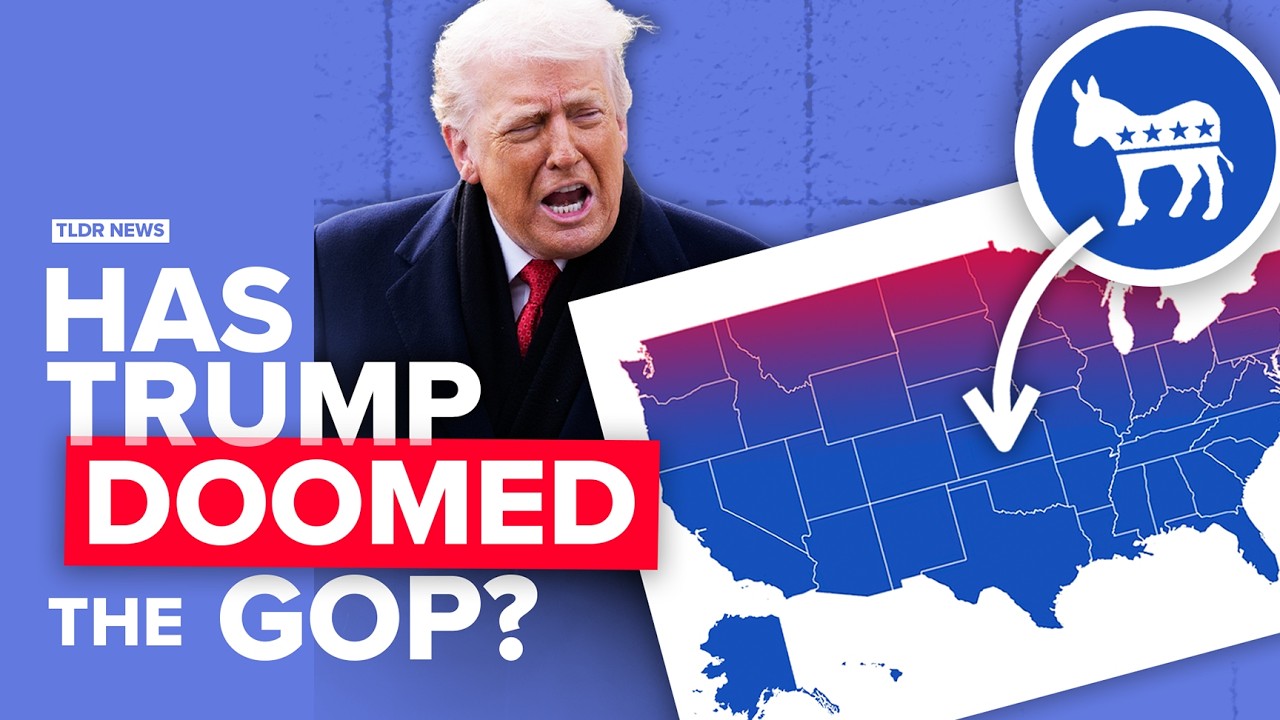
Why the Democratic Midterm Outlook Is No Longer a Certain Disaster
For much of 2025, the political consensus held that the Democrats were heading into the midterm elections with a structural disadvantage. Economic anxiety, lingering inflation, and historical precedent—where the party holding the White House almost always loses seats—painted a grim picture.
For much of 2025, the political consensus held that the Democrats were heading into the midterm elections with a structural disadvantage. Economic anxiety, lingering inflation, and historical precedent—where the party holding the White House almost always loses seats—painted a grim picture. However, a confluence of recent data and political developments suggests that the narrative is shifting. While the path remains narrow, the Democratic Party’s prospects for the upcoming midterms are looking considerably more viable than they did just a few months ago.
The Shifting Political Terrain
The primary driver of this renewed optimism is a change in the electoral environment. Recent polling indicates a tightening in the generic congressional ballot, with the Democrats closing a gap that once seemed insurmountable. This shift is not accidental; it is the result of specific policy wins and a recalibration of the party’s messaging strategy.
Specifically, the administration has successfully pivoted the public conversation toward economic issues that resonate with working-class voters. By focusing on measures to curb price gouging and lower household costs, the party has begun to neutralize the Republican advantage on economic competence. Voters are beginning to perceive the Democratic agenda as more directly responsive to their daily financial pressures, rather than as a series of abstract legislative victories.
The Republican Vulnerability
Conversely, the Republican Party is facing internal fractures that are complicating their ability to mount a unified campaign. The ongoing leadership battles within the House have exposed a party struggling to govern, which undermines their primary attack line against Democratic control. When the opposition is perceived as chaotic and focused on internal squabbles rather than solving national problems, undecided voters often look elsewhere.
Furthermore, the GOP’s hardline stance on certain social issues is proving to be a liability in suburban swing districts. These areas, which were crucial to Republican gains in recent cycles, are showing signs of fatigue with cultural warfare. The data suggests that these voters are prioritizing stability and economic pragmatism over ideological purity, a trend that favors Democratic candidates who position themselves as moderates.
The Data Behind the Shift
The analytics support this narrative. Approval ratings for the President, while still below 50%, have stabilized after months of decline. More importantly, the intensity of opposition is softening. In key battleground states, the number of voters who list "Democratic extremism" as their primary concern has dropped, replaced by a more general anxiety about the cost of living—an issue where Democrats are now polling competitively.
Voter turnout models are also being revised. The Democratic base, particularly younger voters and minorities, who were showing signs of apathy, are demonstrating renewed enthusiasm. This is largely attributed to the administration’s aggressive stance on student loan forgiveness and climate investment, which are mobilizing the progressive wing that often sits out non-presidential elections.
A Narrow but Real Path
It is crucial to maintain perspective. The Democrats are not the favorites. The historical headwinds remain strong, and the Senate map is inherently difficult for them. However, the race is no longer a foregone conclusion. The party has successfully navigated the most dangerous period of the cycle, avoiding the internal collapse that many predicted.
The next few months will be defined by whether the Democrats can sustain this momentum and whether the Republicans can resolve their internal disputes. For now, the evidence suggests that the midterms are a genuine contest. The Democrats have moved from a position of defensive vulnerability to one of competitive opportunity, a shift that few analysts predicted at the start of the year. The election, once expected to be a referendum on the incumbent party, is increasingly shaping up to be a choice between two very different visions for the country.
Related Coverage
Democrats Eye Six-Seat Senate Gain as Iowa Race Tightens in 2026 Midterms
Democrats could flip six Senate seats in 2026, according to a new forecast, while a surprisingly close race in Iowa emerges as a key indicator of national voter mood.
Democrats Surge Toward 2026 Midterms as Trump's Grip on Congress Falters
Democrats are gaining momentum ahead of the November 8 midterm elections, with analysts predicting a potential wave that could end Republican control of Washington and challenge President Donald Trump's agenda. The outcome will determine control of Congress and shape the future of key policy areas including science funding, public health, and energy regulation.
2026: Democrats Seize Congress as War, Debt and Climate Crises Reshape the World
A historic Democratic wave in the U.S. midterms, a tense standoff with Iran, Russia's escalating war in Ukraine, and converging debt, climate and humanitarian crises defined a turbulent year that exposed a global order serving the powerful while ordinary people paid the price.
Democrats’ Civil War Goes Prime Time: 2 Progressive Wins, 2 Party Splits, 1 Messy Midterm
Democrats are heading into the midterms fractured, with progressive insurgents scoring major primary upsets while party leaders in Texas voted on dueling resolutions to abolish or reform ICE—exposing a divide that could cost them seats in November.
Republicans Face Reckoning After Midterm Defeat as Trump's Iran War Strategy Falters
Democrats won a sweeping victory in the US midterm elections, leaving Republicans searching for a way forward and raising doubts about President Donald Trump's war strategy in Iran.
Democrats Flip Congress, Vance Blames Iran War for GOP Losses as Oil Prices Steady
Democrats won control of both chambers of Congress in midterm elections, a shift that could reshape US policy on the Iran war. Vice President JD Vance blamed the Republican losses on the conflict, while oil prices steadied after an 8% plunge as markets bet on hopes of ending the war.
Related Editorials
Democrats Won Big. Here's Exactly Who Abandoned Trump.
Earlier this week, Trump and the Republican Party suffered a historic defeat in the midterms. The Democrats took control of the House of Representatives by a wide margin and were on track to win at least 55 Senate seats, with a 56th possible if Mississippi, still being counted at the time of record
Early Voting Data Signals Democratic Momentum—But the Race Isn't Over
As millions of Americans cast their ballots ahead of Election Day, early voting data is offering the first concrete clues about voter enthusiasm and party turnout. While the numbers appear encouraging for Democrats, analysts caution that early voting patterns are not necessarily predictive of final
# The Unraveling of Democracy: How Economic Insecurity Is Reshaping American Politics
A growing body of research suggests that financial precarity—not ideological polarization—may be the driving force behind democratic backsliding in the United States. For decades, political scientists assumed that citizens who felt economically secure would be more likely to participate in demo
The Democrats’ Civil War: A Party at War With Itself
The Democratic Party, long viewed as a broad coalition united by shared opposition to Republican policies, is facing an internal rupture that threatens to redefine its identity. What was once a simmering tension between its progressive and moderate wings has now erupted into a full-blown conflict o
Can Democrats Finally Flip Texas? The Perfect Storm Behind Terico's Historic Bid
Texas was once a swing state, but it has been reliably red for decades. A Democrat has not won statewide office in the Lone Star State since 1994, a gubernatorial race since 1990, or a US Senate race since 1988.
Blue Tsunami: Democrats Storm House and Senate in Historic Rebuke of Trump
Democrats have seized control of both chambers of Congress in a sweeping midterm victory, delivering a stinging rebuke to Donald Trump and fundamentally reshaping the balance of power in Washington for the remainder of his term. What began as expectations of a modest blue wave became something clos