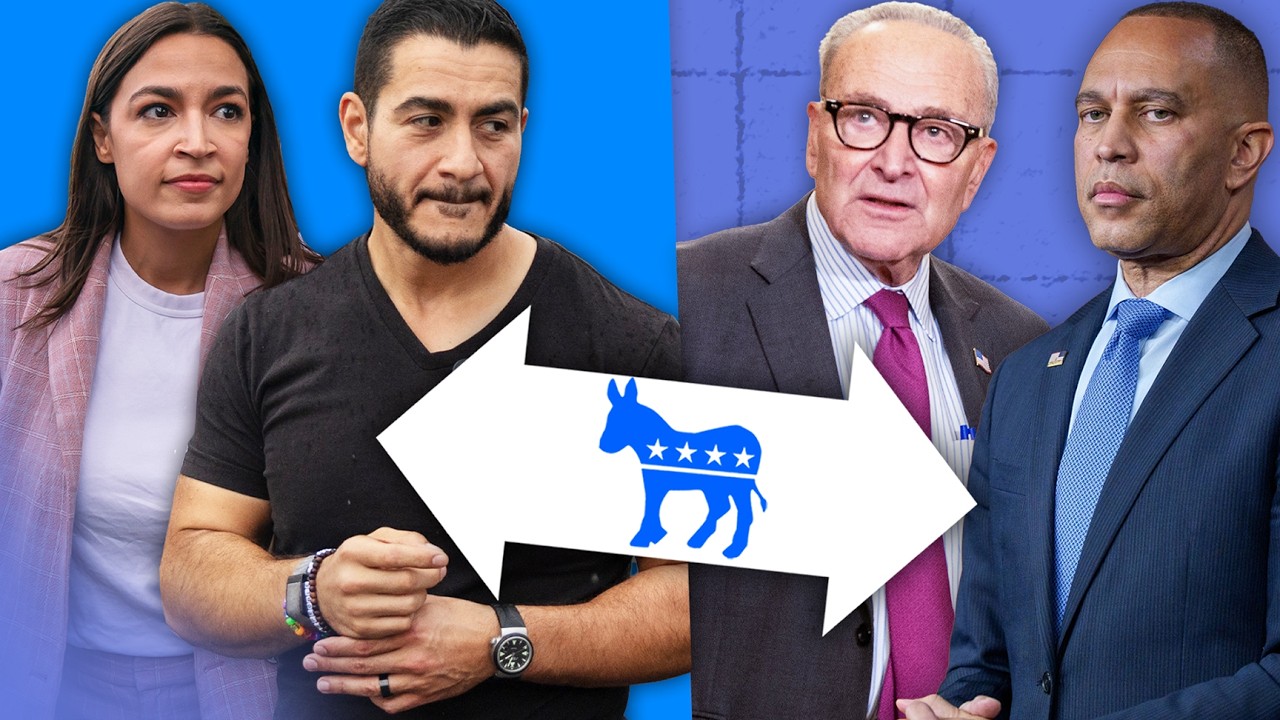
The Democrats’ Civil War: A Party at War With Itself
The Democratic Party, long viewed as a broad coalition united by shared opposition to Republican policies, is facing an internal rupture that threatens to redefine its identity. What was once a simmering tension between its progressive and moderate wings has now erupted into a full-blown conflict o
The Democratic Party, long viewed as a broad coalition united by shared opposition to Republican policies, is facing an internal rupture that threatens to redefine its identity. What was once a simmering tension between its progressive and moderate wings has now erupted into a full-blown conflict over strategy, ideology, and the very future of the party. This is not a simple disagreement over policy details; it is a fundamental struggle over who the party represents and how it can win—or even survive—in a rapidly changing political landscape.
The Roots of the Fracture
At the heart of the conflict lies a generational and ideological divide. On one side are the establishment moderates, who advocate for incremental change, bipartisan compromise, and a return to a perceived political center. On the other are the progressive insurgents, who argue that incrementalism has failed to address systemic inequalities, climate change, and economic insecurity, and who demand transformative structural reforms.
This is not a new schism. The tension between the desire for ideological purity and the pragmatism of electoral politics has existed for decades. However, recent electoral losses and shifting demographics have intensified the debate from a philosophical discussion into an active, public war for control of the party’s machinery, messaging, and donor base.
The Core Arguments
The moderate wing contends that the party’s primary goal must be defeating the Republican opposition. They argue that a platform focused on sweeping, left-wing policies alienates the suburban swing voters and working-class demographics necessary for a national majority. For them, victory is predicated on appealing to the center, emphasizing fiscal responsibility, and projecting an image of stability and competence.
Conversely, the progressive wing argues that the party’s constant attempts to court the center have resulted in a lack of clear vision, leading to low voter turnout among the party’s base—particularly young voters and minorities. They posit that a bold, unapologetic agenda is the only way to energize the electorate and create a new, more reliable voting bloc. They see compromise not as a strength, but as a capitulation to a broken status quo.
The Stakes of the Conflict
This internal war is not merely academic; it has tangible consequences. It affects primary challenges, where incumbents face threats from within their own party. It influences fundraising, as donors choose sides between traditional PACs and grassroots-funded movements. Most critically, it shapes the legislative agenda, often paralyzing the party from acting cohesively when it holds power.
The conflict also impacts public perception. While a vibrant internal debate can be a sign of a healthy democracy, a highly visible and vitriolic civil war risks painting the party as chaotic and unable to govern. It provides ammunition for opponents and can disillusion independent voters who view the infighting as a distraction from the issues that affect their daily lives.
The Path Forward
There is no easy resolution on the horizon. The Democratic Party is currently a house divided, caught between its past and its future. Whether it can reconcile its two factions depends on its ability to find common ground on shared values while respecting the divergent paths proposed to achieve them. The party must decide if it is a coalition of interests or a movement of ideology. The answer to that question will determine not only its own fate but also the direction of the nation’s political landscape for years to come.
Related Coverage
Democrats’ Civil War Goes Prime Time: 2 Progressive Wins, 2 Party Splits, 1 Messy Midterm
Democrats are heading into the midterms fractured, with progressive insurgents scoring major primary upsets while party leaders in Texas voted on dueling resolutions to abolish or reform ICE—exposing a divide that could cost them seats in November.
Democrats in Chaos as $3.3 Billion Israel Military Aid Splits Party Leadership
Top Democrats are publicly feuding over a Republican proposal to block $3.3 billion in U.S. military aid to Israel, exposing a deep rift in the party as lawmakers clash over support for Israel's occupation of Palestinian territories.
Stablecoin War Erupts: Warren Splits Democrats Over $180B Crypto Bill Loopholes
A battle over the future of digital money has split the Democratic Party, with Senator Elizabeth Warren launching a fierce attack on a stablecoin bill that has divided her own colleagues.
Trump and Netanyahu at War Over Iran: Ceasefire Collapses as Allies Split
A fragile US-brokered ceasefire between Iran and Israel has collapsed, exposing a deepening rift between President Donald Trump and Israeli Prime Minister Benjamin Netanyahu over how to end the conflict [168642][168888][170083].
Half of House Democrats Vote to Cut $3.3 Billion Israel Military Aid as Party Splits
Nearly half of House Democrats voted to cut $3.3 billion in military aid to Israel, exposing a deep party rift as voters focus on the Iran war’s economic toll.
Jeffries’ Secret Kushner Sit-Down Sparks Democratic Firestorm: 100 Days Before Midterms
A bombshell report reveals House Democratic leader Hakeem Jeffries met privately with Jared Kushner to discuss cooperation, enraging Trump critics and threatening party unity ahead of a likely Democratic takeover.
Related Editorials
The Tech Elite vs. The Populist Base: The Real War Splitting MAGA
The political coalition known as MAGA is no longer a monolith. Beneath the surface of public rallies and unified social media messaging, a structural fracture is widening.
Why the Democratic Midterm Outlook Is No Longer a Certain Disaster
For much of 2025, the political consensus held that the Democrats were heading into the midterm elections with a structural disadvantage. Economic anxiety, lingering inflation, and historical precedent—where the party holding the White House almost always loses seats—painted a grim picture.
Germany’s Political Upheaval Will Reshape Europe
Germany, long viewed as Europe’s anchor of stability, is entering a period of profound political change. The shifts underway in Berlin will not remain contained within Germany’s borders; they will reshape the European Union itself.
The Unraveling Alliance: Why a US-Israel Divorce Looks Increasingly Inevitable
For decades, the bond between the United States and Israel was considered unbreakable—a cornerstone of Middle Eastern geopolitics. Yet, beneath the surface of official statements and military aid packages, tectonic plates are shifting.