Iceland’s Quiet Revolt: The End of Europe’s Political Illusion?
For decades, the European Union has sold itself as a project of perpetual integration—a political and economic engine designed to smooth over national differences and deliver shared prosperity. Yet, according to two of Europe’s most prominent economic thinkers, the recent actions of a small Nordic
For decades, the European Union has sold itself as a project of perpetual integration—a political and economic engine designed to smooth over national differences and deliver shared prosperity. Yet, according to two of Europe’s most prominent economic thinkers, the recent actions of a small Nordic island have laid bare a fundamental truth: the EU’s core architecture is no longer about unity, but about control.
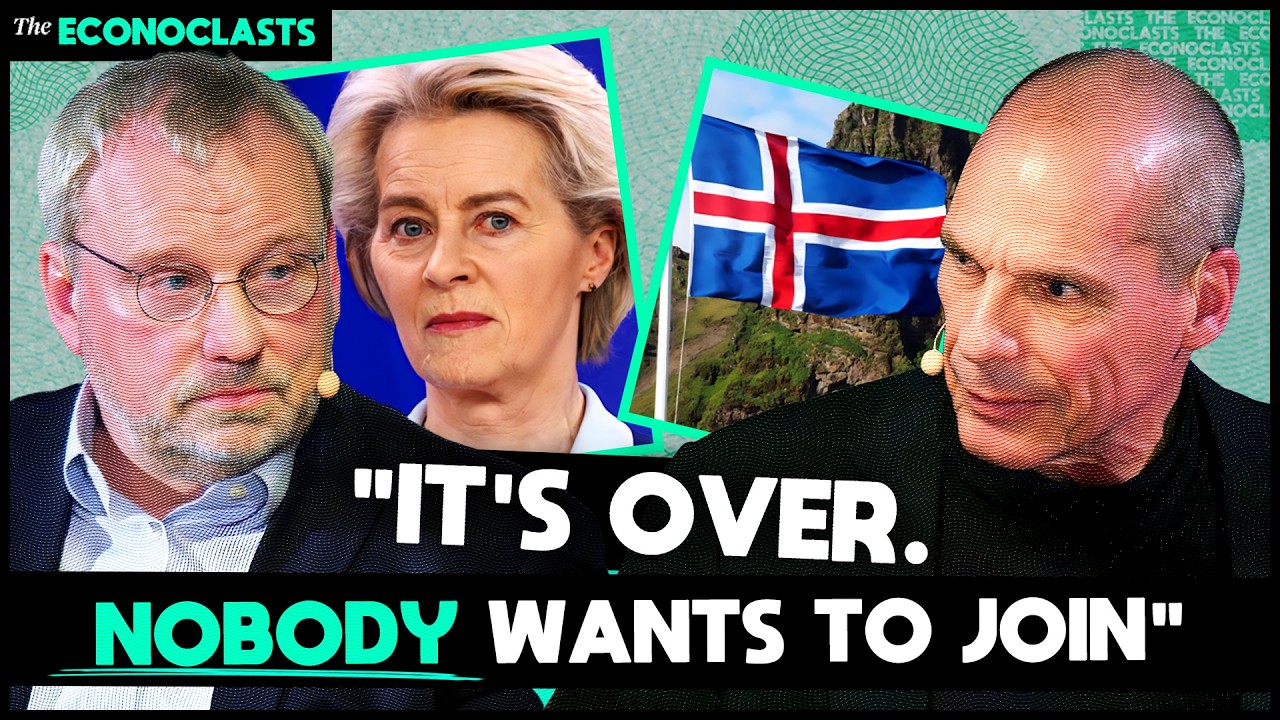
In a recent episode of The Econoclasts, economist Yanis Varoufakis and journalist Wolfgang Münchau dissect the implications of Iceland’s recent policy decisions. While Iceland is not an EU member, its status as a member of the European Economic Area (EEA) makes it a crucial test case. The EEA grants Iceland access to the EU’s single market, but crucially, it does not grant Brussels direct authority over its domestic affairs—a distinction that has proven to be Iceland’s greatest strategic advantage.
The central argument presented is that Iceland has effectively "shattered the illusion" that the EU is a necessary prerequisite for economic stability and political sovereignty. By leveraging its EEA status, Iceland has retained control over its fisheries, its currency, and—most importantly—its ability to implement capital controls during the 2008 financial crisis. This autonomy, Varoufakis and Münchau argue, allowed Iceland to recover with a speed and social cohesion that the EU’s heavily indebted southern members could only dream of.
The conversation pivots to a scathing critique of the EU’s institutional rigidity. The speakers posit that the bloc has evolved into a "debtor-creditor" hierarchy, where the European Central Bank (ECB) and the European Commission prioritize the solvency of northern banks over the democratic will of southern populations. In this framework, the "European project" has morphed into a mechanism for enforcing austerity, not fostering convergence. The illusion, they claim, is that member states are equal partners; in reality, they are subordinates to an unelected technocracy that dictates fiscal policy regardless of local economic realities.
Iceland’s success is not accidental. The transcript highlights how the nation refused to bail out its private banking sector, allowing it to fail while protecting domestic depositors and social services. This "heterodox" approach, which involved letting the currency devalue and imposing temporary capital controls, was initially condemned by European institutions. Yet, the long-term results have been remarkably positive: low unemployment, controlled debt, and a robust social safety net. This stands in stark contrast to the "internal devaluation" forced upon Greece, which resulted in a decade of depression and a permanent exodus of its youth.
The discussion concludes with a sobering prediction: the EU’s refusal to learn from the Icelandic model will inevitably lead to further fragmentation. If the bloc continues to prioritize the "rule of law" as defined by Maastricht criteria over the "rule of the people," it risks catalyzing the very nationalist backlash it seeks to prevent. The lesson from Iceland is not that Europe should be abandoned, but that the current political structure—which suppresses dissent and punishes member states for democratic choices—is fundamentally unsustainable.
In essence, the video argues that Iceland has demonstrated a viable alternative: economic integration without political subjugation. By doing so, it has exposed the EU’s central contradiction—that it cannot simultaneously demand democratic legitimacy while denying its members the sovereignty to chart their own economic destinies. For Varoufakis and Münchau, the question is no longer whether the EU will change, but whether it can change before the illusion of unity shatters entirely.
Related Coverage
The Price of Power: How Sanctions, War, and Climate Chaos Are Reshaping the Global Economy
A global economy built on the promise of open trade and cheap energy is now buckling under the weight of geopolitical conflict, strategic blockades, and a technological gold rush that is straining the very limits of infrastructure. From the closed oil lifeline of the Strait of Hormuz to the drone-struck refineries of Russia and the record-breaking rallies in tech stocks, the global financial system is being pulled in opposing directions. While investors chase artificial intelligence (AI) profits and safe-haven assets like gold, millions of ordinary citizens are facing the harsh realities of inflation, fuel shortages, and a widening gap between the wealthy and the rest [15239].
Strait of Hormuz, Drought, and Debt: The Global Economy Strains Under War and Climate Chaos
A global economy built on the promise of open trade and cheap energy is buckling under the weight of geopolitical conflict, strategic blockades, and a technological gold rush that is straining the very limits of infrastructure, leaving ordinary citizens to bear the brunt of inflation, fuel shortages, and a widening gap between the wealthy and the rest [15239].
A Fragile Peace Shatters: How a Global System Built for Profit Fuels Endless War, Climate Chaos, and a Crushing Debt Crisis
A brief moment of hope for global stability, sparked by a tentative peace deal between the United States and Iran that promised to unlock vital oil routes, has collapsed under renewed violence, a record-breaking climate disaster, and a political upheaval that is shifting nations to the far right. At the core of this interconnected crisis lies a global economic order that prioritizes military spending and corporate profit over human welfare, funneling public resources into endless conflict while ordinary citizens bear the costs in hunger, displacement, and deepening inequality.
Modi Bets $8.8 Billion on Deep-Sea Oil and Chips to End Import Addiction by 2047
India’s Prime Minister Narendra Modi has vowed to turn the country into a developed economy by 2047, leaning heavily on a $8.8 billion deep-sea oil gamble and a domestic push for semiconductor and nuclear power production to break foreign dependency [219670][214591]. The plan comes amid growing student protests and a stark warning from Modi that India must build a "strong and capable" military through self-reliance [219678][215497].
Related Editorials
Europe’s Decline is Now Official: The Continent Has Lost Its Economic Soul
In a rare moment of bipartisan agreement, two of Europe’s most astute economic minds—Yanis Varoufakis, the former Greek Finance Minister, and Wolfgang Münchau, a veteran financial journalist and co-founder of *The Econoclasts*—have declared the end of an era. The evidence, they argue, is no longer
Germany Just Broke the EU’s Firewall
A conversation between Yanis Varoufakis and Wolfgang Münchau reveals how Berlin’s fiscal about-face is rewriting the rules of Europe—and why the bond markets may be the only referee left. For years, the European Union’s fiscal architecture rested on a simple promise: no member state would be allowe
Germany’s Economic Model Is Broken—and There’s No Going Back
Germany, long celebrated as Europe’s economic engine, is now facing a crisis that its political and financial leaders appear unwilling—or unable—to confront. In a candid discussion, economists Yanis Varoufakis and Wolfgang Münchau dissect the structural failures behind Germany’s stagnation, the Eur
Europe’s Economic Doom Loop: Why Brussels Has Lost the Wheel
Europe’s economic engine is sputtering, and according to two of the continent’s most prominent economic voices, the drivers in Brussels have lost control of the vehicle. In a recent discussion, former Greek Finance Minister Yanis Varoufakis and Financial Times columnist Wolfgang Münchau painted a s
Africa’s Boldest Gamble Since Independence: The Continent’s Push for a Unified Currency
For decades, the dream of a united Africa has lingered as a political fantasy—a relic of post-independence optimism. But now, a coalition of nations is taking what analysts call the continent’s most audacious economic step since the end of colonial rule: the creation of a single, shared currency.
Europe’s Energy Crisis Is a Design Flaw, Not an Accident
For years, European policymakers boasted about building the world’s most advanced energy system—one that would be green, cheap, and secure. But when Russia invaded Ukraine in 2022, that promise collapsed.