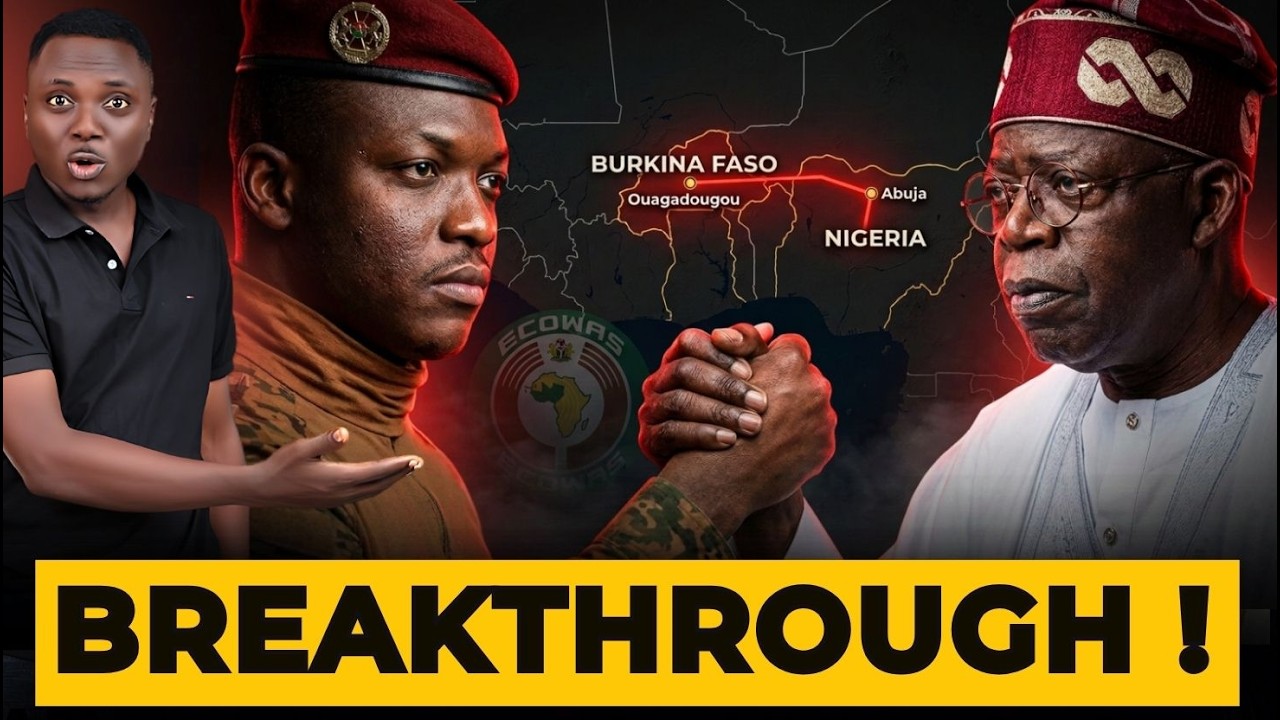
Mali’s Bold Pivot: How a Surprise Alliance Is Redrawing West Africa’s Geopolitical Map
In a region already defined by coups, sanctions, and shifting loyalties, one man’s unexpected diplomatic gambit is sending shockwaves through West Africa. Colonel Assimi Goïta’s Mali has long been a flashpoint for international tension, but the latest development—a deepening military and political
In a region already defined by coups, sanctions, and shifting loyalties, one man’s unexpected diplomatic gambit is sending shockwaves through West Africa. Colonel Assimi Goïta’s Mali has long been a flashpoint for international tension, but the latest development—a deepening military and political pact with Burkina Faso and Niger—signals more than just another alliance. It represents a decisive break from decades of French influence and a radical reordering of regional security. This is not merely a policy shift; it is a strategic realignment that could redefine the balance of power in the Sahel, with global implications that extend far beyond the continent.
The Context: A Region in Turmoil
To understand the magnitude of this move, one must first grasp the fragility of the current landscape. Since 2020, Mali has experienced two military coups, each justified by the ruling junta as a necessary response to a failing state. The security vacuum, exacerbated by a relentless jihadist insurgency and chronic political instability, has left the central government in Bamako with limited control over vast swathes of its territory. This instability has not occurred in a vacuum. Neighboring Burkina Faso and Niger have faced similar existential threats, leading to their own military takeovers in 2022 and 2023, respectively.
For decades, France served as the region’s primary security guarantor, deploying thousands of troops under Operation Barkhane to combat insurgents linked to Al-Qaeda and the Islamic State. However, widespread public resentment toward French military presence, coupled with a perception of ineffective results, created a fertile ground for anti-French sentiment. The juntas in Bamako, Ouagadougou, and Niamey have skillfully harnessed this populist anger, framing their seizures of power as acts of national liberation—not just from terrorism, but from neo-colonial influence.
The Surprise Move: A Confederation Takes Shape
The "surprise move" referenced in the analysis is the formalization of the Alliance of Sahel States (AES), a mutual defense pact signed in September 2023. While the agreement itself was not entirely unexpected, the speed and public commitment to its implementation have startled observers. The leaders of the three nations—Goïta, Ibrahim Traoré of Burkina Faso, and Abdourahamane Tchiani of Niger—have pledged to create a confederation that goes beyond mere military cooperation.
This is not a simple coalition of convenience. The AES charter includes provisions for collective security (an attack on one is an attack on all), economic integration, and a coordinated diplomatic front. More significantly, it explicitly rejects interference from external powers, a direct rebuke to France and, by extension, the Economic Community of West African States (ECOWAS), which has demanded a return to civilian rule.
Why This Matters: The Dismantling of Post-Colonial Order
The creation of a unified bloc among these three nations is strategically seismic for several reasons. First, it represents the most concrete step yet toward dismantling the post-colonial security architecture that France spent decades constructing. The withdrawal of French troops from Mali, Niger, and Burkina Faso is complete or underway, and the AES is designed to ensure they never return.
Second, it signals a definitive pivot toward new international partners, most notably Russia. The juntas have increasingly turned to Moscow for military hardware, training, and, in Mali’s case, the deployment of the Wagner Group (now known as Africa Corps). This move provides the AES with an alternative security lifeline, effectively breaking the Western monopoly on military support in the region.
Third, the alliance creates a geographical bloc that controls a vast, resource-rich territory in the heart of the Sahel. This region is not only critical for its mineral wealth—including gold, uranium, and lithium—but also as a transit point for migration and illicit goods. A coordinated, hostile bloc here poses a direct challenge to European border security and economic interests.
The Economic and Humanitarian Calculus
The decision to form a confederation is not without immense risk. The three nations are among the poorest in the world, heavily reliant on foreign aid and international loans. Their collective exit from ECOWAS—which they have announced as a "irreversible" step—threatens to sever vital supply chains and banking systems. The free movement of goods and people, a cornerstone of ECOWAS, is now in jeopardy, potentially leading to food shortages and economic isolation.
Furthermore, the security gamble is immense. While the juntas claim they are better positioned to fight terrorism without foreign interference, the reality on the ground is grim. The withdrawal of French and UN forces has created a security vacuum that jihadist groups are actively exploiting. The AES’s promise of a joint military force is ambitious on paper, but the logistical and financial capacity to sustain such an operation remains highly questionable.
The International Response: A Test of Wills
The reaction from the international community has been one of cautious alarm. The United States and European Union have condemned the coups and the subsequent alliance, but their leverage is waning. The expulsion of French ambassadors and the termination of military agreements have left Western powers with few diplomatic tools other than sanctions. However, sanctions risk further alienating a population already gripped by poverty and insecurity, potentially pushing the AES closer to Russia and Iran.
For ECOWAS, the AES represents an existential crisis. The bloc, which has historically mediated regional disputes, has been humiliated by the defection of three of its members. The threat of military intervention in Niger (which was briefly on the table in 2023) has been abandoned, revealing the limits of regional power when faced with a unified military front.
The Road Ahead: A New Axis or a Collapse?
The future of West Africa now hinges on the success or failure of this audacious experiment. If the AES succeeds in establishing a modicum of stability and economic autonomy, it could inspire similar movements across the continent, fundamentally altering the relationship between Africa and the West. It would prove that a "third way" is possible—one that rejects Western liberal democracy and security models in favor of a more nationalist, sovereign-driven approach.
Conversely, if the alliance collapses under the weight of economic pressure and internal dissent, it could plunge the region into a deeper humanitarian catastrophe. The leaders of the AES are staking their political survival on their ability to deliver security and prosperity. They have burned their bridges with the West and are now entirely dependent on their own resources and the goodwill of partners like Russia, Turkey, and the Gulf states.
Conclusion
The formation of the Alliance of Sahel States is more than a headline; it is a declaration of intent. It signals the end of an era where Paris dictated security policy in its former colonies and the beginning of a volatile, multipolar scramble for influence in the Sahel. For the international community, the challenge is no longer how to restore the old order, but how to engage with a new reality where the rules of the game are being rewritten by a new generation of military leaders. The world is watching, but the fate of the Sahel rests firmly in the hands of three men in Bamako, Ouagadougou, and Niamey. Their gamble is either the birth of a new, self-determined Africa, or a prelude to a regional collapse of historic proportions.
Related Coverage
New Saudi-Turkey-Pakistan Defense Pact Shakes Up Middle East, But Can It Survive First Test?
A new trilateral defense agreement between Saudi Arabia, Turkey, and Pakistan is reshaping regional security, but experts question whether the alliance can hold together under pressure.
Trump Drops Turkey Sanctions, Eyes F-35 Sale in Shock NATO Summit Pivot
President Donald Trump announced he will lift sanctions on Turkey and is considering selling F-35 fighter jets to the country, marking a dramatic shift in U.S. policy that could reshape NATO's internal dynamics.
Sahel Juntas Crack Down on Critics as Militant Attacks Surge – Report Finds Security Worsening
A new report reveals that military juntas in Mali, Burkina Faso, and Niger are silencing journalists and activists instead of adapting their security strategies, even as Islamist militant groups make unprecedented gains across the Sahel region.
Vietnam Signs Energy Deals With Russia as Putin Pushes for New Allies in Southeast Asia
Vietnam deepened energy cooperation with Russia during a state visit to Moscow, as both countries seek new partnerships amid Western sanctions and shifting global alliances.
Global Conflicts and Shifting Alliances Reshape a World on Edge
A wave of escalating conflicts, collapsing ceasefires, and intensifying economic pressures is redrawing the global landscape, from the battlefields of the Middle East and Ukraine to the halls of power in Washington, Brussels, and Beijing.
Oil Shocks, Drone Wars, and a Shifting World Order: The Crises Reshaping Global Power
A wave of attacks on oil routes, escalating drone warfare in Ukraine, and a landmark BRICS summit are testing alliances and squeezing households worldwide.
Related Editorials
The Sahel Alliance Just Redrew West Africa’s Geopolitical Map—And ECOWAS Is Scrambling
In a move that has sent ripples through West African diplomacy, the Alliance of Sahel States (AES) has unveiled a significant new project that regional bloc ECOWAS did not anticipate. The development marks a decisive step in the consolidation of the AES as a standalone geopolitical and economic for
Turkey’s Silent Surge: How Ankara Is Reshaping the Battlefield in Mali
For years, the conflict in Mali has been defined by a complex web of local militias, foreign mercenaries, and shifting jihadi alliances. Yet, a new player has quietly moved to the center of the board, altering the strategic calculus of the Sahel.
Burkina Faso’s Arms Industry Ambition: A Turning Point for West African Sovereignty?
In a significant shift for West African geopolitics, Burkina Faso has announced the establishment of a military manufacturing complex. This move signals a bold stride toward defense autonomy for the junta-led nation, potentially altering the regional balance of power.
The Sahel’s Quiet Revolution: Why Mali, Burkina Faso, and Niger Turned Their Backs on the West
In a move that has reshaped the geopolitical map of West Africa, three nations—Mali, Burkina Faso, and Niger—have collectively severed ties with their traditional Western allies. This is not a sudden coup or a fleeting protest; it is a calculated, strategic pivot that signals a new era of self-dete
Russia’s Silent Takeover: How Moscow Is Replacing France in the Sahel
In a dramatic geopolitical shift, Russia is quietly but decisively expanding its military and political influence across West Africa’s Sahel region. Recent developments in Mali, Burkina Faso, and Niger signal a coordinated effort by Moscow to fill the vacuum left by departing Western powers—particu
The Coup That Exposed the West's Hidden Hand in Africa's Resource Wars
Burkina Faso's young leader Ibrahim Traoré has done what few African presidents dare: he named the foreign powers quietly profiting from the continent's instability. His evidence is forcing a global reckoning.