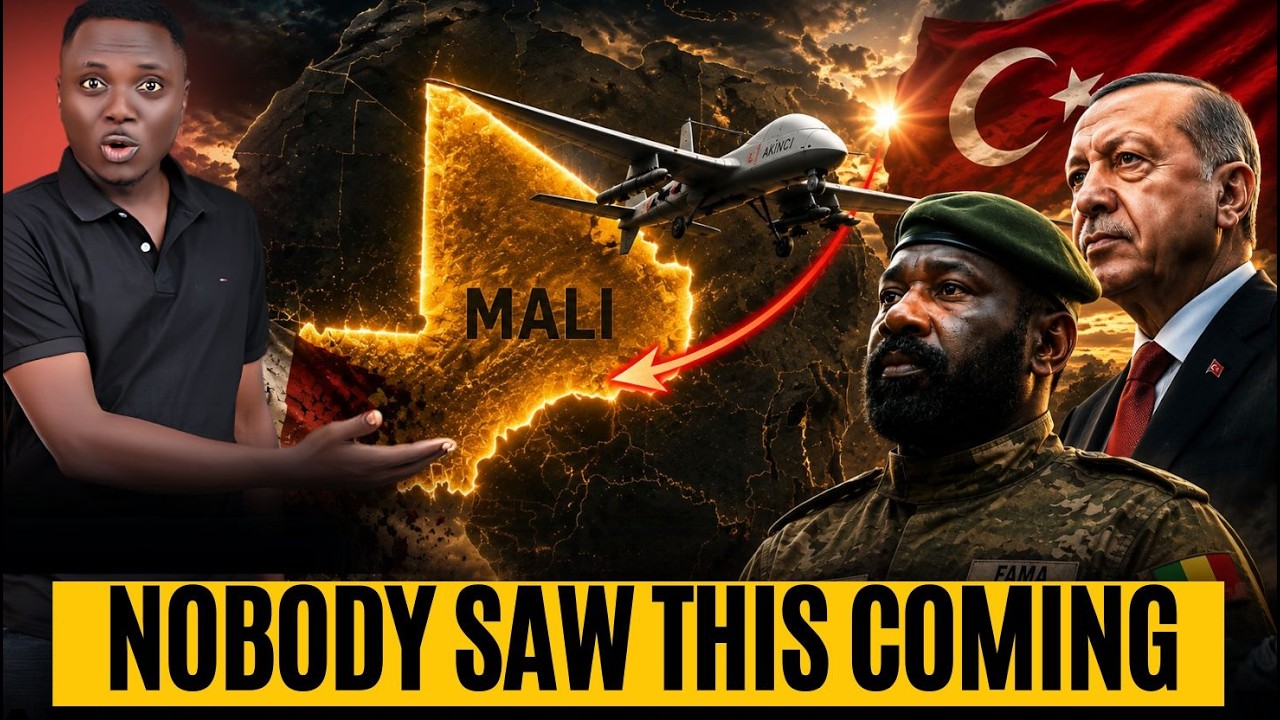
Turkey’s Silent Surge: How Ankara Is Reshaping the Battlefield in Mali
For years, the conflict in Mali has been defined by a complex web of local militias, foreign mercenaries, and shifting jihadi alliances. Yet, a new player has quietly moved to the center of the board, altering the strategic calculus of the Sahel.
For years, the conflict in Mali has been defined by a complex web of local militias, foreign mercenaries, and shifting jihadi alliances. Yet, a new player has quietly moved to the center of the board, altering the strategic calculus of the Sahel. Turkey’s expanding military and technological footprint is no longer a peripheral story; it is a decisive factor in the fight for control of West Africa.
While Western powers have largely retreated from the region, Ankara has filled the vacuum with a pragmatic blend of defense exports, drone warfare, and diplomatic maneuvering. The result is a transformation of the Malian battlefield that has caught both regional capitals and global observers off guard.
The Drone Factor
The most visible shift comes from the sky. Turkey’s Bayraktar TB2 drones have become the signature weapon of the Malian Armed Forces (FAMa). These unmanned aerial vehicles (UAVs) offer real-time surveillance and precision strike capabilities that were previously unavailable to Bamako. Unlike heavy fighter jets, TB2s require minimal logistical support, making them ideal for the vast, arid expanses of the Sahel.
The impact has been immediate. By providing actionable intelligence to ground troops, these drones have broken the tactical advantage of insurgent groups that once moved with impunity. Convoys are now vulnerable. Camps are discovered before they can be relocated. The psychological effect is equally significant: the fear of a silent, hovering observer has disrupted the mobility that is the lifeblood of guerrilla warfare.
Beyond Hardware: A Strategic Partnership
However, Ankara’s influence extends far beyond the transfer of hardware. The agreement between Turkey and Mali is a comprehensive security partnership. This includes the training of elite Malian units, the establishment of maintenance and repair facilities for Turkish-made equipment, and the provision of armored vehicles tailored for counter-insurgency operations.
This is a stark contrast to the previous reliance on French and European support, which often came with strict conditions regarding human rights and political governance. Turkey offers a more transactional relationship, free from the ideological strings attached by Western allies. For the Malian junta, which seized power in 2021, this sovereignty-first approach is a significant diplomatic victory.
The Geopolitical Ripple
Turkey’s entry into Mali is not an isolated incident. It is part of a broader strategy to establish a foothold in the Sahel, a region rich in gold and uranium but plagued by instability. By securing a presence in Bamako, Ankara gains leverage over supply chains and access to raw materials, while simultaneously opening a new market for its booming defense industry.
This move also complicates the chessboard for other international actors. Russia’s Wagner Group (now Africa Corps) has a significant presence in Mali, ostensibly to protect the junta. The introduction of Turkish drones and training creates a potential friction point, as both nations vie for influence over the same client. Similarly, Algeria and Mauritania are watching closely, wary of a new military dynamic on their southern borders that could spill over.
A Double-Edged Sword
While the Turkish intervention has provided the Malian state with a renewed offensive capability, it is not a silver bullet. The drones have lowered the threshold for violence, leading to more frequent airstrikes that risk civilian casualties. In a counter-insurgency, alienating the local population is the fastest route to failure.
Furthermore, the reliance on a single foreign supplier creates a new form of dependency. If Ankara decides to withdraw its technical support or halt spare parts deliveries, the Malian military could find itself grounded and overextended. The strategic depth provided by Turkey is real, but it is also fragile.
The New Reality
The war in Mali has entered a new phase, defined not by the withdrawal of one power, but by the arrival of another. Turkey has changed the equation by giving Mali the tools to fight on its own terms, while simultaneously binding the country to Ankara’s own geopolitical ambitions.
The long-term outcome remains uncertain. Yet, one thing is clear: the days of the Sahel being a purely Franco-African or Russo-African affair are over. Turkey is here, and its drones are watching.
Related Coverage
New Saudi-Turkey-Pakistan Defense Pact Shakes Up Middle East, But Can It Survive First Test?
A new trilateral defense agreement between Saudi Arabia, Turkey, and Pakistan is reshaping regional security, but experts question whether the alliance can hold together under pressure.
Hong Kong's 150% Yuan Bet: Can It Beat Sanctions Chaos to Win the Middle East?
A quiet but strategic shift is underway as Hong Kong positions itself as a neutral financial bridge between China and the Middle East, while simultaneously launching a massive yuan lending tool to boost global currency use—all as African businesses get crushed between US and Chinese sanctions.
Türkiye’s Top Diplomat Shuttles Between Tripoli and Benghazi, Pushing ‘One Libya’ Unity in New Talks
Türkiye is doubling down on its role as a mediator in Libya, with its foreign minister holding talks in both Tripoli and Benghazi to push for a unified political solution.
Erdogan and Netanyahu’s War of Wills: 2 Armies, 1 Region, Zero Room for Compromise
Turkey’s opposition has dropped its domestic fight to back President Recep Tayyip Erdogan as the standoff with Israel over Syria and Gaza escalates, turning a personal rivalry into a strategic clash reshaping the Middle East.
Turkey Seizes Control of Billion-Dollar Poultry Sector as Opposition Leader Threatens to Split Party
Turkey has appointed a state trustee to oversee the country’s billion-dollar white meat industry, creating uncertainty that could disrupt production and exports, while the leader of the main opposition party announced plans to form a new political group amid deepening internal turmoil.
Sahel Juntas Crack Down on Critics as Militant Attacks Surge – Report Finds Security Worsening
A new report reveals that military juntas in Mali, Burkina Faso, and Niger are silencing journalists and activists instead of adapting their security strategies, even as Islamist militant groups make unprecedented gains across the Sahel region.
Related Editorials
Mali’s Bold Pivot: How a Surprise Alliance Is Redrawing West Africa’s Geopolitical Map
In a region already defined by coups, sanctions, and shifting loyalties, one man’s unexpected diplomatic gambit is sending shockwaves through West Africa. Colonel Assimi Goïta’s Mali has long been a flashpoint for international tension, but the latest development—a deepening military and political
The Silent Pivot: Why Chad’s Unnoticed Move Just Rewrote the Rules
In the high-stakes arena of international strategy, the most consequential moves are often the ones that make no sound. While commentators focused on the obvious theater and public posturing, a subtle but seismic shift occurred—one that most observers completely missed.
The Sahel’s Hidden War: Why Mali’s Conflict Is Far Larger Than Reported
For years, the war in Mali has been framed as a remote insurgency—a localized struggle between government forces and Tuareg rebels in the country’s vast northern desert. But new evidence suggests that this framing is dangerously incomplete.
Russia’s Silent Takeover: How Moscow Is Replacing France in the Sahel
In a dramatic geopolitical shift, Russia is quietly but decisively expanding its military and political influence across West Africa’s Sahel region. Recent developments in Mali, Burkina Faso, and Niger signal a coordinated effort by Moscow to fill the vacuum left by departing Western powers—particu
Algeria’s Quiet Rearmament of the Sahel: A Strategic Shift with Regional Shockwaves
In a move that has recalibrated the balance of power in Northwest Africa, Algeria has begun a significant military supply program to the Alliance of Sahel States (AES). The deliveries, which include armored vehicles, artillery systems, and advanced drone technology, mark a decisive departure from A
Egypt’s Silent Play: The Move That Reshaped the Regional Chessboard
In the high-stakes arena of Middle Eastern geopolitics, the loudest moves often come from missiles and ultimatums. Yet, the most consequential shift this quarter was executed in near-total silence.