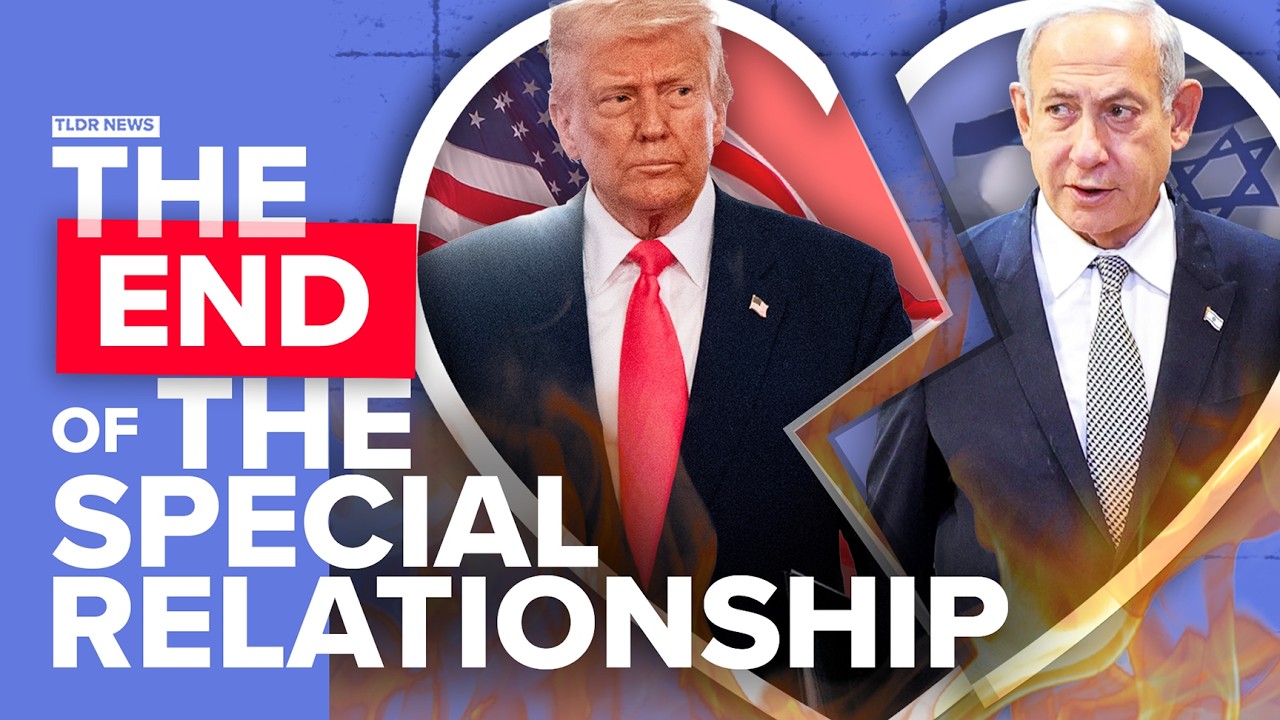
The Unraveling Alliance: Why a US-Israel Divorce Looks Increasingly Inevitable
For decades, the bond between the United States and Israel was considered unbreakable—a cornerstone of Middle Eastern geopolitics. Yet, beneath the surface of official statements and military aid packages, tectonic plates are shifting.
For decades, the bond between the United States and Israel was considered unbreakable—a cornerstone of Middle Eastern geopolitics. Yet, beneath the surface of official statements and military aid packages, tectonic plates are shifting. A growing divergence in strategic interests, generational values, and political priorities suggests that this historic partnership is heading toward an inevitable, and potentially painful, separation.
The Generational Gulf
The most significant driver of this rift is not diplomatic, but demographic. Younger Americans, particularly those under 40, view the Israeli-Palestinian conflict through a fundamentally different lens than their parents or grandparents. For older generations, the memory of the Holocaust and the 1967 Six-Day War frames Israel as a vulnerable underdog. For Millennials and Gen Z, the dominant image is often that of an occupying power.
This shift is not merely sentimental. It translates directly into political pressure. While the U.S. Congress remains staunchly pro-Israel, the voting base of the Democratic Party is increasingly critical of Israeli policy. Politicians who ignore this trend do so at their own electoral peril. The result is a slow, steady erosion of the bipartisan consensus that has protected the alliance for 70 years.
Strategic Divergence: Two Different Maps
Beyond public opinion, the two nations are reading from different strategic playbooks. The United States, exhausted by two decades of war in the Middle East, is pivoting toward the Indo-Pacific to counter China. This requires stability in the Gulf, normalization with Arab states, and a resolution to the Palestinian issue.
Israel, meanwhile, is focused on its immediate security perimeter: Iran’s nuclear program, Hezbollah on its northern border, and Hamas in Gaza. These threats are existential for Israel but are increasingly seen in Washington as regional distractions. When Israel strikes Iranian assets in Syria or expands settlements in the West Bank, it does so knowing these actions complicate America’s broader diplomatic goals, particularly the Abraham Accords.
The One-State Reality
The most explosive issue is the changing reality on the ground. The two-state solution—the bedrock of U.S. policy for three decades—is now widely considered dead. Israel’s current government has explicitly rejected Palestinian statehood, and the expansion of settlements has made a contiguous Palestinian state geographically impossible.
This presents Washington with an impossible choice. If it continues to support Israel unconditionally, it becomes complicit in a de facto one-state reality where millions of Palestinians live without equal rights. This violates core American democratic values and alienates the entire Arab and Muslim world. If it pressures Israel, it risks a domestic political firestorm and accusations of betrayal.
The Economic and Military Tether
The relationship is not just emotional; it is institutional. The U.S. provides Israel with $3.8 billion in military aid annually and guarantees its qualitative military edge. This tether, however, is a double-edged sword. It gives Washington leverage, but it also makes the U.S. a direct stakeholder in Israeli actions.
When Israel uses American-made weapons in operations that draw international condemnation—such as the 2023 war in Gaza—the U.S. shares the reputational damage. The global South, led by nations like South Africa and Brazil, now openly accuses Washington of double standards. This diplomatic cost is rising faster than the strategic benefit of the alliance.
The Inevitability of Divorce
A "divorce" does not mean a sudden severance of ties. It means a gradual, painful renegotiation of the relationship. We are likely to see a future where the U.S. continues to provide defensive aid (like Iron Dome) but stops offering blanket diplomatic cover at the United Nations. We may see conditions attached to military aid, or a public distancing from settlement expansion.
The alliance is not yet broken, but the trust is cracked. Both nations are beginning to plan for a future where they are no longer each other’s primary partner. For Israel, this means diversifying its alliances toward India, China, and the Gulf states. For the U.S., it means rebuilding credibility with the Arab world and a new generation of American voters.
The divorce is not a question of "if," but of "how" and "when." And the process has already begun.
Related Coverage
Netanyahu’s ‘Forever War’ Strategy Splits US and Israel as Gaza Death Toll Mounts
The United States and Israel are increasingly at odds over how to end the war with Iran, as Israeli Prime Minister Benjamin Netanyahu pursues a strategy that analysts say is driven by his own political survival rather than shared US priorities. Washington wants an exit from a conflict that is disrupting oil markets and growing unpopular at home, but Netanyahu, facing elections by the end of October and a criminal investigation, is betting on a new “hexagon of alliances” that risks deepening global rifts [170083][169001].
Israel’s $205 Billion War Bill and 20,000 Dead Kids Expose the Real Cost of U.S. Support
Israel’s wars since October 7 have cost nearly $205 billion, while a UN report confirms over 20,000 children killed in Gaza — as the U.S.-Israel bond shows its first real cracks after years of strain.
Trump and Netanyahu at War Over Iran: Ceasefire Collapses as Allies Split
A fragile US-brokered ceasefire between Iran and Israel has collapsed, exposing a deepening rift between President Donald Trump and Israeli Prime Minister Benjamin Netanyahu over how to end the conflict [168642][168888][170083].
EU Unity Cracks as Israel Feud Splits Brussels, NATO Summit Looms
A power struggle inside the European Union over Israel policy has erupted into open conflict, just weeks before a critical NATO summit in Ankara that will test the alliance's cohesion amid US threats to pull back from Europe.
US Signs Two Conflicting Middle East Deals, Risking Collapse
The United States has signed two contradictory Middle East agreements that risk canceling each other out, with one deal allowing Israel to stay in Lebanon while the other demands a full withdrawal.
US in ‘Panic’ as Gulf States Threaten to Ditch Washington for Own Security Pact
The White House is scrambling to keep Gulf allies from forming their own independent security alliance, a move that would shatter American influence in the region and undermine the Abraham Accords.
Related Editorials
The Unraveling Alliance: Why the Right Turned Against Israel
In a striking reversal of political allegiance, a significant segment of the American and European right has shifted its stance on Israel. For decades, the state was a cornerstone of conservative foreign policy—a "bulwark against terrorism" in the Middle East.
Washington’s Fickle Embrace: Why the Gulf States Are Losing Patience with Trump
For decades, the relationship between the United States and the Gulf monarchies has rested on a simple bargain: American security guarantees in exchange for oil stability and regional alignment. Yet, beneath the surface of official summits and handshakes, a quiet but profound erosion of trust is un
Is Washington Turning Its Back on the Indo-Pacific?
For decades, the United States has positioned itself as the indispensable power in the Asia-Pacific region, anchoring security alliances and driving economic integration. Yet, under the current administration, a growing chorus of diplomats and strategists is asking a provocative question: has Washi
Netanyahu’s Political Tightrope: Why the Wartime Coalition Is Fracturing
In the annals of modern Israeli politics, few leaders have demonstrated the political survival instincts of Benjamin Netanyahu. Yet, despite his reputation as the "magician" of Israeli statecraft, recent polling data suggests that his grip on power is loosening.
OPEC’s Unraveling: Why the Cartel’s Collapse Now Looks All But Certain
For decades, the Organization of the Petroleum Exporting Countries (OPEC) has functioned as the undisputed referee of global energy markets, wielding its members’ vast crude reserves to set prices and stabilize supply. Yet, beneath the veneer of quarterly meetings and production quotas, tectonic fo
The Quiet Surrender: How the United States Lost the War with Iran
For over two decades, the United States has been locked in a strategic confrontation with the Islamic Republic of Iran. Yet, according to a sweeping analysis of American foreign policy, the U.