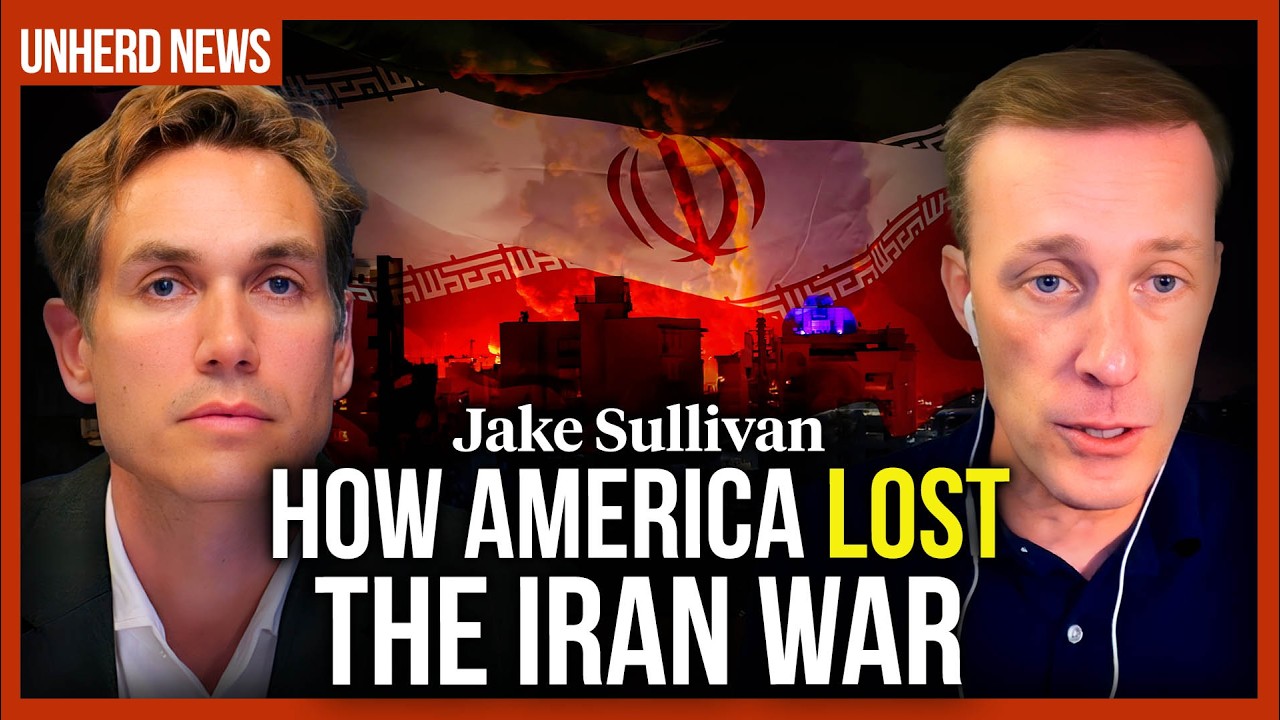
The Quiet Surrender: How the United States Lost the War with Iran
For over two decades, the United States has been locked in a strategic confrontation with the Islamic Republic of Iran. Yet, according to a sweeping analysis of American foreign policy, the U.
For over two decades, the United States has been locked in a strategic confrontation with the Islamic Republic of Iran. Yet, according to a sweeping analysis of American foreign policy, the U.S. did not lose this conflict on a conventional battlefield. It lost it in boardrooms, diplomatic corridors, and through a series of self-inflicted wounds. The story of this loss is not one of military defeat, but of strategic paralysis, failed deterrence, and a fundamental misunderstanding of how power works in the 21st century.
The Paradox of American Power
The central argument is a stark one: The United States possesses overwhelming military superiority over Iran, yet it has consistently failed to translate that power into political outcomes. This paradox stems from a critical flaw in American strategy. Washington has repeatedly drawn "red lines" regarding Iran’s nuclear program, its ballistic missile development, and its support for proxy militias. However, when Iran crossed these lines—testing missiles, enriching uranium beyond agreed limits, or attacking U.S. assets—the American response was often limited, symbolic, or absent.
This pattern created a dangerous precedent. Each time a red line was crossed without significant consequence, the credibility of American deterrence eroded. Iran learned that the cost of defiance was manageable, while the benefits—nuclear progress, regional influence, and domestic prestige—were substantial.
The Failure of Maximum Pressure
The cornerstone of U.S. policy under the previous administration was the "maximum pressure" campaign. The strategy aimed to cripple Iran’s economy through sanctions, forcing it to negotiate on American terms. On paper, the policy worked: Iran’s oil exports plummeted, its currency collapsed, and its economy contracted severely.
However, the analysis reveals a critical oversight. Maximum pressure failed to achieve its primary political objective. Instead of capitulating, Iran adapted. It deepened its ties with China and Russia, accelerated its nuclear program, and expanded its network of proxies in Yemen, Syria, Iraq, and Lebanon. The pressure did not break the regime; it hardened it. The sanctions created a siege mentality, rallying domestic support around the government and reducing the space for internal dissent.
The Diplomacy Trap
The subsequent shift toward diplomacy, exemplified by the negotiations for a return to the Joint Comprehensive Plan of Action (JCPOA), presented a different set of problems. While diplomacy is a necessary tool, the U.S. approach was criticized for being reactive rather than proactive. Washington often waited for Iran to make the next move, allowing Tehran to dictate the pace of negotiations.
Furthermore, the U.S. failed to build a credible "Plan B." Negotiators lacked the leverage of a credible military threat. Iran understood that the U.S. was desperate for a deal to avoid a wider war, and it used this leverage to extract concessions. The result was a diplomatic process that dragged on, allowing Iran to continue its nuclear enrichment while talks stalled.
The Proxy War Miscalculation
Perhaps the most significant strategic failure has been the handling of Iran’s proxy network. For years, Iran has armed and funded groups like Hezbollah in Lebanon, the Houthis in Yemen, and various militias in Iraq and Syria. These proxies have attacked U.S. troops, Israeli civilians, and Saudi infrastructure.
The U.S. response has been characterized by tit-for-tat strikes that, while militarily precise, have been strategically ineffective. The U.S. has targeted individual commanders or weapons depots, but it has not dismantled the network. Iran’s proxies have proven resilient, quickly replacing lost leaders and equipment. The U.S. has been fighting a war of attrition against a system designed to absorb attrition.
The Information War
A final, often overlooked front is the information domain. Iran has mastered the art of asymmetric information warfare. It uses state media, social media bots, and diplomatic channels to shape narratives. It has successfully framed the conflict as a struggle against American imperialism, gaining sympathy in the Global South and among anti-war movements in the West.
Meanwhile, the U.S. has struggled to tell its own story. The American narrative—focused on countering terrorism and preventing nuclear proliferation—has been drowned out by Iran’s more emotionally resonant message of resistance and sovereignty. The U.S. has lost the battle for hearts and minds, not because its cause is unjust, but because it has failed to communicate effectively.
Conclusion: A War Without an End
The United States has not lost the war with Iran in a single decisive battle. Instead, it has lost through a thousand small cuts. The failure to enforce red lines, the miscalculation of sanctions, the reactive diplomacy, the ineffective proxy war, and the lost information campaign have combined to create a strategic dead end.
Iran is now closer than ever to a nuclear threshold, its proxies are stronger, and its regional influence is at an all-time high. The U.S., despite its immense power, finds itself in a position of weakness, forced to choose between accepting a nuclear Iran or launching a high-risk military campaign. The war is not over, but the United States has already lost the ability to win it on favorable terms. The question now is whether Washington can learn from its mistakes before the next crisis erupts.
Related Coverage
US-Iran War Ends in Fragile Truce, $300 Billion Price Tag for America
The United States and Iran have signed a preliminary peace agreement, ending a 100-day war that has devastated the region and left both sides claiming victory while the deal faces collapse from multiple directions.
US-Iran Deal Ends War That Killed Thousands, Strait of Hormuz to Reopen Friday
A peace agreement between the United States and Iran has halted a conflict that left thousands dead and exposed the limits of American military power, with the Strait of Hormuz set to reopen on Friday under Iranian control [173005][173211].
Iran and US Announce Deal to End War, Reopen Strait of Hormuz — But Israel Objects and Details Remain Unclear
The United States and Iran have reached an interim agreement aimed at ending their war and reopening the Strait of Hormuz, a vital waterway for global oil shipments [172974]. However, major disagreements over Iran’s nuclear program, sanctions relief, and regional military influence remain unresolved, and Israel has raised strong objections to the deal [172963][171334].
US-Iran Deal Signed, Leaving Netanyahu Isolated as War Ends in Stalemate
A peace agreement between the United States and Iran has been reached, ending months of conflict, but the deal falls short of the total victory that President Donald Trump and Israeli Prime Minister Benjamin Netanyahu had demanded.
Iran Demands $100 Billion Back Before Signing Any Peace Deal
The United States and Iran are closer than ever to signing an agreement to end their war, but a critical dispute over approximately $100 billion in frozen Iranian assets threatens to derail the entire deal.
Obama Admits US Is 'Worse Off' After 100-Day War with Iran — $53 Billion in Gas Costs
Former President Barack Obama says the United States is worse off now than before it went to war with Iran, as new data shows American consumers have paid an extra $53 billion in higher gas prices during the conflict.
Related Editorials
The Hidden Crisis That Could Decide the Next Iran War
For years, the public debate on Iran has focused on centrifuges, enriched uranium, and the timeline to a nuclear weapon. Yet, a deeper, more immediate crisis is unfolding beneath the surface—one that receives far less attention but could prove decisive in any future conflict.
The US-Iran Nuclear Deal: A Diplomatic Tightrope Walk That Reshaped the Middle East
In 2015, the world watched as the United States and Iran—two nations locked in decades of mutual hostility—signed an agreement that many believed could prevent a catastrophic war. The Joint Comprehensive Plan of Action (JCPOA), commonly known as the Iran nuclear deal, was not merely a diplomatic do
The Iran Deal’s Hidden Escape Clause: How the World’s Toughest Sanctions Could Vanish Overnight
In 2015, world powers celebrated the Joint Comprehensive Plan of Action (JCPOA)—the Iran nuclear deal—as a landmark of nonproliferation. But beneath its diplomatic veneer lies a critical secret that could render the agreement meaningless.
The Unraveling Alliance: Why a US-Israel Divorce Looks Increasingly Inevitable
For decades, the bond between the United States and Israel was considered unbreakable—a cornerstone of Middle Eastern geopolitics. Yet, beneath the surface of official statements and military aid packages, tectonic plates are shifting.
Washington’s Fickle Embrace: Why the Gulf States Are Losing Patience with Trump
For decades, the relationship between the United States and the Gulf monarchies has rested on a simple bargain: American security guarantees in exchange for oil stability and regional alignment. Yet, beneath the surface of official summits and handshakes, a quiet but profound erosion of trust is un
The Quiet Collapse of American Influence: Why the World No Longer Listens
For decades, the United States wielded a unique form of power. It was not the power of bombs or banks, but the power of attraction.