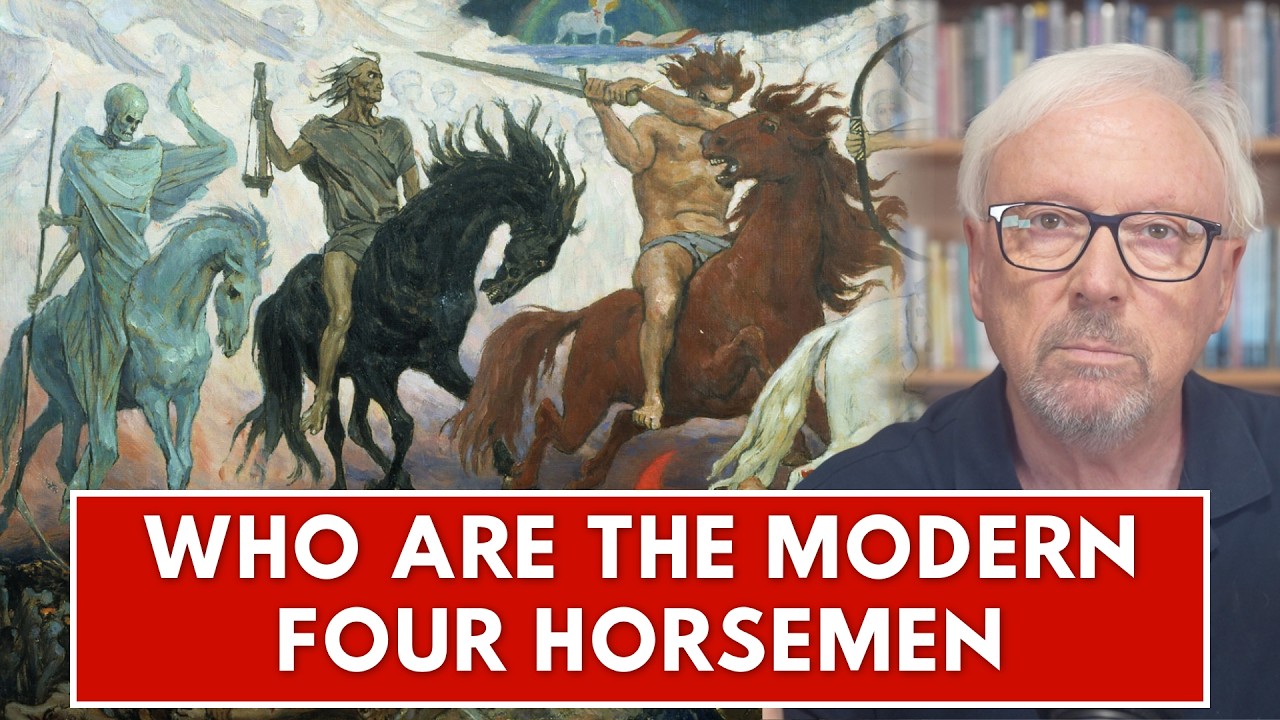
The Four Horsemen of the Modern Apocalypse
The original four horsemen of the apocalypse were conquest, war, famine, and death. Each of these still resonates somewhere in the world today, but are they the greatest threats we face now?
The original four horsemen of the apocalypse were conquest, war, famine, and death. Each of these still resonates somewhere in the world today, but are they the greatest threats we face now? I would argue they are not, at least in the Western states where mass demonstrations are now commonplace. Four larger modern threats have emerged: patriarchy, colonialism, neoliberalism, and individualism. Together they threaten our collective future. The apocalypse is already happening. Catastrophe need not arrive as a sudden event; societies can be destroyed from within, and that is precisely what neoliberalism has been doing. Inequality, exploitation, and environmental destruction are connected events, and these outcomes are not accidents. The question is: what systems of power produce them?
The first horseman is patriarchy. Patriarchy is about power, and it is not simply about men. Women can also uphold patriarchal institutions; Margaret Thatcher is the perfect example. Patriarchy values hierarchy, control, and domination. It undermines equality, care, and cooperation, and that is precisely what we see in society now. Patriarchy threatens our well-being.
The second horseman is colonialism. Colonialism is about domination and resource extraction. It has been the foundation of English wealth for centuries. It can operate internationally or domestically: wealthy regions of a country can exploit poorer communities, wealthy people can exploit poorer people, and in the UK one country in the union can exploit the others. Economic power can replace direct political control, and colonial relationships persist without formal empires, even though the UK still retains some mechanisms of empire. That is what our tax haven empire is all about. Colonial extraction is still happening, and the global south is still suffering, as are people in many parts of the UK.
The third horseman is neoliberalism. Neoliberalism makes competition the organizing social principle of society. It puts market outcomes before human needs. It concentrates economic power and rewards wealth. It undermines collective responsibility and destroys public provision wherever it can. It mistakes market success for social progress, and the result is no progress at all, which is exactly what people across Europe, the USA, the UK, and elsewhere now believe. This is not only about wages; it is about human rights and respect for individuals.
The fourth horseman is individualism. This is not just about individual freedom, although that matters. The issue is the denial of interdependence. Individualism treats success as entirely personal. It makes poverty appear to be personal failure and points a finger at those who suffer it. It denies the relationships that sustain society, communities, companies, and everything else. It undermines reciprocity and collective responsibility. It presumes that we are on our own when quite clearly that is not true. That is not how life is lived, yet this assumption underpins the world our politicians wish to project upon us.
These four horsemen reinforce each other. Patriarchy establishes hierarchies of social power. Colonialism extracts wealth through unequal relationships. Neoliberalism legitimizes economic inequality through supposed free markets. Individualism undermines solidarity and collective action. Together they concentrate power, weaken democracy, undermine community, destroy society, and destroy collective well-being, which they deny is even a possibility.
Economics has not only misunderstood the threats from these four horsemen; it has reinforced them. Conventional economics starts from the assumption that we are all isolated individuals struggling against all others. That is the basis of neoclassical and neoliberal economics. But no economy exists without relationships. Every economic transaction involves reciprocal obligations. We make bargains with each other, but they are not in isolation; in many cases they are statements of intent rather than straightforward exchanges without obligation. Power determines how benefits are distributed, and economics, as well as political economy, must recognize our fundamental interdependence if both are to be relevant now. Right now economics does not do that, which is why it supports the modern four horsemen.
We could, however, choose a different future. We can replace domination with equality and mutual respect. We can replace exploitation with cooperation between communities and nations. We can make markets that serve society rather than govern it. That is within the power of governments. We can recognize our shared responsibilities and our interdependence and build them into our approach to managing mutual well-being. This is how we can recreate the democratic institutions we need. Apocalypse is a political choice. The four horsemen are human creations; their power depends on institutions and beliefs. What people have created, people can change. Our future depends on the relationships we build. These four horsemen can be slain, and it is time they were consigned to history. We do not need to replace them. We need to focus on human well-being and how we can work together for a better future.
Related Coverage
A World on Fire: How Endless War, Climate Collapse, and a Captured Economy Are Fueling a Global Crisis
A cascade of overlapping crises—from collapsing ceasefires in the Middle East to a grinding war in Ukraine, a record-strength climate emergency, and rising political instability—is reshaping global affairs, leaving millions caught between conflict, hunger, and failing institutions. The common thread across these disasters is a global system increasingly corrupted by financial influence and corporate lobbying, prioritizing profit and power over fundamental human needs and rights.
War, Profit, and a Planet in Flames: How a Captured Global System Fuels Endless Crisis
A cascade of overlapping emergencies—from collapsing ceasefires and record-breaking hunger to a potentially historic climate disaster—is reshaping the world. The common thread across these disasters is a global system increasingly corrupted by financial influence and corporate lobbying, prioritizing profit and military spending over fundamental human needs and rights, leaving ordinary people to bear the costs of conflict, displacement, and environmental collapse.
Global Health in 2026: How War, Profit, and Climate Are Deciding Who Lives and Who Dies
A new era of interconnected crises—spanning war, energy shocks, climate disasters, and the unregulated rise of artificial intelligence—has overwhelmed health systems worldwide, leaving access to basic medical care determined increasingly by wealth and geography. From Gaza to Yemen to Zimbabwe, millions face preventable suffering while a narrow set of powerful interests reaps record rewards.
Title: Power, Profit, and a Planet in Peril: How War, Climate Chaos, and Financial Greed Are Redrawing the Global Order
**Summary:** From the battlefields of Ukraine and the besieged Strait of Hormuz to Europe’s drought-parched rivers and the polling stations of Africa, a cascade of interconnected crises is exposing a global system where the pursuit of geopolitical power and corporate profit increasingly collides with fundamental human needs.
War, Climate, and Profiteering: How a Global System Fuels Endless Conflict and Suffering
A cascade of overlapping crises—from collapsing ceasefires and grinding wars to a record-strength climate emergency and rising political instability—is reshaping global affairs, leaving millions trapped between conflict, hunger, and failing institutions. The common thread across these disasters is a global system increasingly corrupted by financial influence and corporate lobbying, prioritizing profit and military spending over fundamental human needs.
A World Under Pressure: War, Climate, and Economic Turmoil Reshape the Global Order
From the Strait of Hormuz to the skies over Ukraine, the world is facing a convergence of crises—energy wars, climate disasters, and a debt-fueled technology boom—that is straining nations and leaving the most vulnerable populations to bear the heaviest burden. These interconnected emergencies are diverting public resources away from human welfare and toward militarization, forcing governments and citizens alike to adapt to a new reality of compounded threats.