Why One Political Candidate Calls for a “French Revolution” in Britain
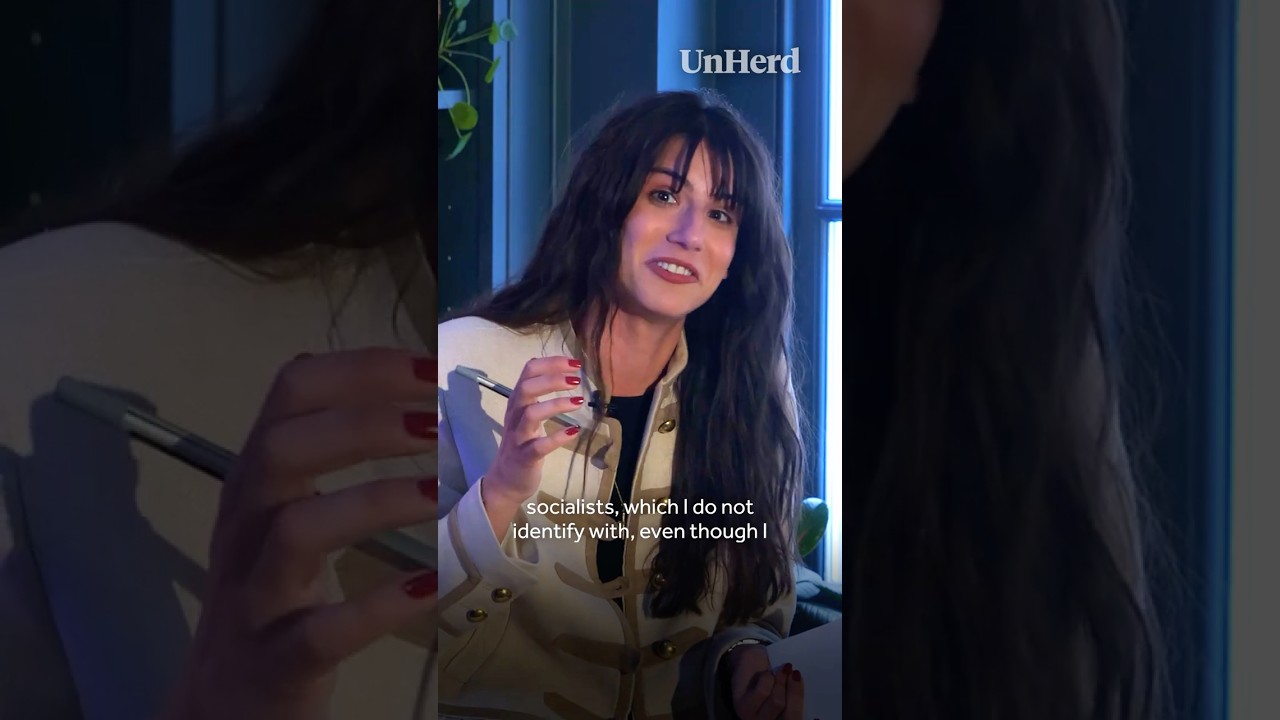
In a provocative statement that has sparked debate, political candidate Stella Tsantekidou has argued that Britain needs a radical overhaul reminiscent of the French Revolution. Speaking in a recent video, Tsantekidou did not call for literal guillotines or regicide, but rather a fundamental restru
In a provocative statement that has sparked debate, political candidate Stella Tsantekidou has argued that Britain needs a radical overhaul reminiscent of the French Revolution. Speaking in a recent video, Tsantekidou did not call for literal guillotines or regicide, but rather a fundamental restructuring of the British political and economic system.
The French Revolution, which began in 1789, dismantled the monarchy’s absolute power, abolished feudal privileges, and established a republic based on the principles of liberty, equality, and fraternity. Tsantekidou argues that modern Britain has become similarly entrenched—with a distant, unaccountable elite that governs for its own benefit rather than for the people.
She contends that the current British establishment, including both major political parties, has failed to address systemic issues such as rising inequality, a stagnant economy, and a disconnect between Westminster and ordinary citizens. In her view, incremental reforms are insufficient; only a sweeping, structural change—akin to the revolutionary upheaval that reshaped France—can restore genuine democracy and accountability.
It is important to note that Tsantekidou’s rhetoric is metaphorical. She is not advocating for violence or the overthrow of the British monarchy by force. Instead, she is calling for a cultural and political shift: one that breaks the grip of a perceived ruling class and returns power to local communities and the working population.
Critics may dismiss such language as hyperbolic or dangerous. However, Tsantekidou’s core argument taps into a growing frustration among voters who feel that the existing system is rigged. Whether or not one agrees with her prescription, her call for a “French Revolution” serves as a stark warning to the political establishment: the patience of the electorate is not infinite.
Related Coverage
Turkey Opposition Figure Demands Legal Action to Speed Up Democracy, as CHP Holds Emergency Talks
Turkey is facing a critical political moment as a leading opposition figure calls for concrete legal steps to accelerate the democratic process, while the main opposition party holds an emergency meeting to assess the rapidly shifting political landscape.
New York Mayor Demands US Arrest Netanyahu, DSA Eyes Wisconsin Win
Two Democratic Socialists of America (DSA)-aligned officials are pushing radical proposals, with New York City Mayor Zohran Mamdani calling for the arrest of Israeli Prime Minister Benjamin Netanyahu and a Florida candidate backing the abolition of the U.S. Senate.
Related Editorials
Britain’s Broken State: Why the Machinery of Government Needs a Total Rebuild
The United Kingdom is running on a system designed for a different era. From sluggish infrastructure to a crisis in public services, the evidence suggests that the current model of governance is no longer fit for purpose.
Labour Says It Wants Jobs—So Why Is It Destroying Them?
The British Labour Party has long positioned itself as the party of workers. Its rhetoric champions employment, economic security, and the protection of livelihoods.
Why I Am a Communist: Slavoj Žižek’s Unsettling Case for a Radical Idea
In a world where communism is often dismissed as a failed ideology of the past, philosopher Slavoj Žižek offers a provocative defense. Speaking in a concise video, he argues that communism remains the only coherent response to the systemic crises of capitalism—not as a nostalgic dream, but as a pra
Neil Kinnock’s Verdict: Why Starmer’s Labour Failed to Inspire
In a rare and pointed critique, former Labour leader Neil Kinnock has offered a stark diagnosis of why Sir Keir Starmer’s party is struggling to connect with voters. Speaking in a recent interview, Kinnock—who led Labour from 1983 to 1992—did not mince words.
Žižek’s Provocative Question: Is Trump a “Secret Stalinist”?
In a recent short-form video, the Slovenian philosopher Slavoj Žižek posed a deliberately provocative question that cuts through the noise of contemporary political analysis: Is Donald Trump a secret Stalinist? While the question is designed to shock, Žižek’s argument is less about historical equiv
Peter Hitchens: Why I Wouldn’t Mourn the Break-Up of Britain
In a striking departure from conventional conservative patriotism, veteran British journalist and author Peter Hitchens has declared that he would not oppose the dissolution of the United Kingdom. Speaking in a recent short video, Hitchens—a man often associated with tradition, the Anglican Church,