Indonesia Just Took Back 300 Hectares From Illegal Palm Oil—and Built an AI to Catch the Next Fire
Indonesia is cracking down on illegal land grabs and deploying artificial intelligence to protect its critically endangered Sumatran elephants, with new enforcement actions and technology aimed at saving a species with fewer than 2,000 left in the wild.
---
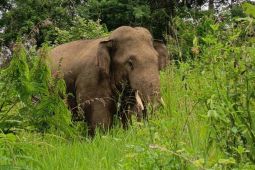
Indonesian authorities have reclaimed approximately 300 hectares of illegally occupied land in Bengkulu province, destroying hundreds of oil palm trees planted inside a protected corridor used by wild Sumatran elephants [249107]. The operation is part of a broader push to restore safe passage for the critically endangered animals, whose movement between forest habitats has been blocked by encroaching plantations [249107].
The Peusangan Elephant Conservation Coordination Forum (FK PECI) is simultaneously calling for stronger protection of elephant corridors across Aceh, warning that without better safeguards, conflicts between elephants and humans will escalate [249116]. Corridors are strips of land that connect separated habitats, allowing elephants to move safely between forest areas [249116]. The forum urged local authorities and communities to work together to keep these routes open and secure [249116].
In a significant technological development, a joint committee managing Sumatran elephant conservation at Way Kambas National Park is building an artificial intelligence (AI) center to track elephants and monitor forest fires in real time [249118]. The system uses AI—computer programs that learn and make decisions—to analyze data from cameras and sensors across the park [249118]. Officials say the technology will help rangers respond faster to threats, including fires and illegal poaching [249118].
Way Kambas, located in Lampung province, is one of the last strongholds of the Sumatran elephant. Fewer than 2,000 of the animals remain in the wild [249118].
The conservation efforts extend beyond technology and enforcement. President Prabowo Subianto has ordered that scientists and local communities be directly involved in running the country's peatland agency, aiming to combine expert knowledge with on-the-ground experience [249082]. Peatlands are carbon-rich wetlands that store large amounts of greenhouse gases. When damaged, they become highly flammable and are a major source of Indonesia's annual fires and carbon emissions [249082].
By including researchers and villagers in the agency's operations, the government hopes decisions will reflect both scientific data and local realities. Local communities often know the land best and can help prevent fires and restore damaged areas [249082].
The move signals a shift toward a more inclusive approach to environmental management, placing those who live and work on the land at the center of efforts to protect it [249082].
Authorities have also issued stern warnings against intentional burning. Police in Jember, East Java, have warned that anyone who deliberately burns forests or land will face criminal charges, with penalties reaching 15 years in prison [244530]. The warning is meant to deter intentional burning, which causes serious environmental damage and can spread quickly during dry conditions [244530].
---