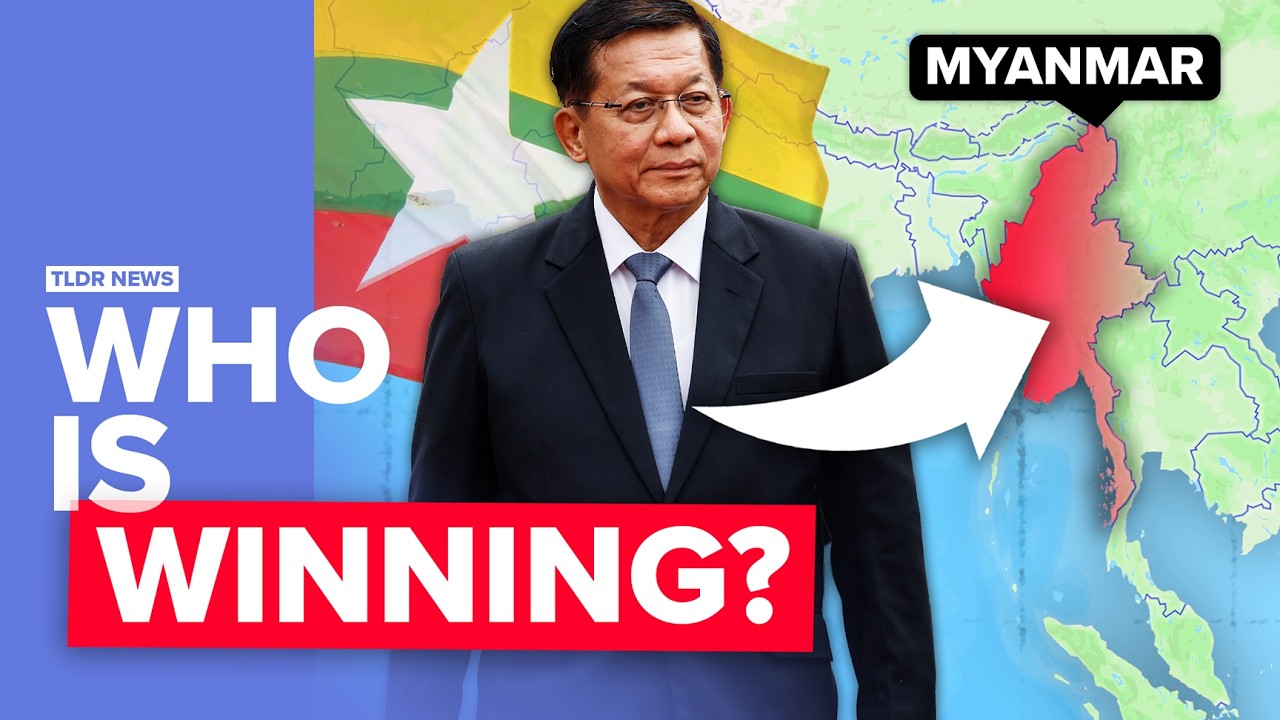
Myanmar’s War Reaches a Crossroads: Can the Junta Survive?
For years, the civil war in Myanmar has been a brutal, grinding stalemate. But recent months have seen a seismic shift in the balance of power.
For years, the civil war in Myanmar has been a brutal, grinding stalemate. But recent months have seen a seismic shift in the balance of power. The military junta, which seized control in a 2021 coup, is now facing its most significant existential threat to date, as a coalition of unlikely allies—from pro-democracy fighters to ethnic armed organizations—has begun to turn the tide of the conflict.
The catalyst for this dramatic change was Operation 1027, a coordinated offensive launched in late October 2023. This was not a series of isolated skirmishes but a synchronized, multi-front assault that caught the military (known as the Tatmadaw) off guard. The operation, led by the Three Brotherhood Alliance in the north, quickly overran military outposts and seized key border towns, effectively severing crucial supply lines and dealing a devastating blow to the junta’s morale.
What makes this moment different from previous resistance efforts is the unprecedented level of coordination. The resistance has moved beyond mere survival, demonstrating an ability to seize and, more importantly, hold territory. They have captured military headquarters, artillery pieces, and even naval vessels, signaling a collapse of the Tatmadaw’s tactical superiority. This success has sparked a "demonstration effect," encouraging resistance groups across the country to launch their own offensives, stretching the junta’s already thin resources to a breaking point.
The strategic picture for the junta is dire. It is increasingly isolated, not only politically but also geographically, with many of its ground supply routes cut off. This has forced the military to rely on air power, which, while devastating, has failed to dislodge entrenched resistance fighters. More critically, the regime is facing a severe manpower crisis. Reports of forced conscription, dwindling troop numbers, and a reliance on poorly-trained militias suggest an army that is hemorrhaging capacity.
However, declaring a definitive turning point would be premature. The conflict remains fluid and bloody. The Tatmadaw retains significant air superiority and control over the central heartland, including major cities like Naypyidaw and Yangon. The resistance, while emboldened, is a fragmented coalition of groups with divergent long-term goals. The risk of internal fractures and the immense challenge of governing a diverse nation post-conflict loom large.
The junta is also unlikely to surrender quietly. History shows that the military elite fears retribution for their actions, and they are capable of retreating to their strongholds to wage a prolonged and destructive war of attrition. The immediate future likely holds more violence, not less, as the regime attempts to consolidate its defenses and launch counter-offensives.
The situation in Myanmar is not merely a turning point; it is a crossroads. The old certainties of military dominance are gone, replaced by a volatile and uncertain landscape. While the junta is on its back foot, it is not yet defeated. The coming months will be critical in determining whether this momentum translates into a lasting political settlement or merely marks the beginning of an even more fragmented and chaotic phase of a conflict that has already claimed thousands of lives. The world watches as a nation fights for its future, with the outcome hanging precariously in the balance.
Related Coverage
Fragile Peace, Escalating War: A World Caught Between Diplomacy and Destruction
A historic but fragile peace deal between the United States and Iran offers a rare glimmer of hope for global energy markets, but it is already under threat from continued violence in Lebanon, while the war in Ukraine intensifies with drone attacks deep inside Russia and a worsening climate crisis pushes millions toward hunger and displacement.
Fragile Peace Deals and Escalating Wars: A World Caught Between Diplomacy and Destruction
A fragile US-Iran peace deal offers a rare glimmer of hope for global energy markets, but it is already under threat from continued Israeli strikes on Lebanon, while the war in Ukraine intensifies with Ukraine striking deep inside Russia and a worsening climate crisis pushes millions toward hunger.
War With Iran Hits 6 Months: Khamenei Dead, Hormuz Shut, and Oil Prices Still Reeling
Global markets remain on edge as the US-Israel military campaign against Iran enters its sixth month, with the killing of Supreme Leader Ali Khamenei, the closure of the Strait of Hormuz, and oil prices still swinging wildly [229317][229504]. The conflict has redrawn the energy map, pushing crude to multi-year highs before a recent cool-down, while stocks remain split between booming energy firms and struggling manufacturers [229317].
Fragile Peace, Escalating War: A World Caught Between Diplomacy and Destruction
A fragile US-Iran peace deal offers a rare glimmer of hope for global energy markets, but it is already under threat from continued Israeli strikes on Lebanon, while the war in Ukraine intensifies with drone attacks deep inside Russia and a worsening climate crisis pushes millions toward hunger.
Global Powers at a Crossroads: Fragile Peace Deals, Escalating Wars, and a World on Edge
A cascade of overlapping crises is reshaping global politics, with a fragile US-Iran peace deal offering a rare glimmer of hope even as the war in Ukraine intensifies, violence continues in Lebanon and Gaza, and the world grapples with democratic decline, climate disasters, and economic uncertainty.
Oil Shock and Global Realignment: How Middle East Conflict, Ukraine War, and Shifting Alliances Are Reshaping the World
A wave of attacks on Saudi oil infrastructure and Houthi seizures of key shipping lanes has sent crude prices above $100 a barrel, while Ukraine's war with Russia escalates and BRICS leaders gather in New Delhi to test whether a divided bloc can challenge Western power.
Related Editorials
Turkey’s Silent Surge: How Ankara Is Reshaping the Battlefield in Mali
For years, the conflict in Mali has been defined by a complex web of local militias, foreign mercenaries, and shifting jihadi alliances. Yet, a new player has quietly moved to the center of the board, altering the strategic calculus of the Sahel.
The Afghan-Pakistan War Restarts: How Does This End?
The fragile peace along the Afghanistan-Pakistan border has shattered. A new phase of conflict, distinct from the two-decade American occupation, is now underway.
Niger’s Silent Coup: Why the Junta’s Own Soldiers Turned on General Tiani
Article: In a dramatic turn of events that has sent ripples through the Sahel region, Niger’s military junta faces its most significant internal challenge yet. Reports from Niamey confirm that a faction of the country’s own armed forces has moved against General Abdourahamane Tiani, the man who sei