The Emerging Axis: Inside the Turkey-Pakistan-Saudi Arabia Defense Compact
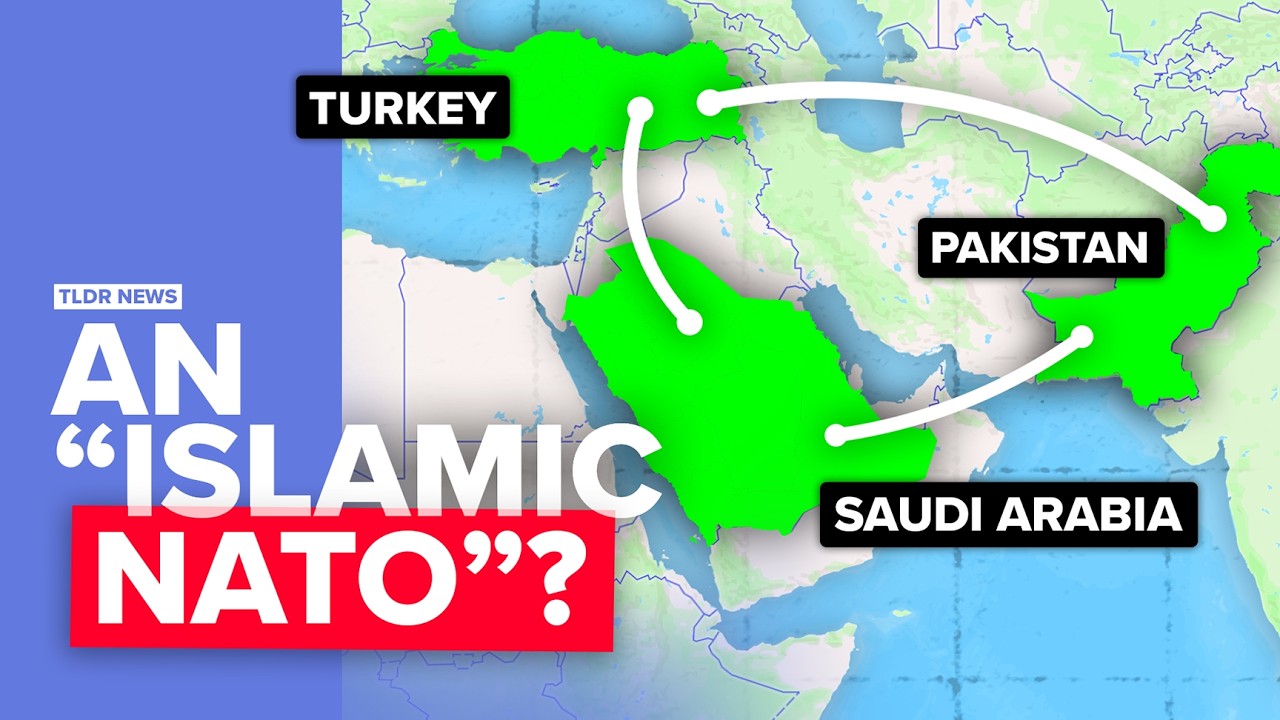
In the shifting sands of global geopolitics, a new triangle of military cooperation is taking shape. Stretching from the Bosporus to the Arabian Sea, Turkey, Pakistan, and Saudi Arabia are forging a defense pact that could redraw the strategic map of the Middle East and South Asia.
In the shifting sands of global geopolitics, a new triangle of military cooperation is taking shape. Stretching from the Bosporus to the Arabian Sea, Turkey, Pakistan, and Saudi Arabia are forging a defense pact that could redraw the strategic map of the Middle East and South Asia. While not a formal NATO-style treaty, this trilateral alignment represents a convergence of economic necessity, technological ambition, and shared geopolitical anxiety.
This is not a marriage of convenience. It is a calculated response to a multipolar world where traditional alliances are fraying and regional powers must build their own security architectures. Here is how this pact was built, what it actually entails, and why it matters.
The Anatomy of the Agreement
The relationship is built on a foundation of high-level military exchanges and joint production ventures. The core of the pact revolves around a "three-plus-one" framework: the three nations collaborating on defense industrialization, with a focus on drone technology, naval upgrades, and missile defense systems.
Turkey brings its proven combat drone technology, specifically the Bayraktar TB2 and the newer Akinci, which have demonstrated devastating effectiveness in recent conflicts. Pakistan brings its extensive experience in counter-terrorism and a deep bench of military engineering talent. Saudi Arabia brings the financial liquidity required to scale production and the strategic desire to localize weapons manufacturing rather than rely solely on Western imports.
The Strategic Drivers
Why now? The answer lies in a convergence of crises.
For Turkey, the pact is a lifeline. Isolated from Western defense supply chains due to its purchase of the Russian S-400 system and its exclusion from the F-35 program, Ankara needs alternative markets to sustain its growing defense industrial base. The Turkish defense sector requires export volume to remain viable.
For Pakistan, the calculus is existential. With a deteriorating security situation in its western provinces and a persistent conventional imbalance with India, Islamabad seeks cheap, effective, and reliable technology. The Turkish drones offer a "poor man's air force" that can strike deep into enemy territory without risking piloted aircraft.
For Saudi Arabia, the motivation is deterrence. Following the 2019 attacks on its oil infrastructure, which exposed vulnerabilities in its air defense, Riyadh is desperate to diversify its suppliers. The United States has proven to be an unreliable security guarantor under shifting presidential priorities. A partnership with Turkey and Pakistan offers a parallel track for defense procurement that does not come with the political conditionalities of Washington.
The "Steel Dome" and Joint Exercises
The most concrete manifestation of this pact is the proposed joint development of a "Steel Dome" air defense system. This is a layered architecture intended to counter drones, cruise missiles, and ballistic missiles. Pakistan and Turkey have already conducted joint tests of the Hisar air defense system, with Saudi Arabia funding the integration of radar and command-and-control networks.
Furthermore, the three nations have participated in the "Anatolian Eagle" and "Sea Guardians" military exercises. These are not symbolic gestures; they involve the exchange of tactical data and the standardization of ammunition and communication protocols. This interoperability means that in a future conflict, a Pakistani F-16 could theoretically be guided by a Turkish AWACS aircraft and protected by a Saudi-supplied Patriot battery.
The Unspoken Rivalry
Despite the public show of unity, this pact is also a response to a specific competitor: Iran. The trilateral axis forms a Sunni-majority bulwark against Shia expansionism. Turkey views Iran as a rival in the Caucasus and Iraq; Pakistan views Iran as a destabilizing force in Balochistan; and Saudi Arabia views Iran as its primary existential threat.
However, the pact is careful not to be defined solely by anti-Iranian sentiment. The rhetoric focuses on "Islamic solidarity" and "maritime security," particularly in the Red Sea and the Indian Ocean. This allows the member states to maintain plausible deniability and avoid provoking a direct confrontation with Tehran.
The Challenges Ahead
This alliance is not without friction. The three nations have divergent interests in Afghanistan, where Pakistan seeks influence, Turkey seeks economic contracts, and Saudi Arabia seeks ideological alignment. There is also the question of reliability: Saudi Arabia has historically paid for defense systems but has been slow to integrate them into operational command structures.
Moreover, the United States is watching closely. Washington has already warned Turkey against deeper defense ties with nations under US sanctions. Pakistan’s reliance on IMF bailouts makes it susceptible to US financial pressure. The durability of this pact will depend on whether the economic and security benefits outweigh the diplomatic costs of angering the West.
Conclusion
The Turkey-Pakistan-Saudi Arabia defense pact is a testament to the fragmentation of the global order. It is a pragmatic alliance built on shared threats and mutual needs, rather than shared values. For the foreseeable future, it will likely remain a transactional relationship—focused on technology transfer and joint procurement—rather than a binding mutual defense treaty.
Yet, its emergence signals a clear message: the era of unipolar security guarantees is over. The future of defense in the region will be written by the nations themselves, with drones in the sky and steel domes overhead. The world’s established powers would be wise to take note.
Related Coverage
Pakistan, Saudi Arabia, Turkey Sign 'Islamic NATO' Defense Pact—Attack on One Is Attack on All
Pakistan, Saudi Arabia, and Turkey have formalized the "Mecca Pact," a trilateral defense agreement with a mutual defense clause stating that an armed attack on any one member will be treated as an attack on all [216655]. The pact signals a major shift toward deeper military and political cooperation among the three Muslim-majority nations, with analysts noting it could reshape regional security dynamics [216606].
New Saudi-Turkey-Pakistan Defense Pact Shakes Up Middle East, But Can It Survive First Test?
A new trilateral defense agreement between Saudi Arabia, Turkey, and Pakistan is reshaping regional security, but experts question whether the alliance can hold together under pressure.
Pakistan, Saudi Arabia, and Turkey Sign "Islamic NATO" Defense Pact in Mecca—Mutual Attack Clause Targets Regional Shift
Pakistan, Saudi Arabia, and Turkey have formalized a new trilateral defense agreement, the Makkah Joint Defense Agreement, which states that an armed attack on any one of the three nations will be treated as an attack on all [214553][216655]. The pact, signed on August 7 in Mecca, signals a major shift away from reliance on the United States as regional powers seek greater self-reliance [216697][215510].
Turkey, Pakistan, Saudi Arabia Lock In Mecca Defense Pact as Russia and Syria Review Key Military Deal
Turkey's foreign minister says the three-nation Mecca Defense Pact is close to completion and will soon welcome new members, while Russia and Syria review their own military agreement in Latakia.
Saudi Arabia, Turkey, and Pakistan Sign ‘Islamic Nato’ Defense Pact in Mecca—Attack on One Is Attack on All
Saudi Arabia, Turkey, and Pakistan have signed a formal joint defense agreement in Mecca, pledging that an armed attack on any one of the three nations will be treated as an attack on all [214553][214663][215536]. The pact, signed on August 7 by Saudi Crown Prince Mohammed bin Salman, Turkish President Recep Tayyip Erdogan, and Pakistani Prime Minister Shehbaz Sharif, marks a rare formal military alliance among the three Muslim-majority states [214663][215698][215536].
Saudi Defense Pact Faces First Big Test as Houthi Attacks Hit Energy Sites, Military Chiefs Rush to Riyadh
Saudi Arabia, Pakistan, and Turkey met in Riyadh after Houthi strikes on Saudi energy infrastructure tested their new Mecca Joint Defense Agreement, while France and the UK pledged military support.
Related Editorials
Turkey’s Silent Surge: How Ankara Is Reshaping the Battlefield in Mali
For years, the conflict in Mali has been defined by a complex web of local militias, foreign mercenaries, and shifting jihadi alliances. Yet, a new player has quietly moved to the center of the board, altering the strategic calculus of the Sahel.
The New Geometry of Global Security: Why Regional Defense Pacts Are on the Rise
In an era defined by shifting geopolitical alliances and eroding trust in traditional global institutions, nations are increasingly turning to regional defense pacts as their primary security guarantee. The video "Why Regional Defence Pacts Are on the Rise" explores this trend, highlighting how cou
Mali’s Bold Pivot: How a Surprise Alliance Is Redrawing West Africa’s Geopolitical Map
In a region already defined by coups, sanctions, and shifting loyalties, one man’s unexpected diplomatic gambit is sending shockwaves through West Africa. Colonel Assimi Goïta’s Mali has long been a flashpoint for international tension, but the latest development—a deepening military and political
The End of Contentment: Why Global Stability Is Fracturing
For decades, a fragile global equilibrium held: cheap energy from Russia, ultra-efficient manufacturing from China, and a security umbrella provided by the United States. This arrangement delivered unprecedented prosperity to the developed world.
The Gathering Storm: How a Continental Shift Is Threatening South Africa’s Regional Dominance
A quiet but seismic shift is underway in African geopolitics. For decades, South Africa has operated as the continent’s economic and diplomatic anchor, wielding influence from Cape Town to Cairo.
The Sahel Alliance Just Redrew West Africa’s Geopolitical Map—And ECOWAS Is Scrambling
In a move that has sent ripples through West African diplomacy, the Alliance of Sahel States (AES) has unveiled a significant new project that regional bloc ECOWAS did not anticipate. The development marks a decisive step in the consolidation of the AES as a standalone geopolitical and economic for