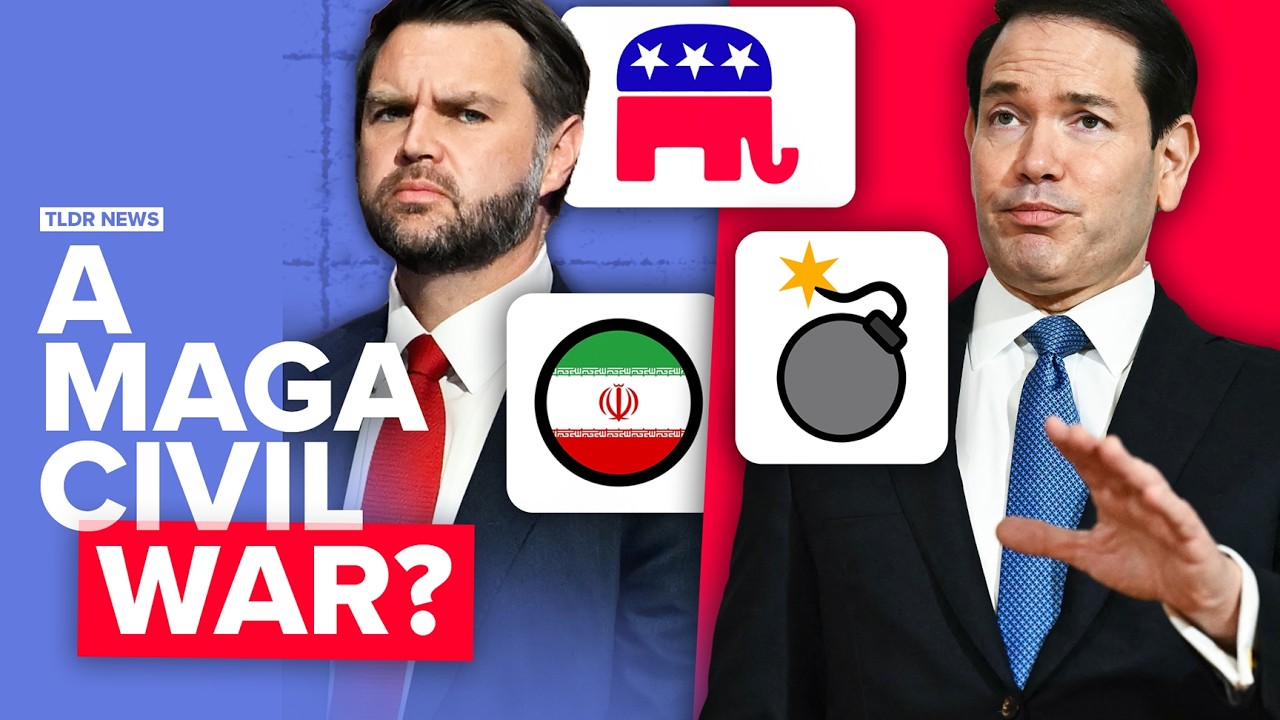
The Tech Elite vs. The Populist Base: The Real War Splitting MAGA
The political coalition known as MAGA is no longer a monolith. Beneath the surface of public rallies and unified social media messaging, a structural fracture is widening.
The political coalition known as MAGA is no longer a monolith. Beneath the surface of public rallies and unified social media messaging, a structural fracture is widening. The conflict is not about policy nuances or foreign affairs; it is a fundamental clash over the soul of the movement, pitting the tech libertarian elite against the populist, protectionist base.
To understand the schism, one must first define the two factions. On one side sits the "Tech Right," a coalition of Silicon Valley billionaires, cryptocurrency advocates, and venture capitalists who have recently aligned with the conservative movement. Their ideology centers on deregulation, technological acceleration, and a meritocracy defined by wealth creation. They view government oversight as the primary obstacle to progress.
On the other side is the "Populist Base," the traditional working-class voters who form the movement's electoral backbone. Their priorities are economic protectionism, strict immigration enforcement, and the preservation of local industries. For them, the government is a tool to protect American workers from global market forces, not a barrier to be dismantled.
The friction point is immigration, specifically the H-1B visa program. The Tech Right advocates for expanding these visas to import high-skilled engineers, arguing that America faces a critical shortage of domestic talent. They contend that to maintain global dominance in AI and software development, the country must import the best minds, regardless of nationality.
The Populist Base views this as a direct betrayal. They argue that the visa program is a loophole used by corporations to undercut American wages and replace domestic workers with cheaper foreign labor. For them, this is not about merit; it is about corporate greed. They see the Tech Right’s stance as evidence that the elite cares more about quarterly earnings than the livelihoods of the American middle class.
This is not merely a disagreement over policy details. It is a philosophical rupture regarding the definition of "America First." For the populist, it means protecting the domestic labor market and cultural cohesion. For the tech elite, it means winning the global race for innovation at all costs, even if it means importing the workforce to do so.
The battle has escalated from policy debates to personal attacks on social media, with each side accusing the other of being "fake conservatives." The Tech Right dismisses the populists as "Luddites" who fear progress. The Populist Base labels the tech leaders as "globalists" who are using the movement for their own financial gain.
The outcome of this internal war remains uncertain. The leadership of the movement faces a difficult choice: appease the donors and intellectual firepower of the Tech Right, or solidify the loyalty of the working-class voters who fill the stands at rallies. Attempting to satisfy both simultaneously may prove impossible, as the two groups hold mutually exclusive visions for the nation's economic future.
What is clear is that the era of a unified MAGA front is over. The coalition is now engaged in a high-stakes tug-of-war, and the resolution of this conflict will determine not only the future of the movement but the direction of the Republican Party for the next decade. The battle is no longer between the right and the left; it is a civil war within the right itself.
Related Coverage
Trump’s Midterm Chaos: Party Insiders Skip Convention as His Own Moves Confuse Allies
Trump’s erratic strategy and polarizing presence are threatening Republican chances in the November midterms, with key allies skipping the party convention and internal divisions growing.
Democrats’ Civil War Goes Prime Time: 2 Progressive Wins, 2 Party Splits, 1 Messy Midterm
Democrats are heading into the midterms fractured, with progressive insurgents scoring major primary upsets while party leaders in Texas voted on dueling resolutions to abolish or reform ICE—exposing a divide that could cost them seats in November.
EU Unity Cracks as Israel Feud Splits Brussels, NATO Summit Looms
A power struggle inside the European Union over Israel policy has erupted into open conflict, just weeks before a critical NATO summit in Ankara that will test the alliance's cohesion amid US threats to pull back from Europe.
Democrats in Chaos as $3.3 Billion Israel Military Aid Splits Party Leadership
Top Democrats are publicly feuding over a Republican proposal to block $3.3 billion in U.S. military aid to Israel, exposing a deep rift in the party as lawmakers clash over support for Israel's occupation of Palestinian territories.
Germany’s ‘Firewall’ Against Far-Right AfD Shows Cracks
Germany’s long-standing political consensus to isolate the far-right Alternative for Germany (AfD) is beginning to fracture under political pressure.
Netanyahu’s ‘Forever War’ Strategy Splits US and Israel as Gaza Death Toll Mounts
The United States and Israel are increasingly at odds over how to end the war with Iran, as Israeli Prime Minister Benjamin Netanyahu pursues a strategy that analysts say is driven by his own political survival rather than shared US priorities. Washington wants an exit from a conflict that is disrupting oil markets and growing unpopular at home, but Netanyahu, facing elections by the end of October and a criminal investigation, is betting on a new “hexagon of alliances” that risks deepening global rifts [170083][169001].
Related Editorials
The Democrats’ Civil War: A Party at War With Itself
The Democratic Party, long viewed as a broad coalition united by shared opposition to Republican policies, is facing an internal rupture that threatens to redefine its identity. What was once a simmering tension between its progressive and moderate wings has now erupted into a full-blown conflict o
The Unraveling Alliance: Why a US-Israel Divorce Looks Increasingly Inevitable
For decades, the bond between the United States and Israel was considered unbreakable—a cornerstone of Middle Eastern geopolitics. Yet, beneath the surface of official statements and military aid packages, tectonic plates are shifting.
Netanyahu’s Political Tightrope: Why the Wartime Coalition Is Fracturing
In the annals of modern Israeli politics, few leaders have demonstrated the political survival instincts of Benjamin Netanyahu. Yet, despite his reputation as the "magician" of Israeli statecraft, recent polling data suggests that his grip on power is loosening.
The Hidden Hand Behind Africa’s Fractures: A Question of External Influence
Across the African continent, a troubling pattern has emerged. From the Sahel to the Horn of Africa, communities that once coexisted are now divided by suspicion, ethnic tension, and political violence.
Trump’s Shadow Over Brazil: Is the U.S. Pushing Mastercard and Visa on a Sovereign Nation?
By [Your Name/Editorial Staff] Date: [Current Date] A quiet but consequential battle is unfolding in Brazil’s financial sector. The question at its center is deceptively simple: Is a former—or future—U.
The Blame Game: How Modern Politics Abandoned Solutions for Scapegoats
A growing chorus of analysts argues that Western democracies are trading problem-solving for finger-pointing—and the consequences may be profound. Something has shifted in the machinery of democratic politics.